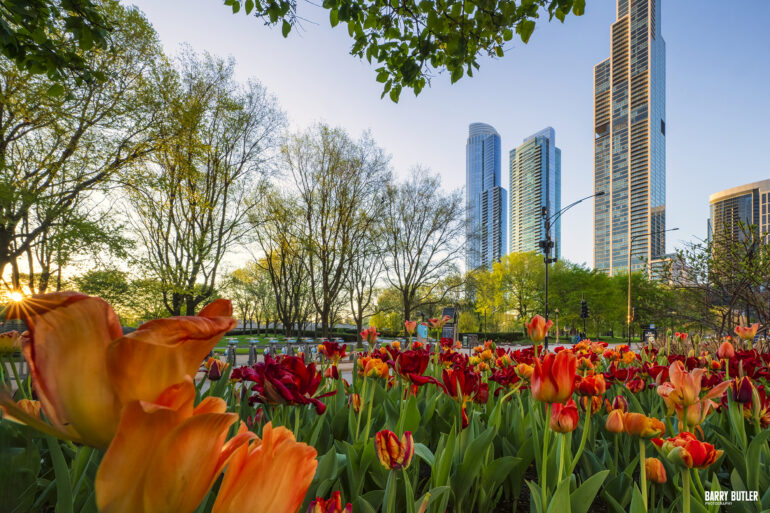
Barry Butler has been photographing Chicago for decades — but more specifically, he’s been capturing its tulips.
A native of Ireland, Butler has always loved shooting natural scenery. But while building his photography practice, he also began photographing Chicago’s industrial landscape, a striking contrast to Ireland’s terrain.
“I was psychologically saying to myself, ‘Well, I don’t have mountains, but I have these skyscrapers. I don’t have waterfalls, but the lake is kind of interesting.’ So I was just changing my thought process,” Butler says.
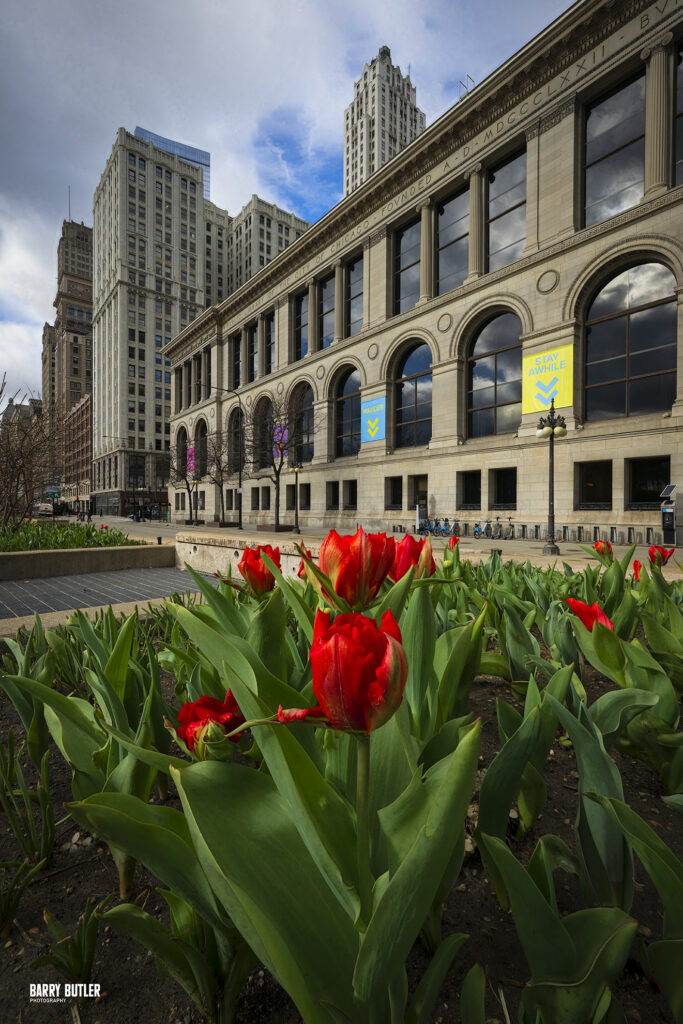
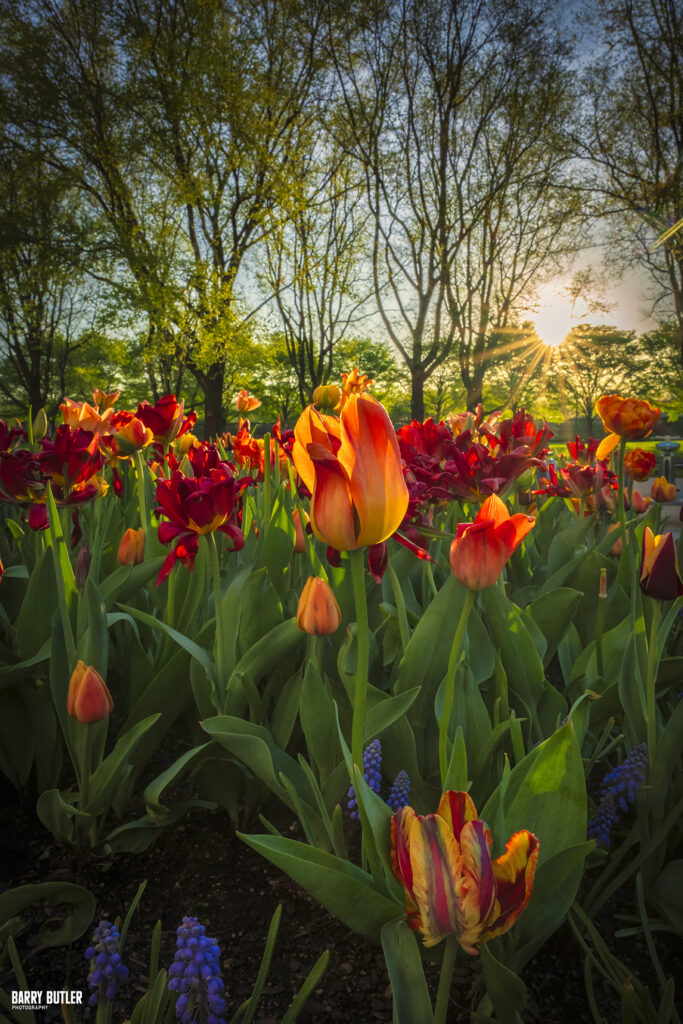
One spring, while shooting, he turned his lens to the tulips lining Michigan Avenue. Butler relishes both the challenge — the flowers shift with even the slightest wind or passing car — and the symbolism: the promise of warmer days after the brutal winters that earned Chicago its “Chiberia” nickname.
“As soon as the weather changes here, we’re outside,” Butler says. “We don’t want to be inside. And one of the nicest parts is just taking a stroll down Michigan Avenue.”
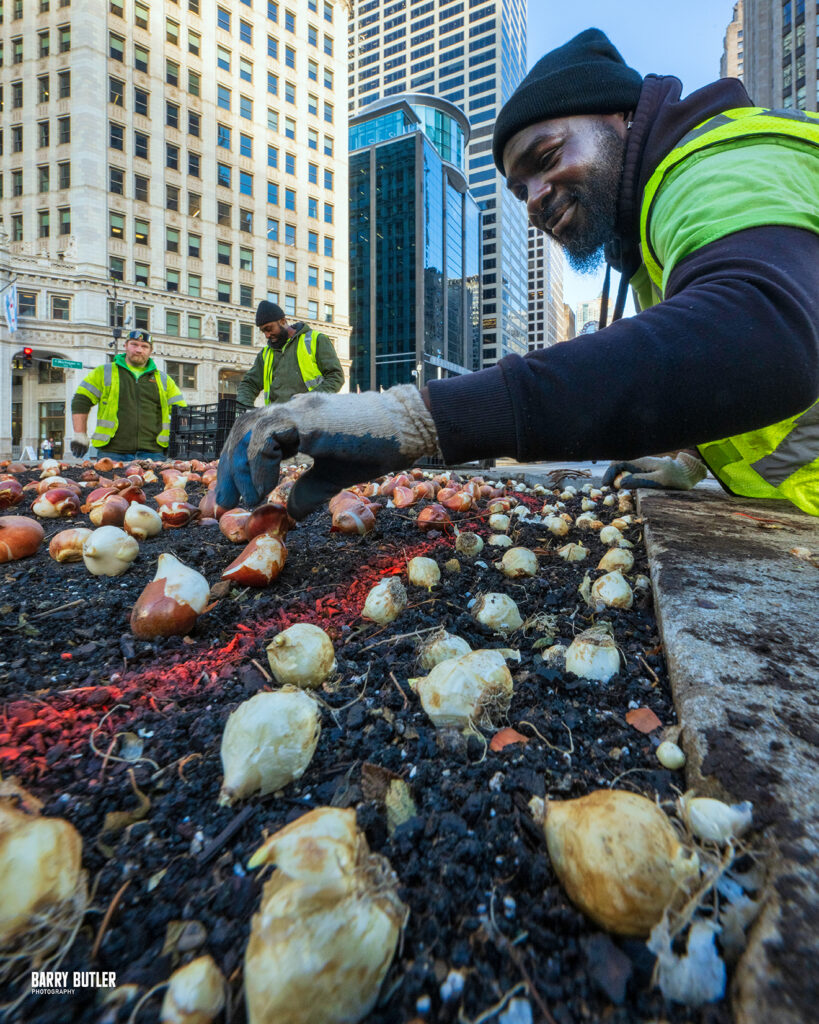
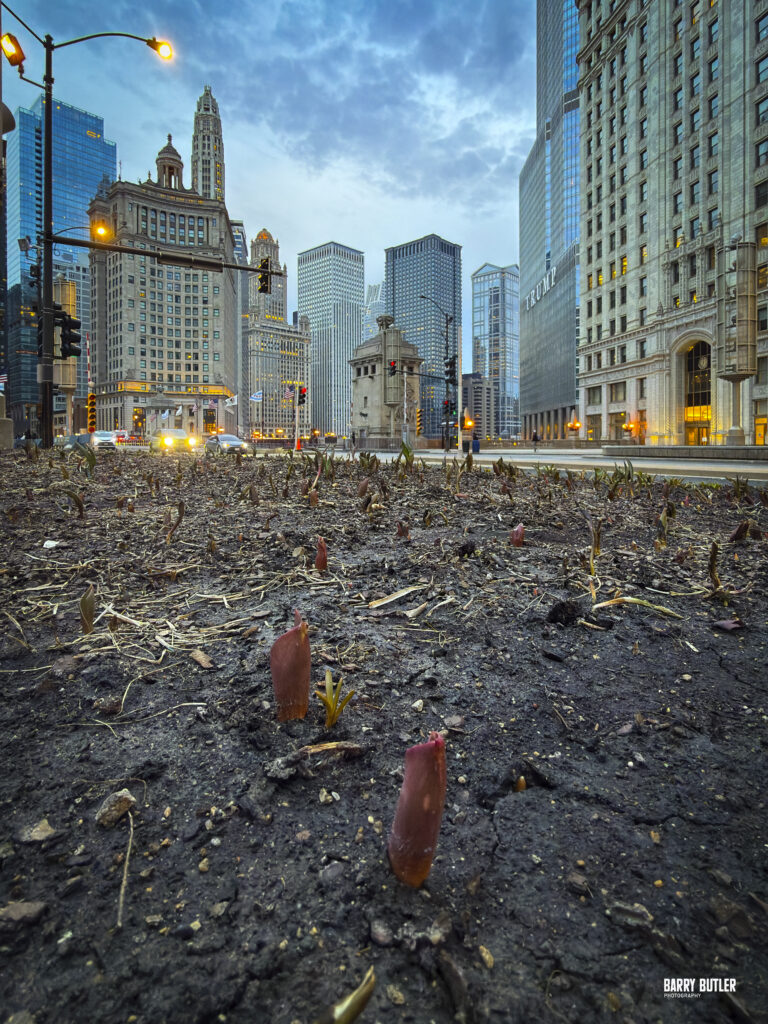
Butler has been photographing Chicago’s tulips for more than 15 years. This year, for the first time, he captured the entire process, beginning with the planting of the bulbs in November.
Providing Job Training with Chicago’s Tulips
Tulips became more than simply flowers to Butler when he found out what — or more specifically who — was behind them.
The tulips along Michigan Avenue are planted by people through a job training program offered by A Safe Haven Foundation, a two-time Make It Better Foundation Philanthropy Award-winning nonprofit that helps people in Chicago through a variety of services, including finding housing as well as addiction support and treatment. It also offers career paths; one is landscape training to trainees through paid on-the-job work experience. A Safe Haven Landscaping has worksites all over the city of Chicago and into Indiana.
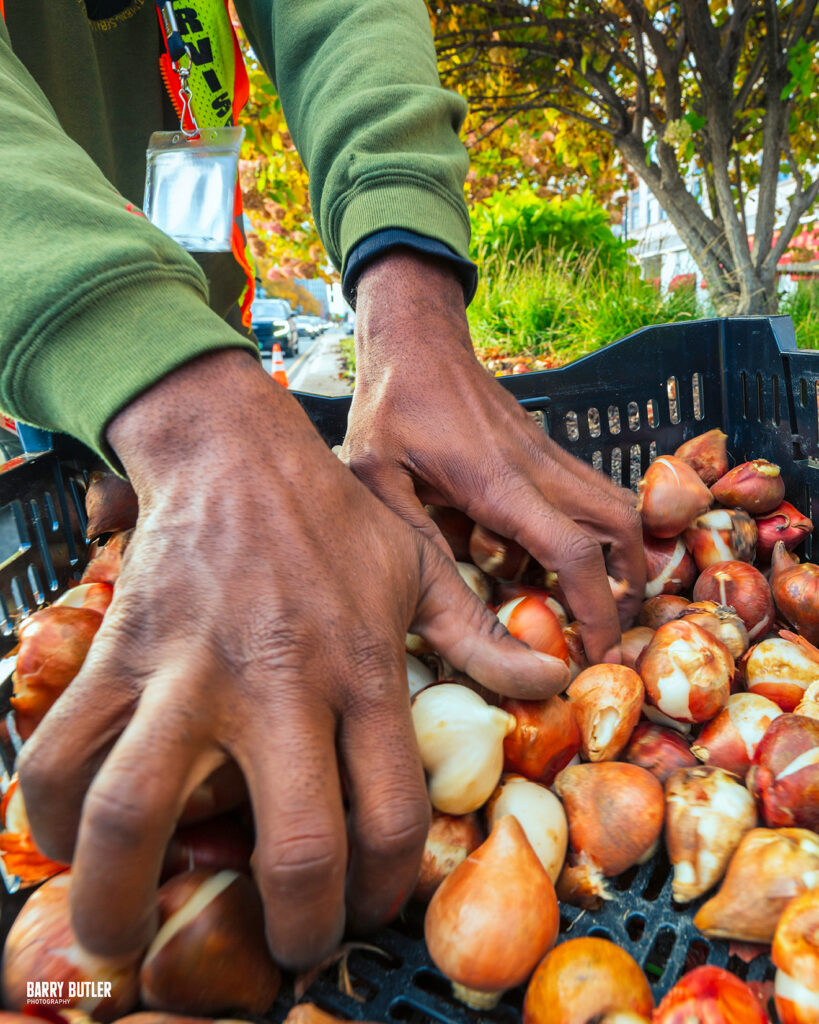
In 2025, 46 trainees participated, maintaining more than 300 land sites, and five trainees graduated from the two-year training program. President Mark Mulroe says the blooming project is a representation of how people can transform.
“It restores their hope. It restores their pride,” Mulroe says. “It restores their vision into imagining what they can be.”
Butler adds, “There are these people who are kind of trying to get their lives back on track, and they’re doing something great for the city at the same time.”

The People Behind the Tulips
When Colleen Casey sees the tulips bloom on Michigan Avenue, she will know she is part of their magic. “That’s what I loved about it the most, all of us together,” says Casey.
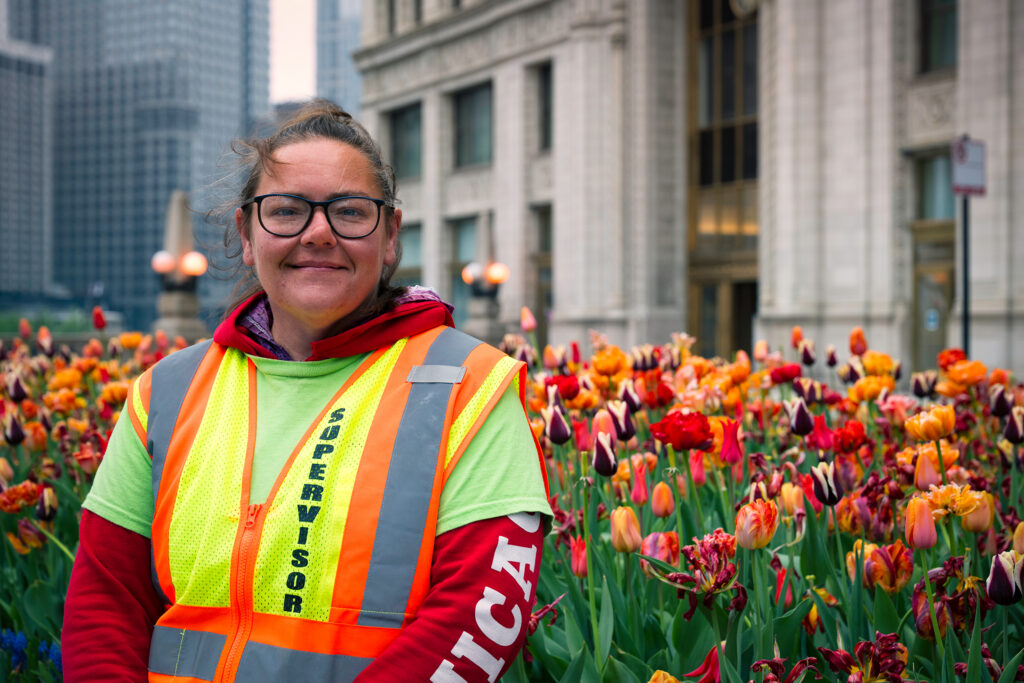
Casey is one of the people who planted more than 180,000 bulbs along Chicago’s most famous street in November. Most are tulips, but some are also muscari, known as grape hyacinths, says Heidi Petersen, a horticulturist at the Cook County Department of Transportation, which coordinates the flowers.
The bulbs are then carefully covered with sod to protect them from city creatures and road salt. The sod is removed in March for their unveiling, whenever they choose to bloom. “They are completely erratic. That’s exactly what’s fun about it,” Petersen says.

For the landscaping job program, participants go through a two-year training. Landscaping Trainee Development Manager Aidan Gabriel teaches trainees what they need to know about horticulture. They learn 30 different kinds of skills throughout two seasons, and how to work with different soils.
During the fall planting, challenges abound. Drivers whizz past, the weather remains unpredictable, and the work itself can be backbreaking, with people on their knees for hours digging through sometimes hard soil. The bulbs have to be facing a certain way, planted at certain depths.
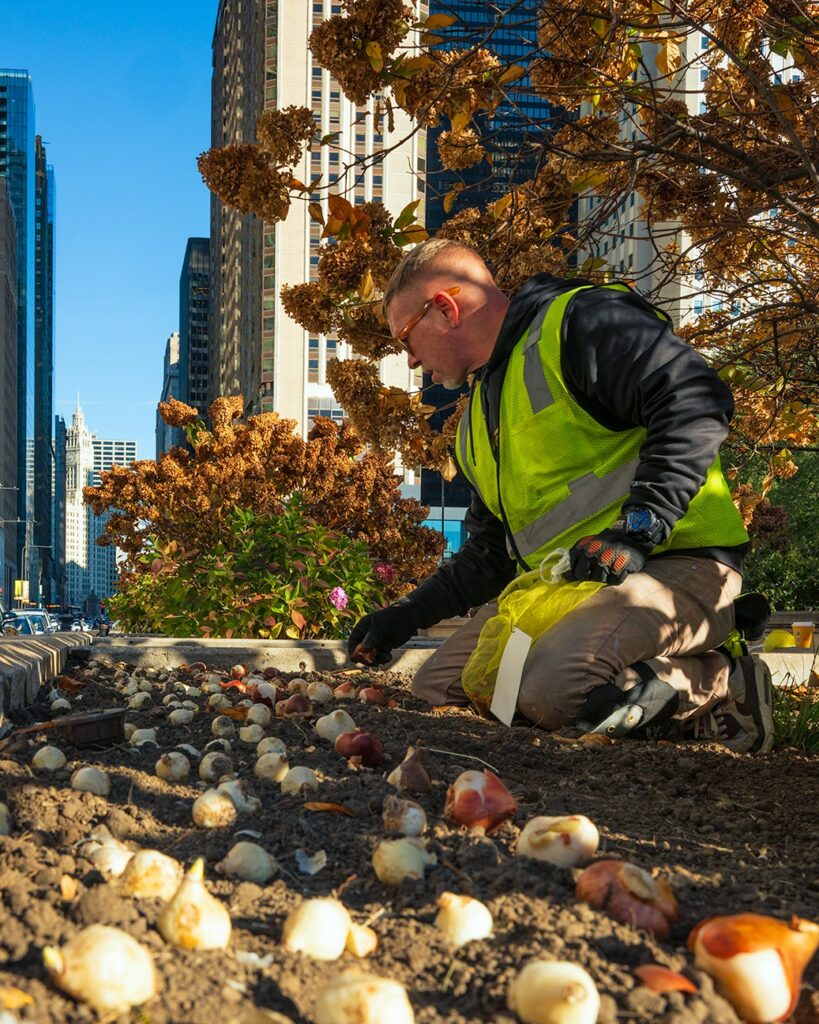
Safe Haven Landscape Director Kris Sokol has been doing this for decades. First, they set out how many they think they will use that day. “We plant so much it looks like a carpet,” Sokol says.
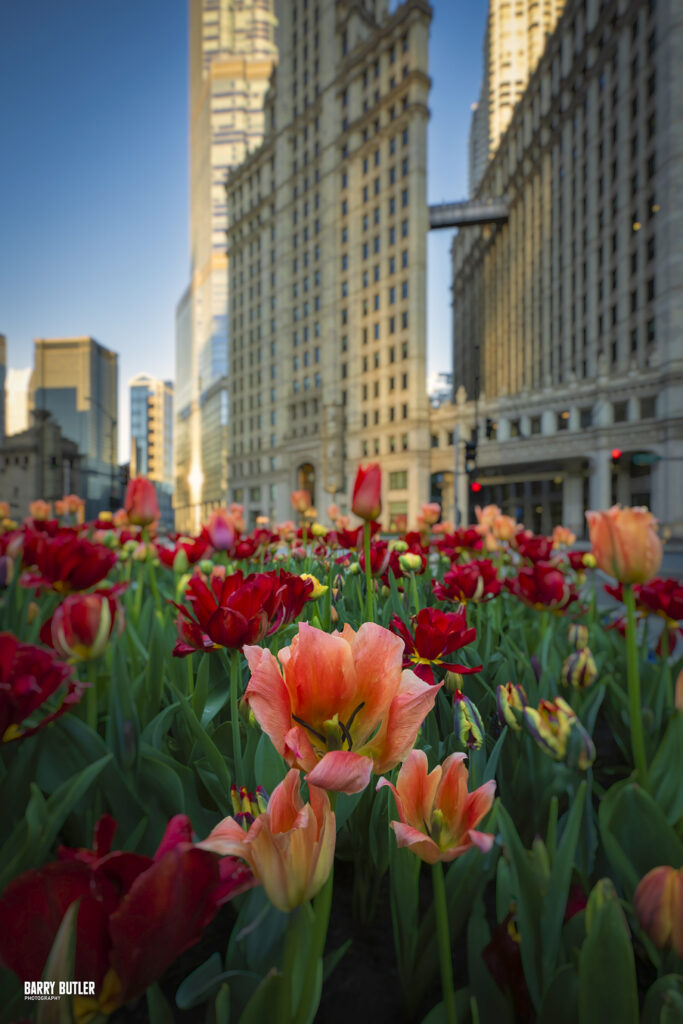
The tulips are one of the best-known visuals of Chicago; even people who have never been to the city recognize them, most likely thanks to Butler’s photos.
“I’m always trying to time it right while the flowers are perfectly in bloom,” Butler says.
More than Job Training
For one trainee, Gyland Howard, having a crew he enjoyed working with and a place to go every day helped him as he recovered from addiction. He had never been a gardener, he says, but through the Safe Haven program, he enjoyed taking care of the grass, greenery, and plants — what he calls his “kids.” It’s taken his mind off the addiction that used to fill it.
“I’m just thinking, ‘Let me take care of these kids,’” says Howard.
The Substance Abuse and Mental Health Services Administration notes that supported employment programs can help people facing serious mental illness, including people with substance use disorders. It can help them with ongoing support as well as finding self-sufficiency. According to SAMHSA, “Most people with [serious mental illness] want to work, yet they face significant barriers in finding and keeping jobs.”
After the tulips finish blooming, they are donated to the Chicago Community Gardeners Association to be distributed to residents in surrounding neighborhoods, for bouquets to brighten their homes.
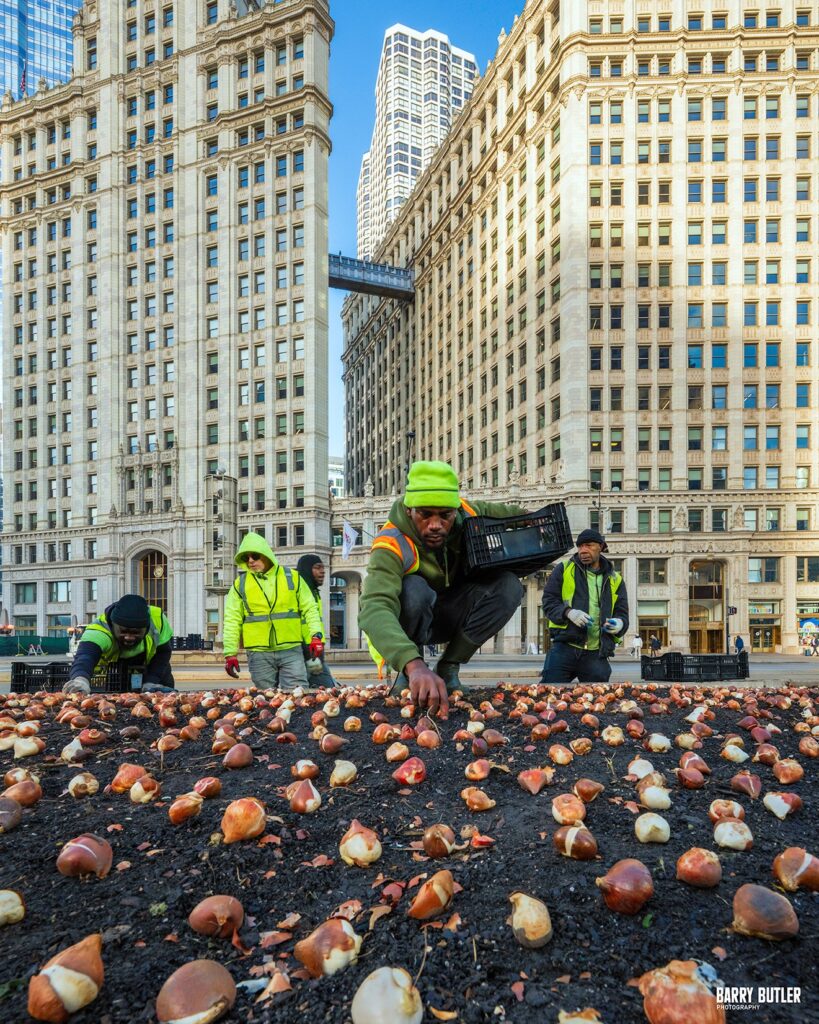
For Butler, one memory ranks in the top 10 of his moments as a photographer, he says. It was a morning when Safe Haven trainees were out there planting.
“People were in their cars, and they would just roll down their window, and they would yell, ‘Thank you!’” Butler recalls. “That’s the spirit, that’s really what this should be all about.” He adds, “Sometimes I think we forget that it doesn’t take much to turn your life around.”
How to Help
A Safe Haven Foundation is a two-time Make It Better Foundation Philanthropy Award winner. They restore hope and opportunities to individuals and communities throughout Chicagoland through a range of programs and resources, including housing, case management, behavioral health, employment, and education.


Alison Bowen is an award-winning journalist whose work has appeared in publications like The New York Times, CHICAGO magazine, Cosmopolitan magazine and the Chicago Tribune, where she was a staff reporter and editor for a decade. She is drawn to stories about maternal health, well-being, trauma and resilience.