
When Patti and Steve Winegar sat down with their planner in 2017 to sketch out their financial legacy, they had two priorities: long term tax strategy and “giving more intentional, larger gifts to our core charities.”
Patti was about to sell a company, so it was an important year to consider taxes carefully. And the Western Springs couple wanted to step up their support of two charities that had long been close to their hearts: Breakthrough T1D, the Type 1 diabetes charity formerly known as JDRF, and the Off the Street Club, a youth center for kids on Chicago’s West Side.
“My husband and I know it feels good to give—to feel like you’re making a difference in the lives of others,” Patti Winegar says.
Their financial advisor, Kathy Roeser, offered a solution that dovetailed both their priorities: a donor-advised fund.
DAFs allow taxpayers to set aside money now to donate to charities at any time in the future. The donor takes an immediate tax deduction, and the funds can grow tax free until the donor decides to make a gift.
The Winegars also considered — and quickly tabled — the option of starting a private foundation.
“We asked the question, and the quick answer was: Private foundations are way more complex and more expensive to maintain,” says Patti Winegar.
“Unless they’re thinking millions of dollars, I have people consider donor-advised funds,” explains Roeser, who works with the Wealth Management Division of Morgan Stanley in Chicago. “Donor-advised funds are really the most flexible and cost effective charitable giving vehicle available.”
You should carefully consider the related tax and legal implications, and discuss the matter with your own independent legal and tax advisors, Roeser said.

Donor-Advised Funds Surge in Popularity
In recent years, more investors have been opening DAFs, as they look to navigate changing tax laws and rebalance their portfolios after years of substantial market gains. Many taxpayers fund their DAF with appreciated stocks — allowing them to avoid paying capital gains tax.
Robert Cucchiaro, who works with high net worth clients as president of Eagle, Idaho’s Summit Wealth & Retirement Partners, explains it this way: A client has $100,000 in appreciated stock, and they want to use it to help their favorite charity. If they sell the stock as a short-term capital gain, after taxes they end up with $70,000 or less to donate.
“Or, they transfer $100,000 worth of stock to their donor-advised fund (where it can be sold tax-free). Now, they have 100 grand that they can donate to their favorite charity — and they get a $100,000 tax deduction,” Cucchiaro says.
Cucchiaro set up his own DAF about five years ago, to benefit, among other charities, Miraclefeet, an organization that performs life-changing surgeries on children born with clubfoot.
“I had a single stock that had done really well, and that was going to be the easiest way to trim the stock and take advantage of the tax code at the same time,” Cucchiaro says.
Changing tax laws encourage “batching”
The Wall Street Journal recently reported that tax law changes are one factor pushing the adoption of DAFs. The standard deduction for 2026 will be $32,200 for married couples, which means that fewer people than ever will be itemizing deductions. Those who do itemize will now only be able to deduct charitable donations that exceed 0.5% of their adjusted gross income.
DAFs can get around those limits by allowing taxpayers to “batch” multiple years’ worth of giving into one deposit — and one tax deduction.
Roeser raises the example of a client who plans to give $10,000 per year. Instead of taking a smaller deduction each year, “they’ll put $50,000 in a donor-advised fund, get the tax deduction in this one year, then give $10,000 each in years one, two, three, four and five.”
Ease of use
Another factor drawing more people to DAFs: They make giving easy. Account holders can generally move money from the DAF to the charity with a few clicks. They don’t have to keep records of checks written for tax time, since the tax deduction has already been taken. And if they do want to keep track of what they’ve given, they can check the DAF account records.
Cucchiaro, who custodies client assets with Charles Schwab, explains: “You can start a Schwab donor-advised fund today on their website in 15 minutes. It’s one e-signature to move the stock from your Schwab account to your donor-advised fund. And then using the drop-down menu, you could select your church and your kids’ school, for example. You make the donations, and the money’s wired to the charity’s bank account. It’s just so easy.”
Private Foundations Are Also an Option
When contemplating larger philanthropic commitments, givers may consider whether to take the next step and start a private foundation. The big advantage there is flexibility: DAFs can only be used to make gifts to 501(c)(3) charities, but foundations can fund individual scholarships or make other grants that aren’t going directly to charities. The downside is that establishing and operating a private foundation costs a lot more in both time and money, compared to a donor-advised fund.
“(A) private foundation has more administrative responsibilities than a donor-advised fund. A private foundation maintains its own set of bylaws and is managed by its own trustees or directors,” writes J.P. Morgan Wealth Management in a piece titled “Donor-advised funds vs. private foundations: How to choose your giving strategy.”
Depending on the size and complexity, a private foundation may have a dedicated staff, or its creator may pay a company or their CPA and attorney to set it up and maintain it. A donor-advised fund, on the other hand, is run by a sponsor, such as a management company like Schwab, Morgan Stanley, Vanguard or J.P. Morgan — or by a charitable trust — for a small annual fee.
For instance, the Chicago Community Trust is a DAF sponsor, and has been growing the program every year since starting it in 1985. While some donors use their DAF funds to support the Chicago Community Trust’s programs, they are free to use the funds to donate to any charity, just as they would be if they started the fund through Schwab or Vanguard, explains Sheila Cawley, CCT chief philanthropy officer.
No matter how donors elect to use their funds, starting a fund through a community trust helps that organization.
“When you have a DAF at the Chicago Community Trust, the fees you pay are supporting our underlying mission,” Cawley says.
Making Giving a Family Affair
One thing that private foundations and donor-advised funds have in common: Both make it possible for families to participate in philanthropy across generations.
It’s a common misconception that you have to have a private foundation in order to get multiple generations involved in giving, says Kate McAdams, Executive Director at J.P. Morgan Private Bank. As a dedicated philanthropy advisor offering clients tailored advice to meet their philanthropic goals, she often works with multi-generational families that collaborate on gifting decisions from a single donor-advised fund.
“I help families mimic the governance of a private foundation: establish the family board, mission, decision-making framework and cadence of meetings. And then the DAF is the mechanism through which the family executes their collaborative giving,” McAdams says.
Families may even choose to create individual DAFs for younger family members, “to encourage their own passion for giving,” McAdams says.
Cucchiaro’s family is one that makes DAF giving a family affair, as part of their annual Christmas celebration.
“We let each of our three kids pick a charity, and then we give $1,000 to each of those,” he says.
While one generation might start a family foundation with the goal of continuing philanthropy across generations, the next generation may not want the responsibility of running the organization. In such cases, converting the foundation to a DAF is sometimes the answer. CCT sometimes helps donors in that situation.
“A family might want to continue to be philanthropic, continue to make grants, but they don’t necessarily want the administration any more of a private foundation. That’s a good time to talk to a DAF provider,” Cawley says.
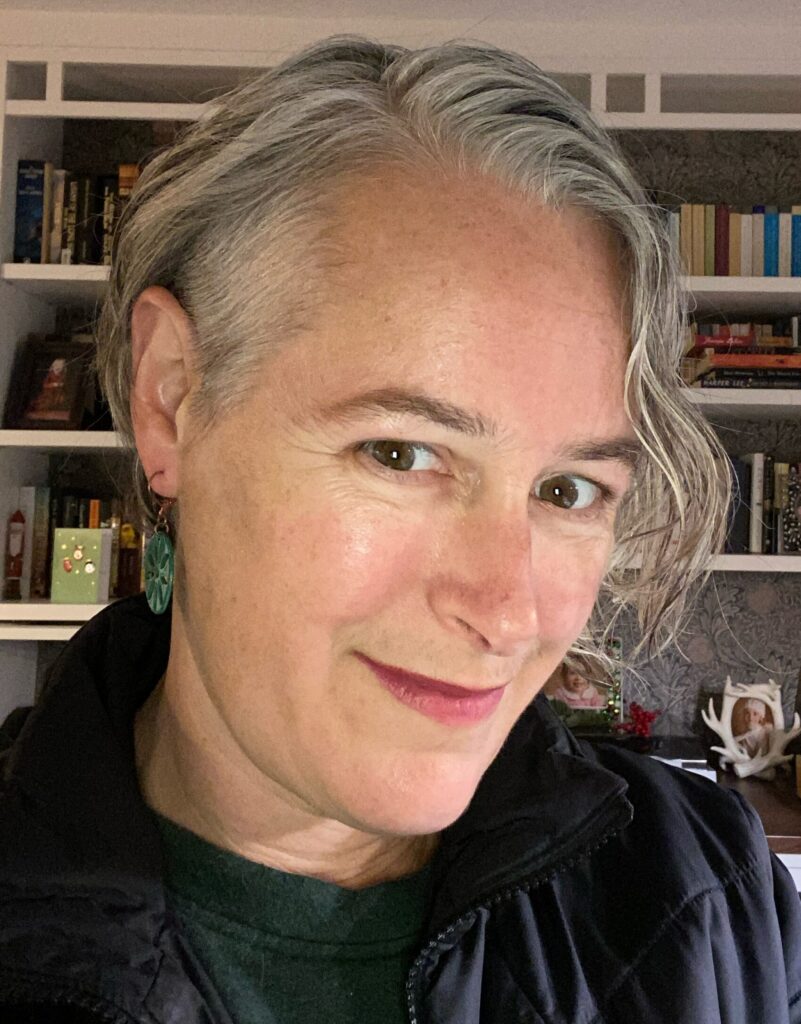
Carrie Kirby writes about travel, technology and personal finance. On her travel blog, Miles on a Dime, she helps people learn how to travel using miles and points, home exchanging and other money-saving techniques. Her work on personal finance, business and technology has appeared in San Francisco Magazine, The San Francisco Chronicle, Wise Bread and more publications.