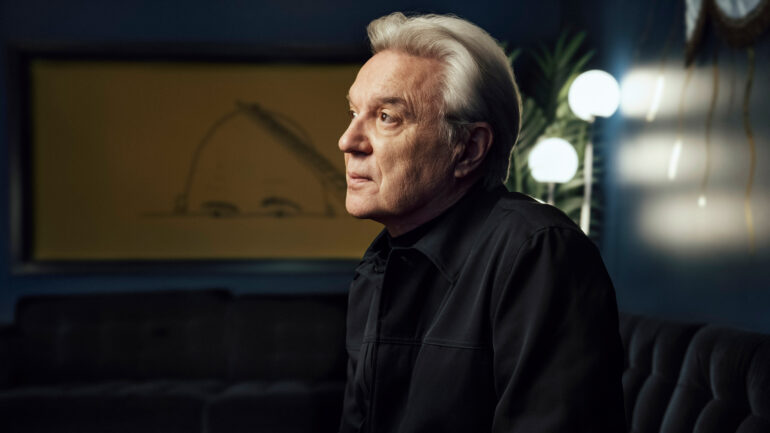
For more than 50 years, curiosity has shaped the career of David Byrne — the Talking Heads frontman and an Academy, Grammy, and Tony Award–winning artist who has long used his art to explore how we perceive and make sense of the world. Across stages and mediums — from Coachella to Broadway to immersive theater — he continues to return to those questions in new forms.
That drive surfaces in the looping, existential lyrics of “Once in a Lifetime” and the searching intimacy of “This Must Be the Place (Naive Melody),” two defining Talking Heads songs, and carried all the way through his latest solo album, Who Is the Sky?, and its widely acclaimed supporting tour.
In Theater of the Mind, his immersive production co-created with Mala Gaonkar and directed by Andrew Scoville, he channels that curiosity into an experience blending neuroscience, storytelling, and live performance to explore perception, memory, and how easily we can be fooled by our own minds. The production recently made its Chicago debut with Goodman Theatre.
“I’m kind of fascinated by how we construct reality,” Byrne told me during his visit to Chicago for opening night. “How much of it is actually out there, and how much of it is what we bring to it?”
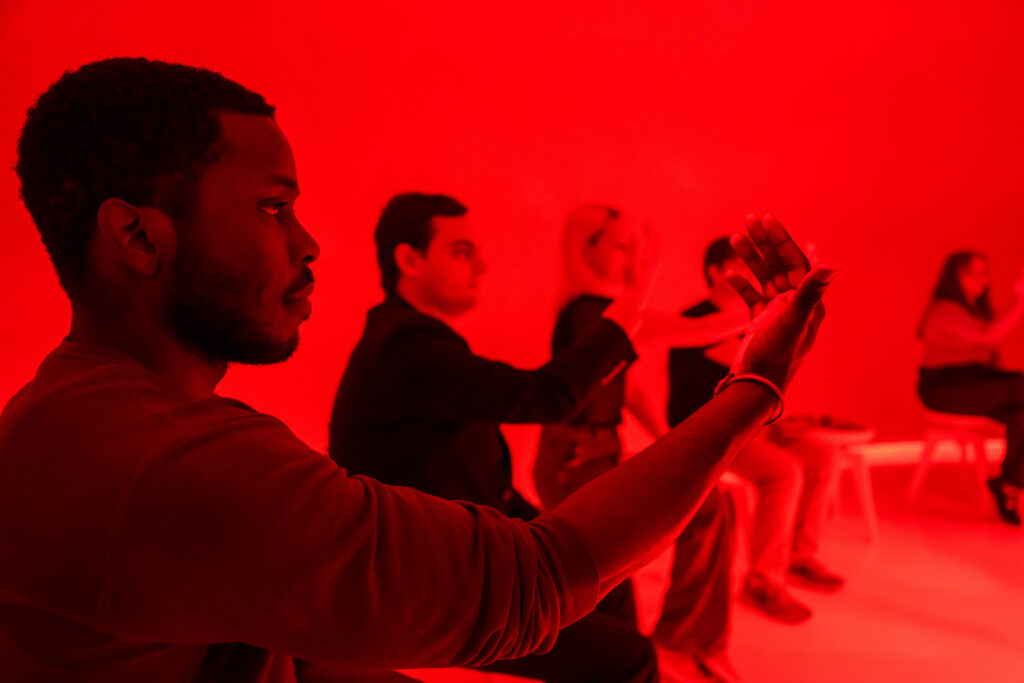
The question sits at the center of the 75-minute production, housed in a dedicated 15,000-square-foot space a few blocks from Goodman’s traditional stages. Groups of 16 are guided through a series of surreal environments, each built around a sensory experiment grounded in neuroscience and connected by a narrative thread. Each audience member is assigned a “role” (no acting required) and given a small piece of unique information, subtly influencing what they notice and how they interpret what unfolds.
Byrne was clear that the goal was not to explain or teach the science in any traditional sense, but to create something that feels lived.
“I hope it comes across as they’re experiencing things,” Byrne said. “It’s one thing to be told something or to read about it in a book. But when something happens to you, when you feel it, it becomes different. It becomes yours in a way.”
For Byrne, this art-and-science mashup is a natural extension of a career that has never stayed in one lane. He has spent decades moving across music, film, books, visual art, and stage, collaborating with artists from Brian Eno and Fatboy Slim to St. Vincent, Hayley Williams, and Olivia Rodrigo.
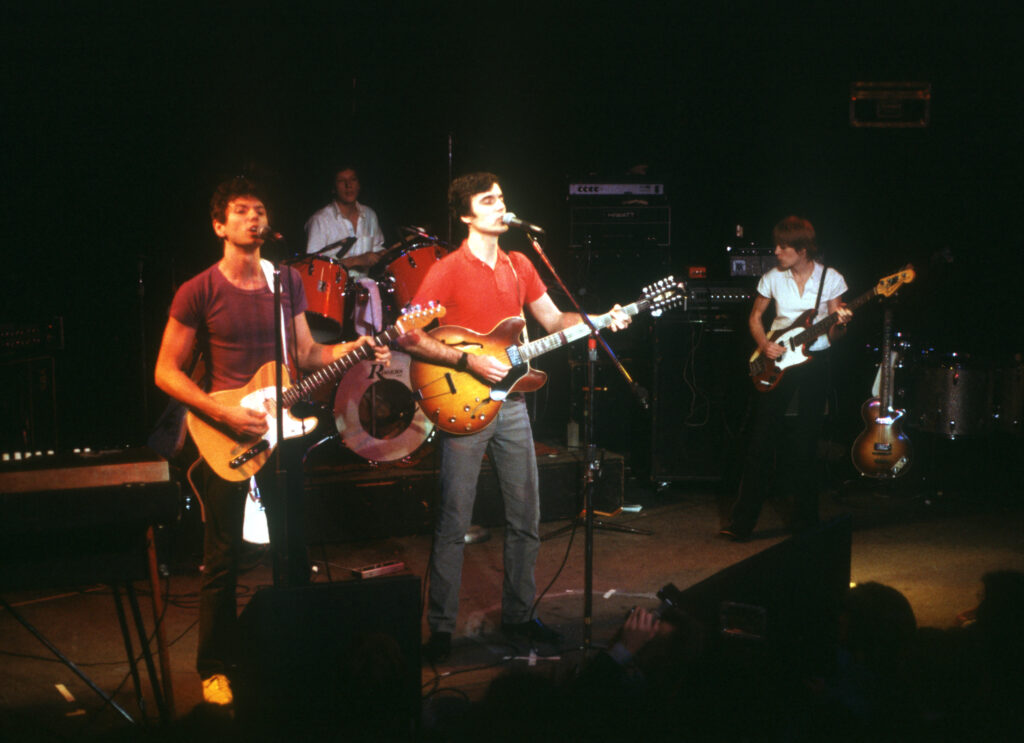
Even early on, as Talking Heads emerged from the New York punk scene alongside CBGB regulars including the Ramones, Blondie, and Patti Smith, Byrne and his bandmates resisted the prevailing aesthetic, trading leather and safety pins for collared shirts and slacks.
Theater of the Mind echoes that same resistance to convention, breaking from Goodman’s traditional stage format by inviting audiences into its environments as active participants. For those wary of immersive theater, the show maintains enough structure to ensure each effect lands as intended — without putting audience members on the spot or asking them to improvise.
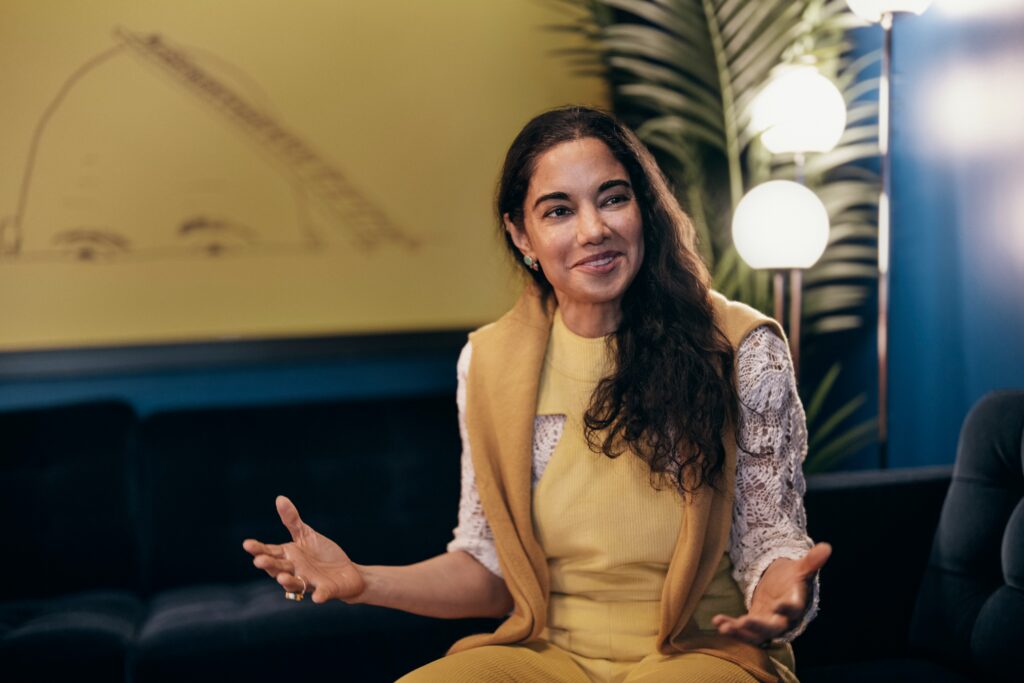
The immersive format for Theater of the Mind grew out of Byrne’s ongoing conversations with Mala Gaonkar, an investor and philanthropist working at the intersection of finance, data science, and human behavior. In 2023 she launched SurgoCap Partners, the largest-ever woman-led debut of a hedge fund, growing it to roughly $6 billion in assets in just three years. She also co-founded the Surgo Foundation and Surgo Ventures, which apply behavioral science, data science, and AI to global public health challenges.
Their earlier collaboration, Neurosociety, translated cognitive science into interactive environments. Theater of the Mind builds on that work by weaving the series of experiments into a single narrative, shifting the role of the audience from observers to participants.
“It’s about the story,” Gaonkar said. “As a creator, you’re not thinking about giving people a lecture on biases. You’re not thinking about anything didactic. You’re thinking about compelling people, bringing people into your experience as a human being.”
From the opening scene, that philosophy is immediately apparent, as a single performer guides the group through a sequence that follows a life in reverse — a framework Byrne said only crystallized during rehearsals.
“We had done it as a series of separate rooms with a different actor in every room,” he said. “And then one of the actors said, ‘I think I could do every room. Do you want to see what that’s like?’ And she did it, and immediately I said, ‘That’s it. I get it. It’s one person’s life.’”
That person — your guide throughout the experience — is called David. And while there are cues that point to Byrne, the actors rarely physically resemble him.
“We wanted to take advantage of the fact that David is well known… and point out that there are many Davids,” Gaonkar said when I asked her how audiences should think of David the guide in contrast to David the music legend.
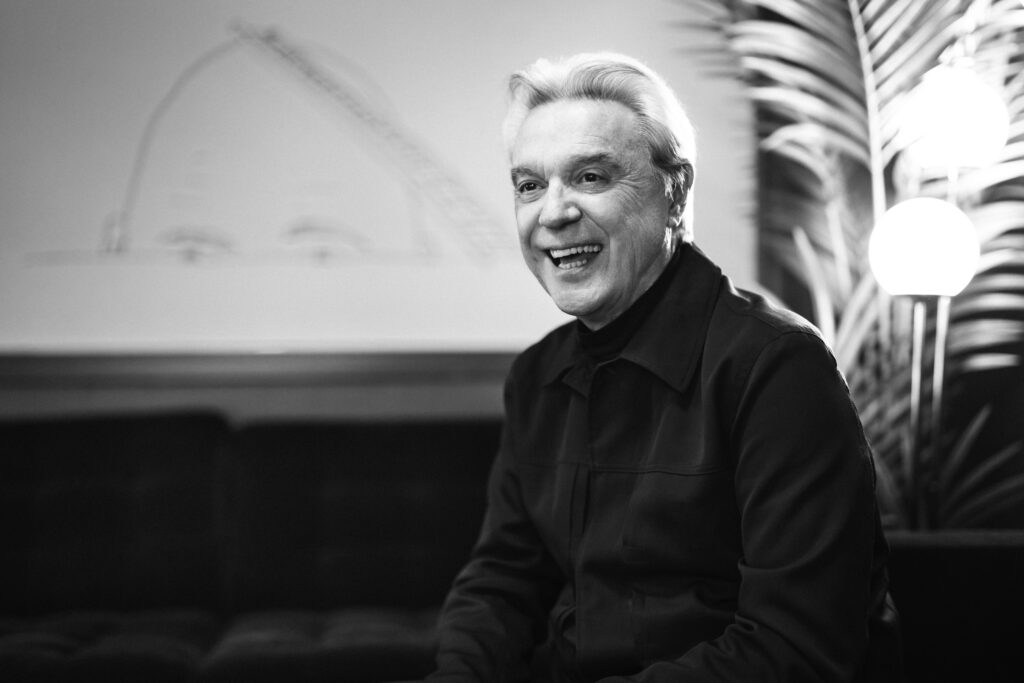
“David can be a white man, but he might also be played by a black woman, for example… people of different ethnicities and different genders. That idea was really compelling and fun and interesting for us to play with.”
Byrne said he was conflicted but ultimately embraced the idea of lending at least some of himself to the character.
“I wasn’t sure how I felt about the character being named David and having little elements of my life in it,” Byrne said. “But I also thought, why not? A lot of the stuff is not exactly biographical or autobiographical.”
Goodman makes clear from the outset that this is not a David Byrne performance. There are, however, unmistakable moments — from biographical elements to the sound of his voice — where his connection is clear. Beyond those, it becomes harder to tell what’s intentional and what you’re bringing to it. As a longtime Byrne fan, I found myself convinced at several points that I was picking up deliberate references to his music.
Later, I began to wonder whether they were there at all, or whether I’d arrived primed to find them. With a 50-year catalog to draw from, it’s easy to find a Byrne lyric that mirrors almost any moment. When I put that idea to him, he left the door open.
“Yeah, maybe you can find them anywhere,” Byrne said. “If you just live your life with curiosity.”
That ambiguity snapped into focus when he later revealed that a scene I had confidently tied to one of my favorite Talking Heads songs was actually inspired by a childhood memory of Gaonkar’s. In that moment, I became a textbook example of one of the show’s central ideas, captured in Gaonkar’s words:
“We’re really learning and emotional machines. What we see is not necessarily every pixel… what we see is what’s important and unexpected to us.”
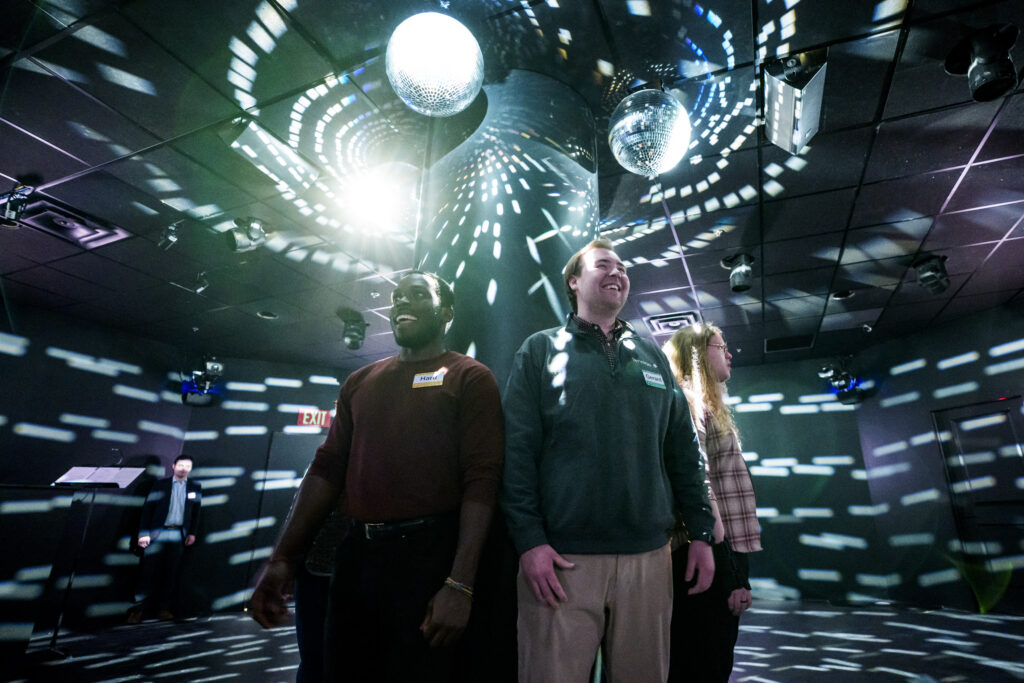
The impact of the experience unfolds through a series of realizations like this — less about what happens than what doesn’t. Each sequence hinges on the gap between expectation and perception, using small, controlled disruptions to reveal how quickly both can be thrown off.
It’s a dynamic Byrne returns to again and again — upsetting the familiar enough to catch you off-guard, then snapping you back into focus. Here, that shift comes not from what’s presented, but from how quickly your expectations fall apart.
The performance never resolves the ambiguity. Instead, it leaves you with a takeaway that’s both refreshing and unsettling: we often see things as we want them to be, not as they are; we don’t remember things exactly as they happened; and who we are isn’t as fixed as it seems.
“We’re not stuck in who we are, in our identities and how we see the world. All those things can change and evolve,” said Byrne, himself an example as he continues to command huge stages like Coachella and reach new audiences in the process.
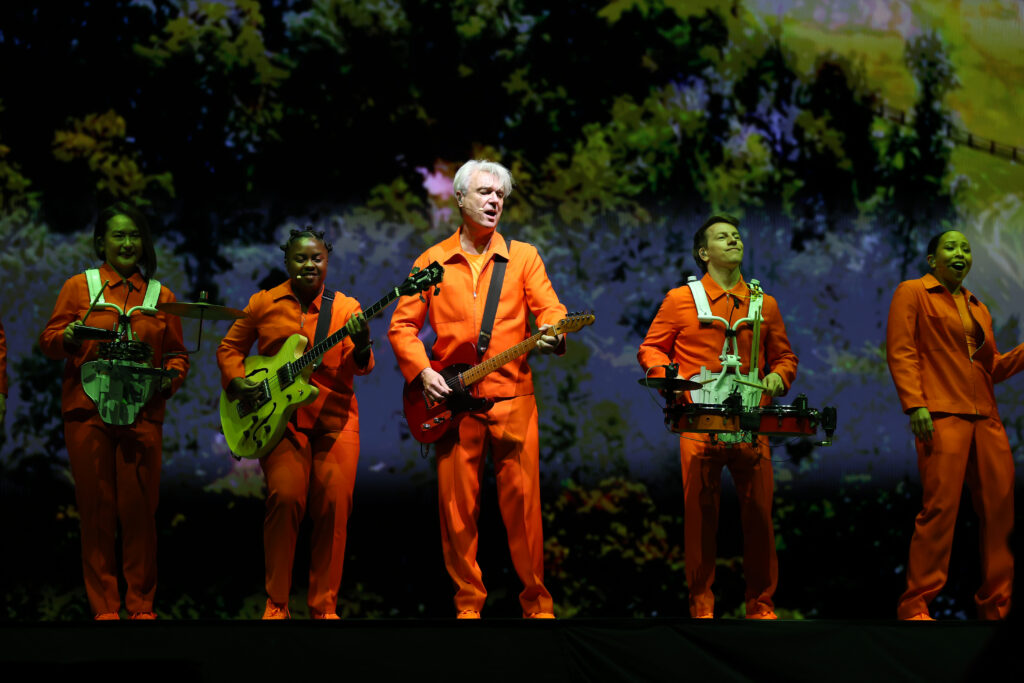
While the overall tone is upbeat, the production also acknowledges that in an age of social media algorithms and reality-distorting AI, our malleability can leave us more susceptible to desensitization, manipulation, or worse.
“We can’t paint too rosy a picture,” Byrne said. “We have to allow for optimistic possibilities, but things don’t inevitably go that way. It’s a choice we make, and it can go to a very dark place too.”
How do we avoid that dark place? Connection, it would seem, is the start. Byrne and Gaonkar both emphasized the shared, in-person experience as pivotal to the production’s impact.
“It’s getting off your phone, off your device, and actually… experiencing,” said Byrne, who also launched Reasons to Be Cheerful, an online platform focused on solutions-driven storytelling.
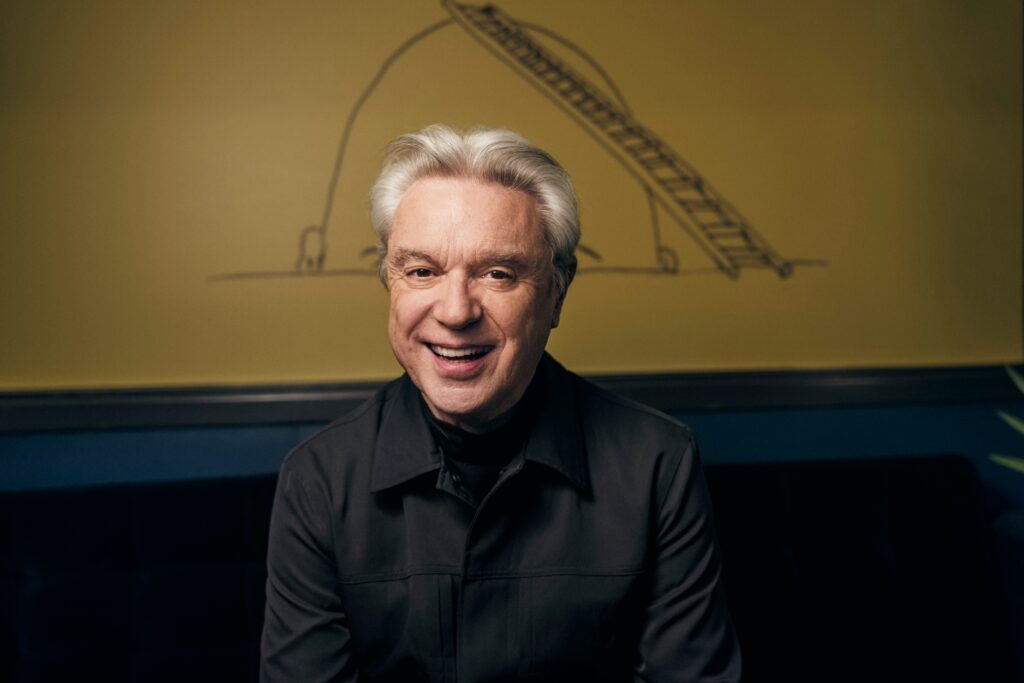
“In a world where I think people are very hungry to commune together and form communities together, the joy and the collaboration of audiences coming together with our creative work has been incredibly moving,” Gaonkar said.
Theater of the Mind doesn’t resolve the questions it raises. It leaves you with them — and with a suspicion that your interpretation of the experience won’t match anyone else’s exactly.
Byrne and Gaonkar hope audiences leave inspired to take a simple next step on their way out: turn to a fellow audience member and compare notes — a small act of connection with the power to unlock a whole new perspective.
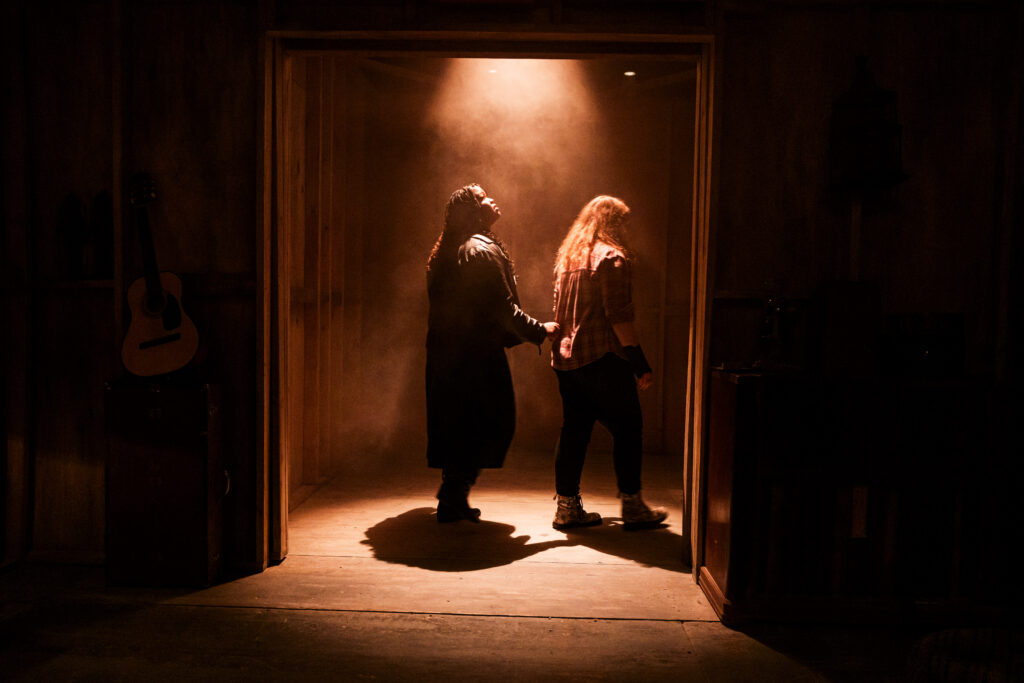
Theater of the Mind runs through July 12, 2026, at the Reid Murdoch Building (333 N. LaSalle). Tickets ($69–$99, subject to change) are available at TheaterOfTheMindChicago.com or through the Goodman Theatre Box Office. Recommended for ages 10+.
How to Help
Support Goodman Theatre, which brought Theater of the Mind to Chicago, by purchasing tickets or making a donation. You can also explore Byrne’s broader philanthropic work through the Arbutus Foundation, which supports projects including Theater of the Mind and Reasons to Be Cheerful.
Brooke McDonald is the editor in chief of Better Magazine. She regularly reports on entertainment, theme parks, and travel and her work has appeared in Insider, The Points Guy, Parents, TravelPulse, Scripps News, and more. Her favorite nonprofits to support include World Central Kitchen, the ACLU, and the and the Vitalogy Foundation. Find her on Instagram @brookegmcdonald, Threads @brookegmcdonald, Bluesky, and X @BrookeGMcDonald.