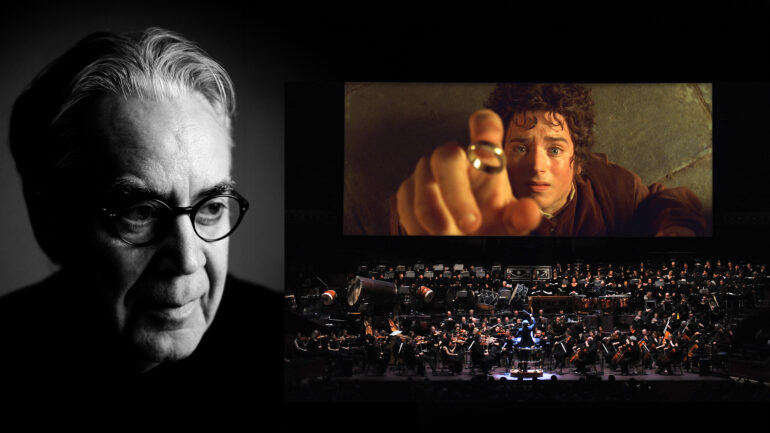
Few composers have shaped the sound of modern cinema as profoundly as Howard Shore. Across more than 90 genre-spanning film scores — from The Silence of the Lambs, Philadelphia, and The Aviator, to lighter favorites like Big and Mrs. Doubtfire — the Canadian composer has built a career defined by musical storytelling.
But it is his score for Peter Jackson’s The Lord of the Rings trilogy that remains his most influential work — recently named the number-one film score of the past 100 years by Collider. Weaving together orchestral themes, invented languages, and musical motifs tied to characters and places, Shore’s score helped bring J.R.R. Tolkien’s Middle-earth to life and earned him three Academy Awards.
Now, in celebration of the 25th anniversary of first film in the trilogy, The Lord of the Rings: The Fellowship of the Ring – In Concert is coming to the stage of Chicago’s Auditorium Theatre. On March 13 and 14, Shore’s score will be performed live by 238 musicians — including full orchestra, chorus, and soloists — beneath a 60-foot screen as the film plays.
Ahead of the Chicago performances, I asked Shore about the musical path that led him to The Lord of the Rings, the craft of writing for film, and the secrets to so many successful collaborations.
Q: Your career moved through rock music, television, and live performance before film composing. Was there a pivotal moment that led you toward writing for film?
A: I grew up in Toronto and they had an excellent library with a section on music. I would check out the scores and recordings all the time. I discovered all the great names and classics there. But beyond the classics they had a lot of music from films. That is where I first discovered the great Japanese composer Toru Takemitsu’s music, not only in the classical section — but also his work in film. So I was listening to his music, mostly the electronic music. He released a whole series of recordings which I still have, like “Green.” I collected those on tape that I listened to endlessly; but I also listened to Cage, Stockhausen, Hindemith, Mingus, and Coleman.
I was interested in music technology and how the technology was used in the recording studio. It was one of the main reasons I became interested in film. It was an opportunity to experiment with different recording techniques and work with great musicians.
Q: Who were your biggest musical influences early in your career?
Charles Mingus, Charles Lloyd, Nina Rota, and Toru Takemitsu.
Q: Some people may not realize you were part of the original creative team behind Saturday Night Live as its first music director. Do you have a favorite memory from those early years — particularly, for our Chicago readers, around the creation of The Blues Brothers, who in their earliest incarnation debuted as “Howard Shore and His All-Bee Band.”
A: I used to introduce John and Danny in the warm-up to the show as “Those brothers in Blues, The Blues Brothers.”
Q: Your scores range from intimate films like Philadelphia to epic storytelling in The Lord of the Rings. Does your creative process change depending on the scale of a film?
A: Music is an emotional language. You have to write from your heart. I always start with the words when I’m working on a film and go back to the original novel, if there is one, or read the screenplay. I like working with the words first, to read and dream. Then I essentially write thematic ideas that I know I can base the score on. Later I will start to work those pieces into the film, to figure out where they fit. I know they belong somewhere, I just don’t know where they go quite yet. I never like to sit in front of a scene and try to work it out head on, I like to go in on the angle.
Q: You’ve had long-running creative partnerships with directors like David Cronenberg, Martin Scorsese, and Peter Jackson. What makes those collaborations work so well?
A: Choosing interesting projects and having good collaborators is the key to success. Effective collaboration occurs when all aspects of the film are evenly balanced: direction, acting, screenwriting, production design, costume, cinematography, editing, music, sound editing, etc. These are the kind of projects I’ve been drawn to, and having great collaborators, like these you’ve mentioned, make for very interesting results.
Q: When you composed the music for The Lord of the Rings, where were you in your career, and what did that project represent for you creatively?
A: When I wrote The Lord of the Rings, I was in my mid-50s and I had over 25 years of experience writing films scores at that time. It was all building to this point where I could compose, orchestrate, and conduct the scores, as well as edit and produce them at this level.
I’m very happy that my work has been acknowledged and enjoyed by so many for so long a period.
Q: Your score for The Lord of the Rings uses recurring musical themes to represent characters, places, and ideas. How did you approach developing those motifs?
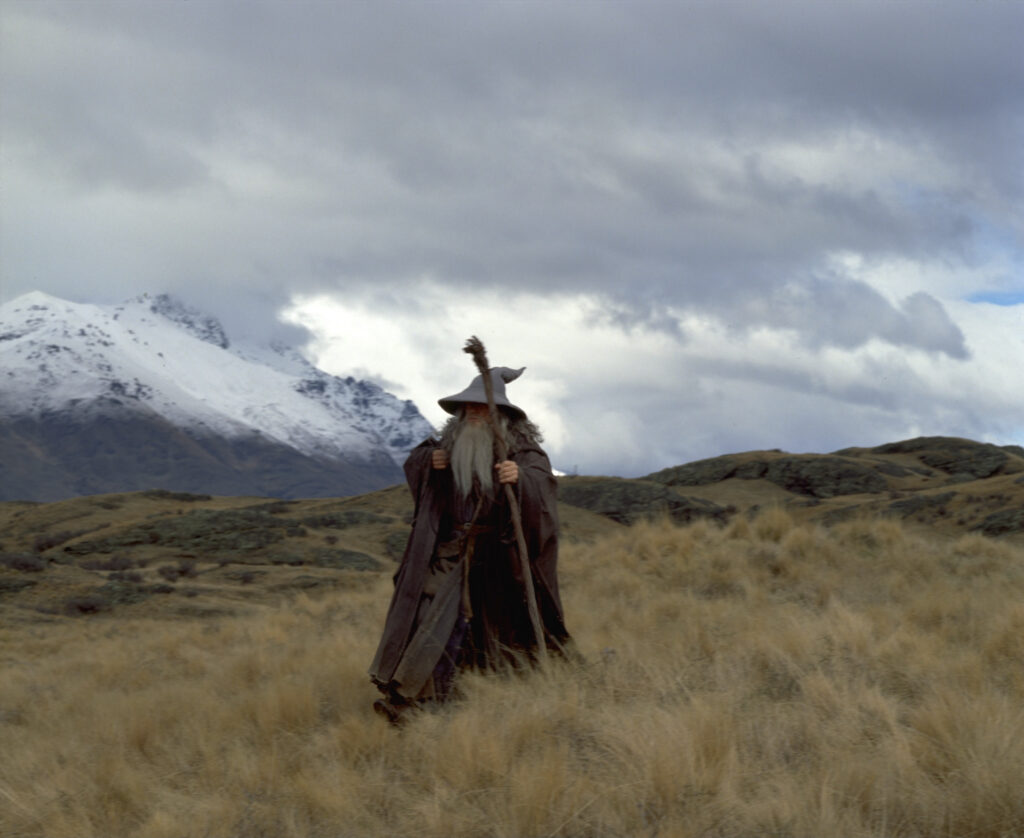
A: There are many ways to approach a scene. Film music is principally point of view and subtext. In the spotting session, this meeting between the composer and the director about the use of music in the film, one asks what’s really required, what is necessary. Every film is different and you have to ask yourself how will this film be best served by the music? On The Lord of the Rings, we quickly learned that we needed the music to help clarify the storytelling in this complex fantasy world that Professor Tolkien had created. The leitmotifs allowed the listener to immediately know where we were in the story.
Q: What advice would you give aspiring composers and musicians today?
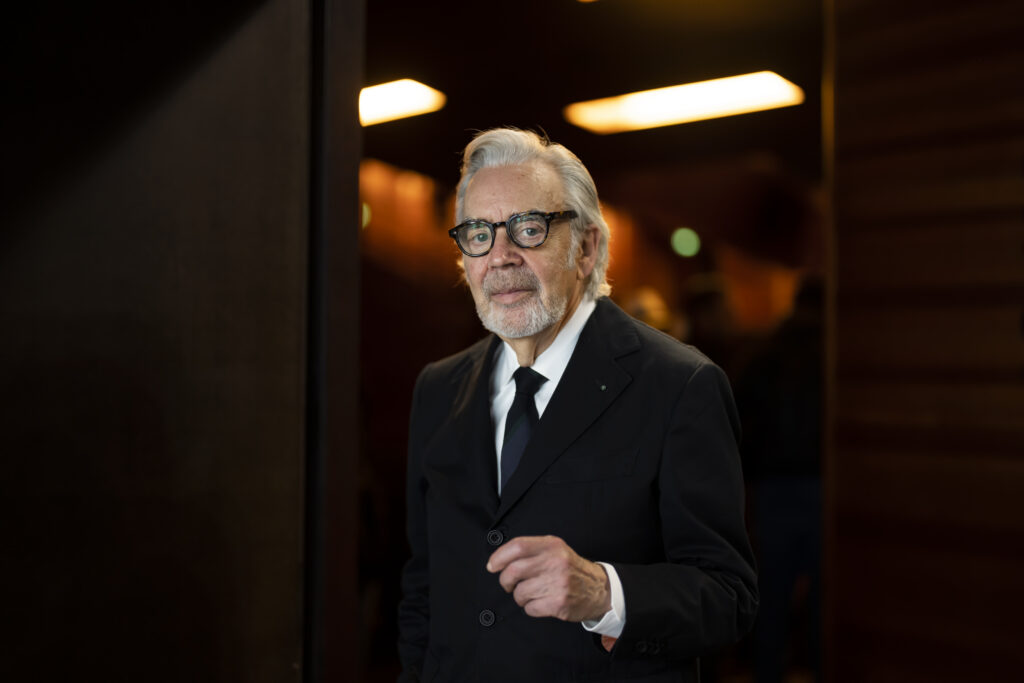
A: You need to grow. It’s a very important part of working with the same director over different films. I’ve worked with David Cronenberg for over 45 years, we’ve made 17 films. Each one grew into the next. We tried many different ways of using music in film, with many different techniques. David was very adventurous and allowed me a lot of creative freedom. It was joyful to work with him.
My interest in film was in the music and how I could express ideas using live musicians, live recording, but also working with electronics and working with a recording studio as an instrument itself. It’s important to allow the creative energy to flow, and to keep creating new works. Not looking back, but always forward.
Q: Are there music education programs or organizations you’ve been especially proud to support?
A: Berklee City Music Boston at Berklee College of Music.
Q: After decades of composing, what excites you creatively today?
A: I am very happy when I am working with a great orchestra. And most recently, I’ve been working with the renowned organist Anna Lapwood. She has created a new piece: “The Lord of the Rings Organ Symphony,” transcribing the original scores for the organ. Anna will be premiering the work on May 1 in Atlantic City, performing on the world’s largest pipe organ at the Jim Whelan Boardwalk Hall.
Attend The Lord of the Rings: The Fellowship of the Ring – In Concert
Experience Howard Shore’s Academy Award–winning score performed live by a full orchestra, chorus, and soloists at Chicago’s Auditorium Theatre March 13 and 14.
Learn more and purchase tickets to this and a wide range of other upcoming performances, including Raiders of the Lost Ark in Concert with Chicago Philharmonic, a 2026 Make It Better Foundation Philanthropy Award winner, Alvin Ailey American Dance Theater, Lily Allen, Tori Amos, John Cusack, and more: auditoriumtheatre.org.
How to Help
Support the Auditorium Theatre by making a gift to its Annual Fund, which helps sustain performances and daily operations at the historic Chicago venue. Donors can also contribute to the Restoration Fund to preserve the National Historic Landmark building or support Creative Engagement programs that bring arts education and community partnerships into schools and neighborhoods across the city. Learn more or donate at auditoriumtheatre.org.
Support Berklee City Music Network
A graduate of Berklee College of Music, Howard Shore highlighted Berklee City Music Boston, an out-of-school, student-centered organization serving Boston-based students in grades 4–12 through programming and scholarships.
Founded more than 30 years ago, the Berklee City Music initiative now reaches more than 60,000 students annually through programs including the Berklee City Music Network and the online Berklee PULSE Music Method. Learn more and donate to support the program.
More From Better
- Vic Mensa on Art, Advocacy, and Investing in the Chicago Community That Shaped Him
- Disney Legend Alan Menken Dishes on Live-Action ‘Aladdin,’ ‘The Little Mermaid,’ and That Time Lin-Manuel Miranda Begged for His Autograph
- Tom Morello on Music, Activism and Bringing ‘Revolution(s)’ to Chicago’s Goodman Theatre
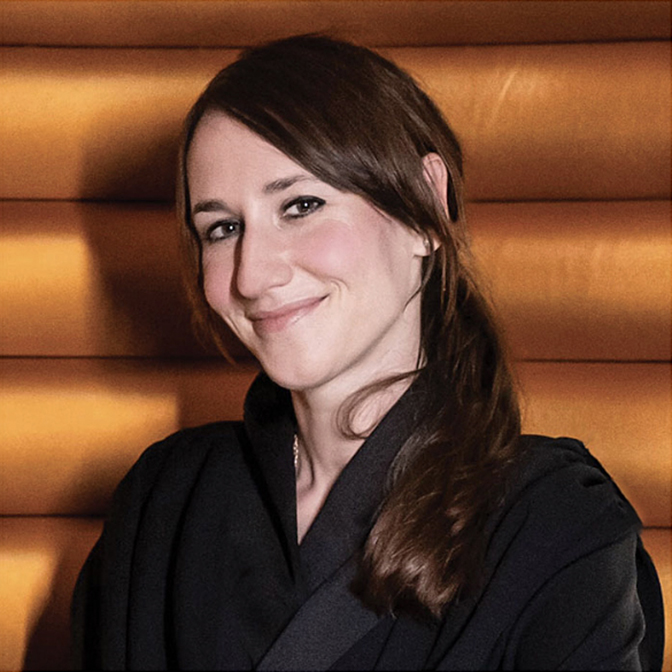
Brooke McDonald is the editor in chief of Better Magazine. She regularly reports on entertainment, theme parks, and travel and her work has appeared in Insider, The Points Guy, Parents, TravelPulse, Scripps News, and more. Her favorite nonprofits to support include World Central Kitchen, the ACLU, and the and the Vitalogy Foundation. Find her on Instagram @brookegmcdonald, Threads @brookegmcdonald, Bluesky, and X @BrookeGMcDonald.