As an IP attorney and art law professor, Silvia Beltrametti is drawn to questions of ownership, influence, and creative interpretation. The Italian mother of three divides her time between homes, extended family, business opportunities, and philanthropic commitments across Ireland, Italy, and the U.S. with her husband, Jay Krehbiel, alongside her work at the School of the Art Institute of Chicago. With so much already demanding her attention, it would be easy to leave those ideas unexplored, but Beltrametti follows them.
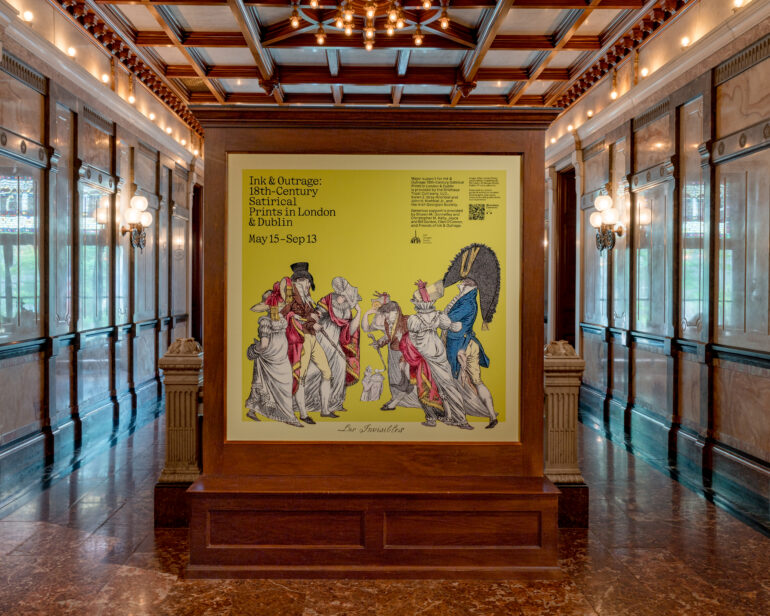
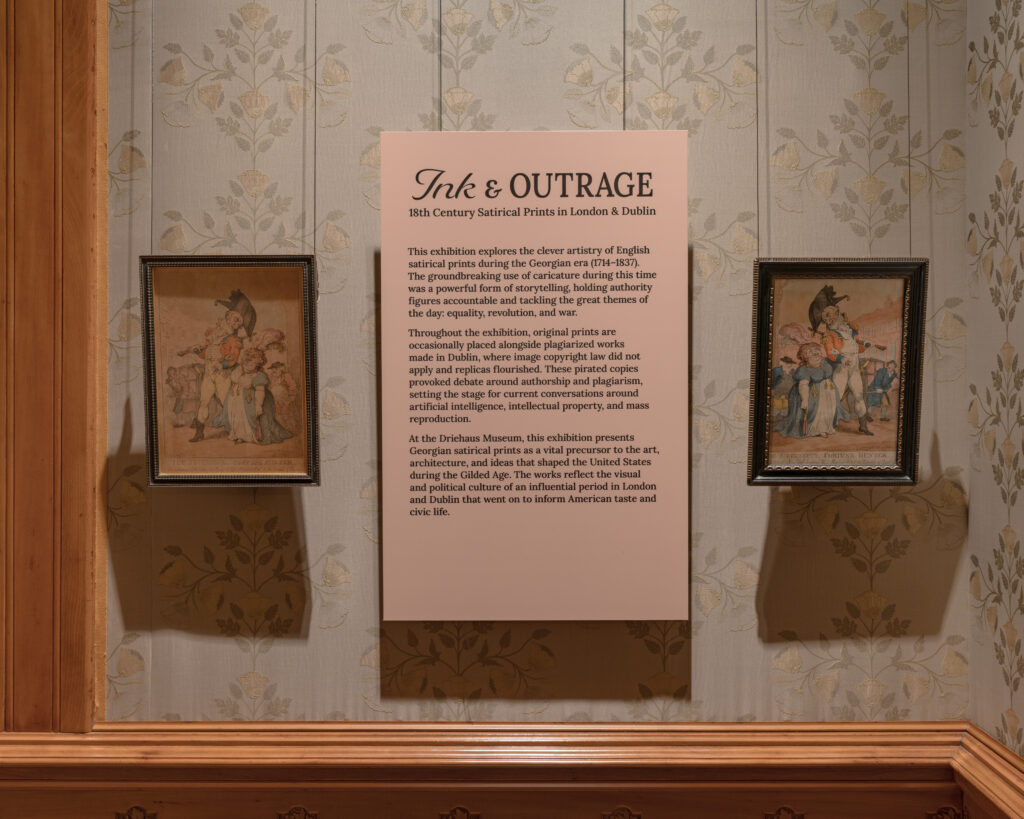
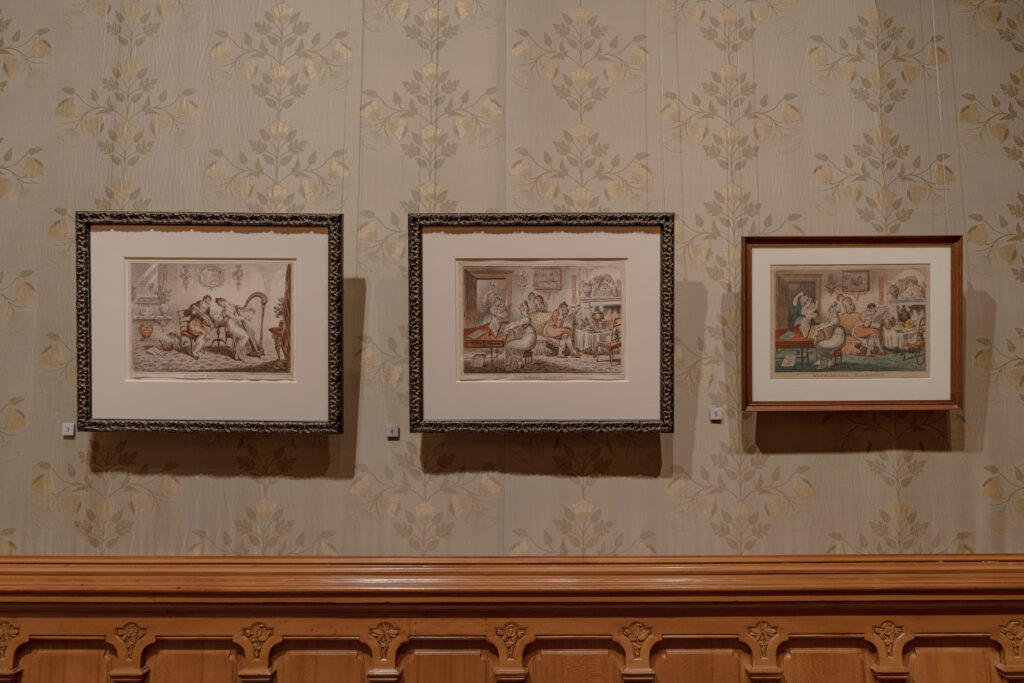
Her latest inspiration takes shape in the exhibition Ink & Outrage: 18th Century Satirical Prints in London & Dublin at the Driehaus Museum, opening May 15. The project emerged from Beltrametti’s willingness to continue pursuing intellectual curiosities amid an already rich and demanding life. The exhibition, curated by Beltrametti and William Laffan, showcases the wit, graphic brilliance, and modern-day relevance of prints by leading eighteenth-century British satirists, as well as the ease with which they were copied in Ireland in the absence of copyright protection. The blatant copyright violation first drew her to the topic, and what originality means has remained a central question to this day.
During the pandemic’s most confining early days, Beltrametti began researching a series of prints hanging in their Chicago Gold Coast apartment that she and Krehbiel had purchased in Ireland a decade earlier. In a small room covered floor to ceiling with colorful eighteenth-century satire, she could escape her preschoolers and find a quiet space to work. She noticed that the prints were not signed or dated.
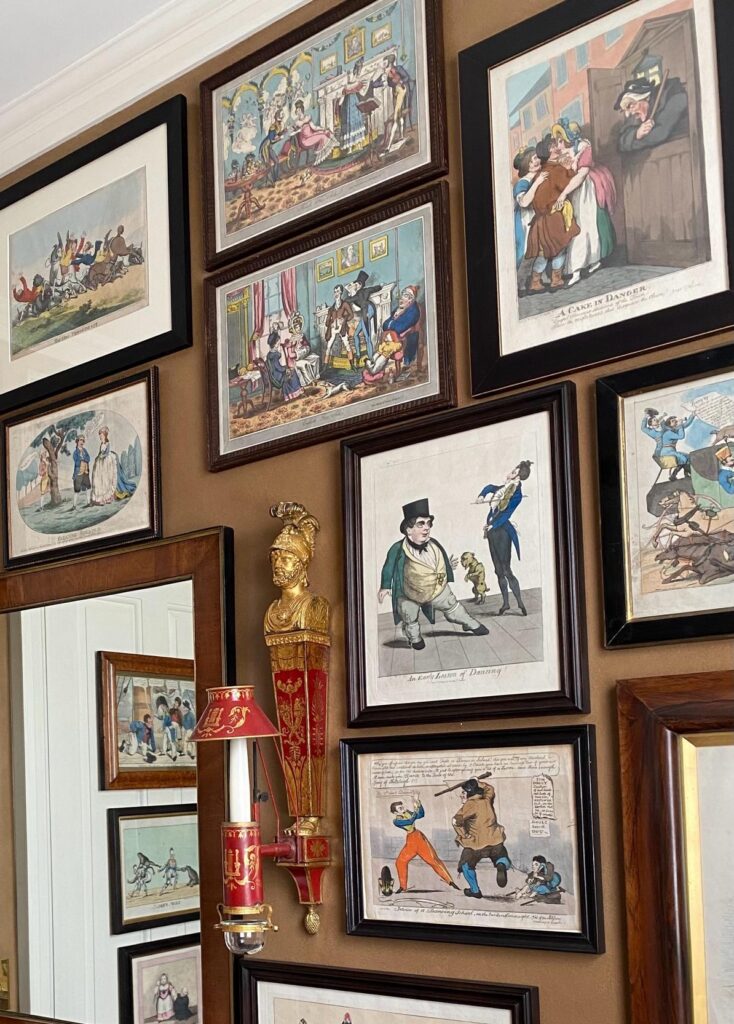
She soon deduced that she and her husband had lovingly invested in unauthorized copies of prints by major British engravers like Gillray, Rowlandson and Cruikshank, who were the satirical stars of that period. In other words, the creators of the originals were their era’s equivalent of Stephen Colbert, Jimmy Kimmel, and Byron Allen. And she — a copyright expert — had inadvertently bought works that should have violated their copyrights, but didn’t. “How did this happen, and what can it teach us today?” Beltrametti wondered.
In the interview that follows, Beltrametti brings the exhibition and the issues it raises to life.
SBN: How did you get from the questions gripping you in that small room to this major exhibition?
SB: There’s nothing that gives me more joy than bringing people into any art historical world that catches my interest, especially one this personal. My mother-in-law is Irish. We own a hotel in County Laois called Ballyfin and a house in County Kerry where we cherish spending our summers. I feel very connected to this Irish heritage.
An invitation to give a lecture with an Irish theme at the Caxton Club, Chicago’s bibliographic society, was my first opportunity to speak publicly about the prints and copyright issues. To explore the deeper implications of such plagiarism, I needed the help of my brilliant and esteemed collaborator, William Laffan, the perfect partner in crime. His connoisseurship of the English and Irish world at that time — not just in terms of the visual arts but also politics and intellectual history — was invaluable, and a perfect complement to my skills.
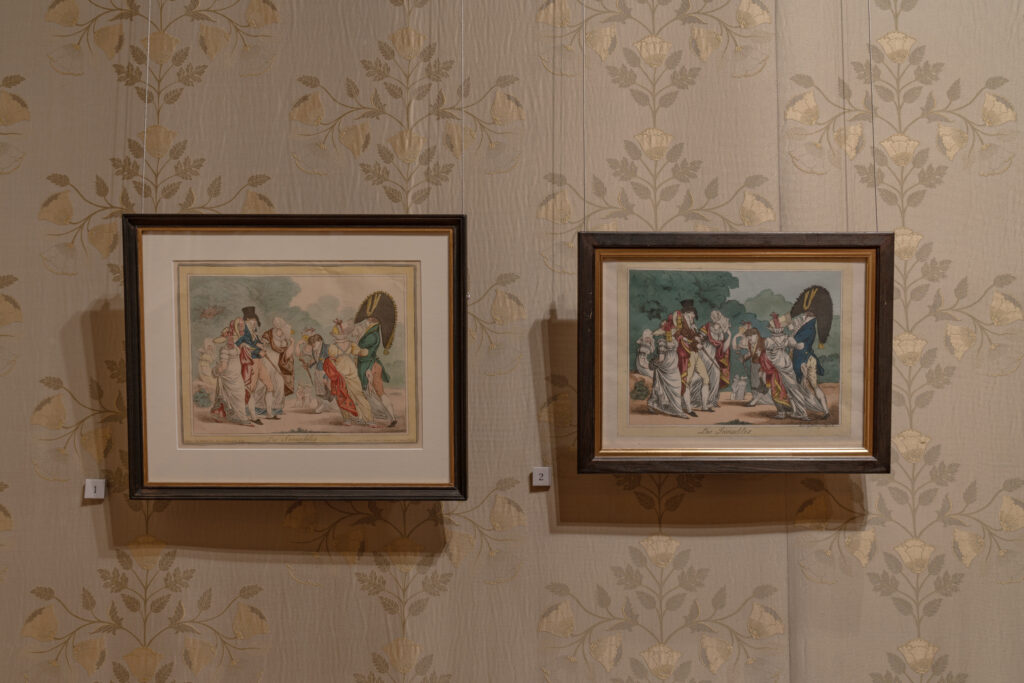
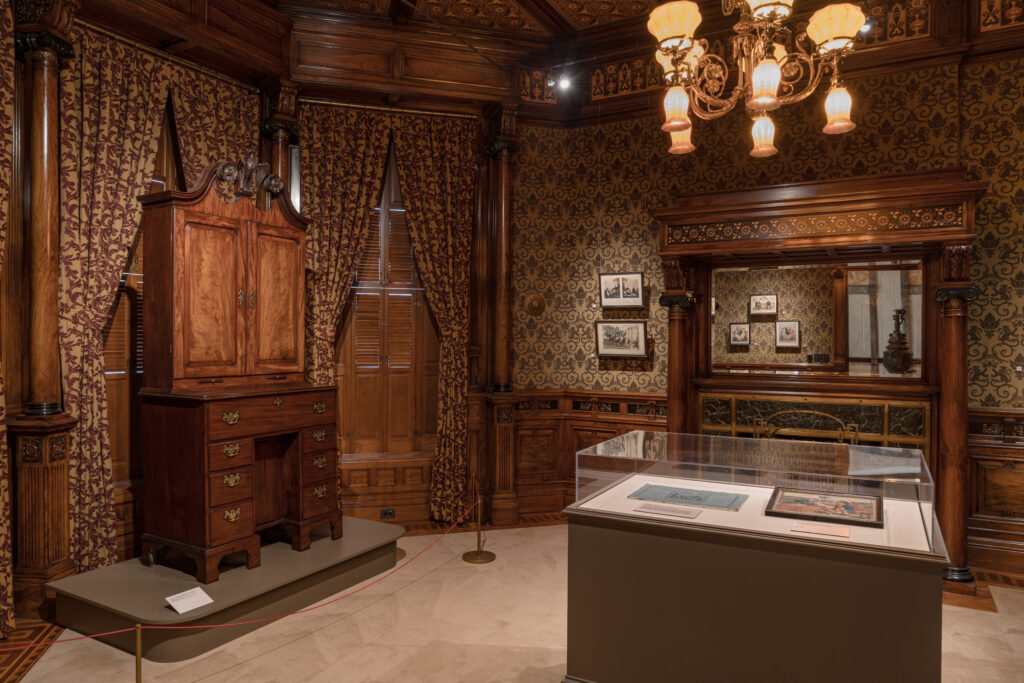
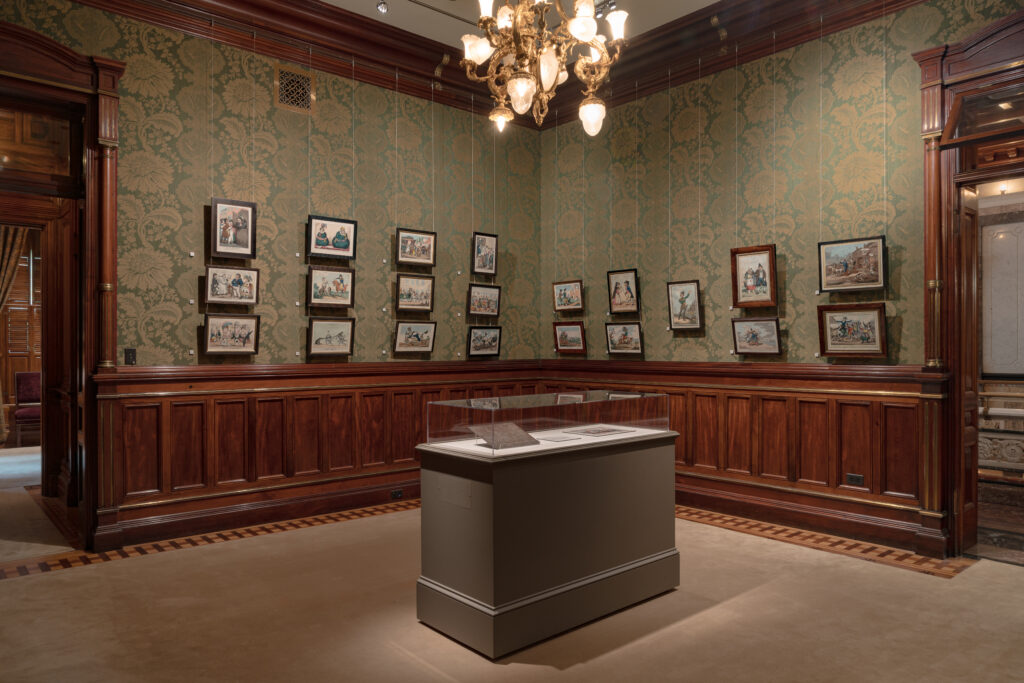
We started with two academic papers, then an exhibition at the Irish Architectural Archive in Dublin with a dedicated catalogue. The archive was an ideal setting because it is located in a Georgian house in which these works would have been displayed. The prints are a vital precursor to the art, architecture, and ideas that shaped the United States during the Gilded Age so it is fitting that they will be on display at Chicago’s Driehaus Museum in their exhibition, Ink & Outrage: 18th-Century Satirical Prints in London and Dublin. The exhibition will take over five galleries on the second floor, which will give the prints the breadth they require to be viewed and understood.
SBN: Why are these prints important and how were they used?
SB: The eighteenth century truly was a golden age of gossip and scandal. Napoleon and the French revolution — and fear of its spread to Britain — provided significant material for anti-radical satire, and so did the affairs of prime Ministers, the Prince of Wales, the King and Queen. The misbehavior was rampant, and the graphic representation was rich with detail and dry wit. These colorful caricatures don’t just speak to people who lived back then, but to every person who enjoys humor — and in the end we all do!
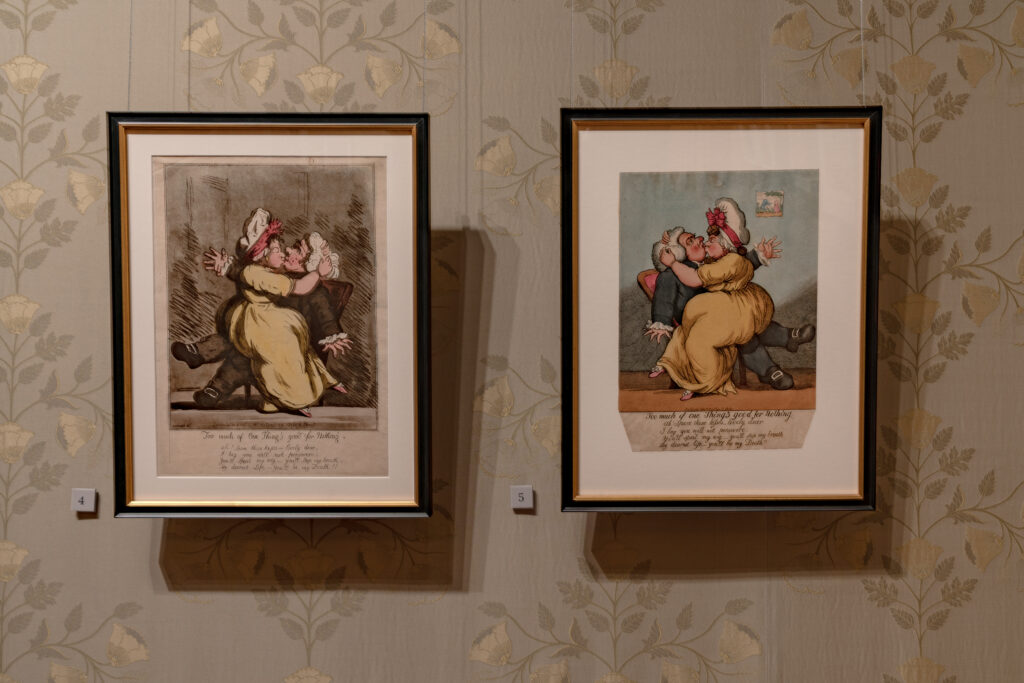
In the 1700s people bought these prints, folded them into albums, and passed them around the dinner table — usually after dinner, over a few glasses of brandy, in order to comment on the issues of the day, like politics and royal gossip, but also daily life, fashion, dances, and dandies.
Our modern equivalent is people sharing photographs, articles, and other content through our phones and online social networks. Instead of albums, we pass our phones during social gatherings, or content from cell phone to cell phone around the world, and then discuss it. That’s exactly what was happening back then too.
SBN: Does this exhibition demonstrate that you have broadened your audience beyond academia, because now your deep intellectual knowledge has been translated for wider cultural engagement?
SB: Definitely.
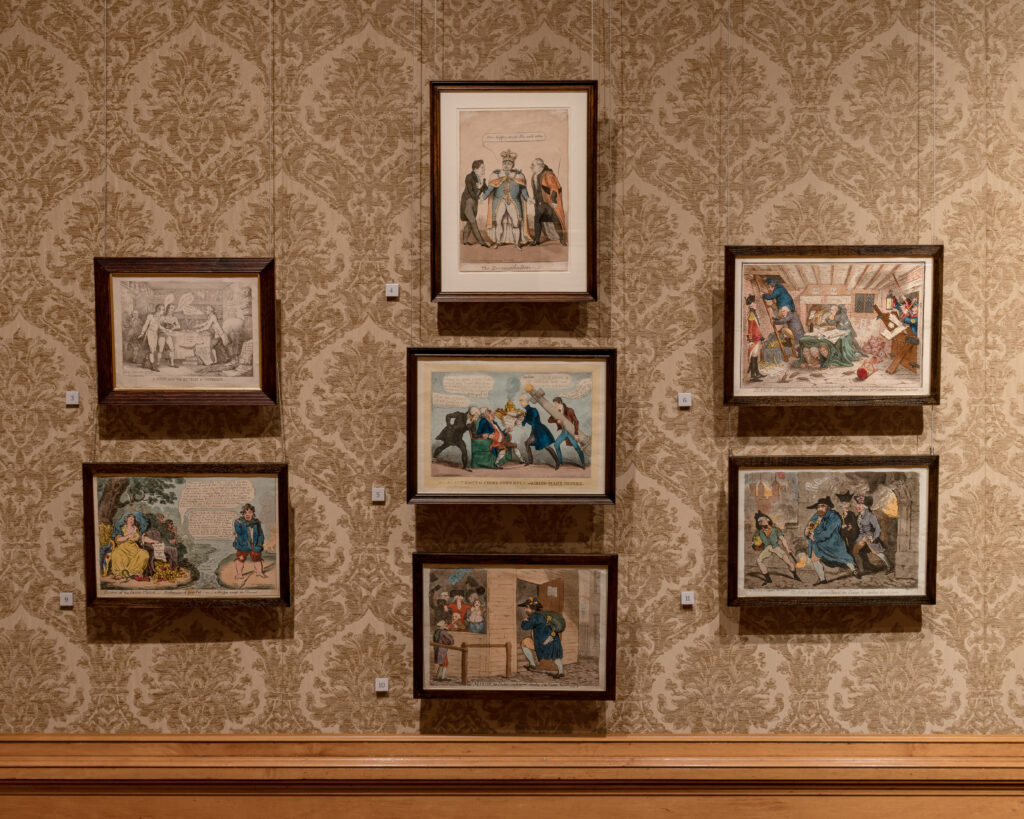
Curating this show truly gave me the means to make the story more accessible and much more visual. There are so many entry points now. First of all, I am truly having a good laugh at myself! As an IP lawyer, I never thought I would be celebrating the work of copyists or plagiarists. Isn’t that the ultimate joke?
Seen in its entirety, the canon has a real WOW factor. The timeline, storylines, and individual pieces reward visitors looking for more detail. The tools that the Driehaus has developed to make these artworks accessible are excellent. The audio tour, available on Bloomberg Connects, includes commentary by New Yorker illustrator Tom Bachtell which is fantastic.
Panel discussions are being organized — including one featuring contributors to The Onion and The New Yorker, and another highlighting the world of 18th century fashion with the School of the Art Institute’s Alex Aubry. You can find all of the exhibition’s related programs on the Driehaus Museum’s website.
The story is growing long legs.
SBN: Is there one print that you would like to talk about in particular?
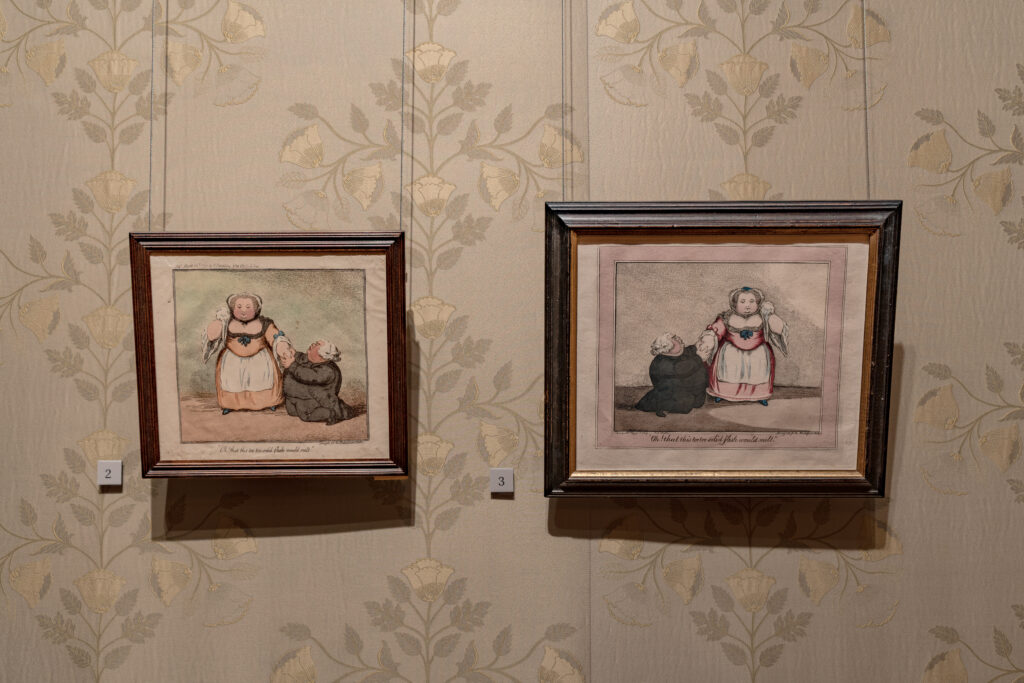
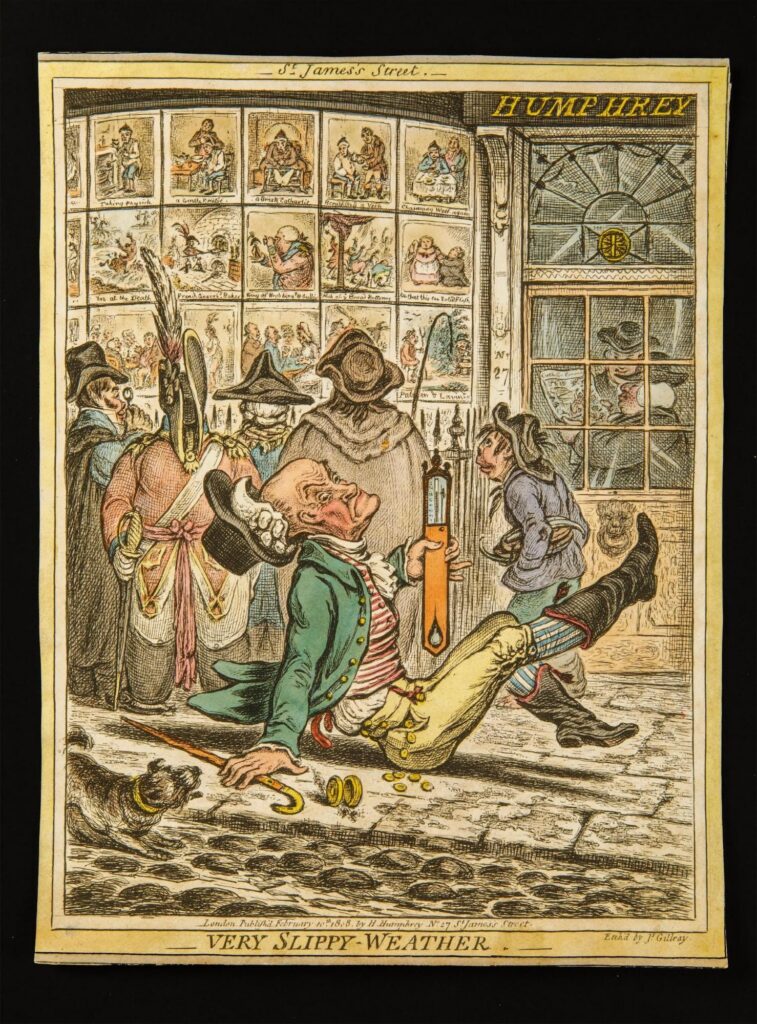
SB: Very Slippy Weather really draws the visitor in. This print by celebrity satirist James Gillray features the print shop of his business partner Hannah Humphrey, the entrepreneurial woman who empowered his career by representing him exclusively. Her name features prominently on top of the door, and the printshop window showcases rows of prints (all by himself of course!) and a wide variety of interested buyers.
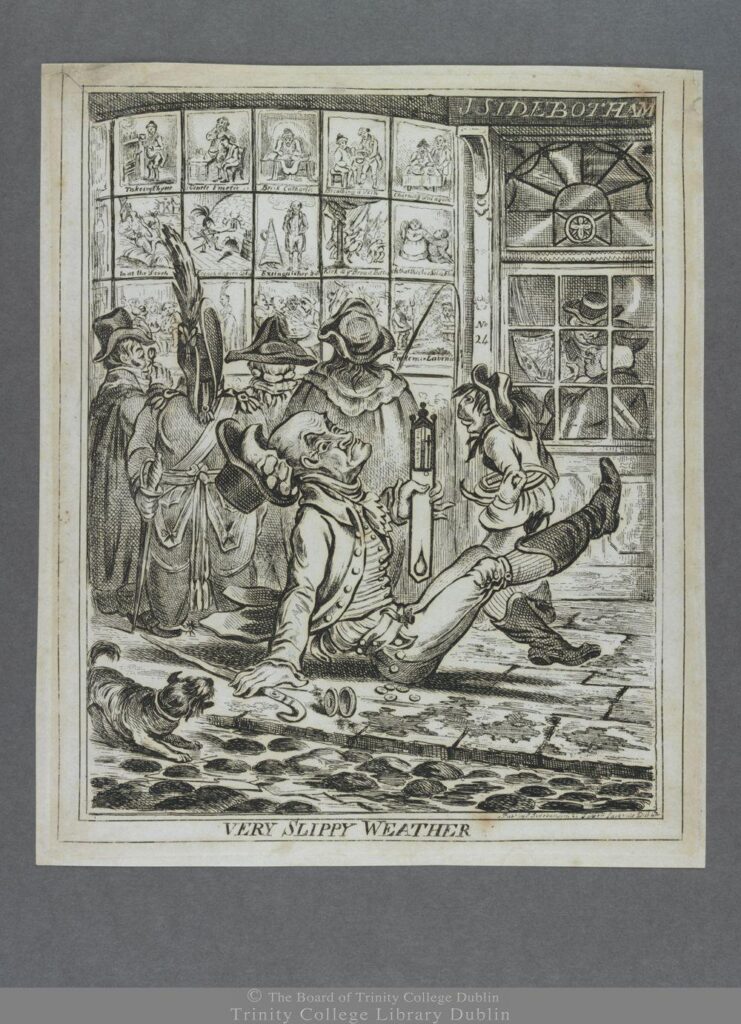
Irish publisher James Sidebotham shamelessly copies this image, not only by putting his own name on top of the window but also by showcasing his pirated versions in the window — such as the Shakespearian reference to Hamlet, “Oh that this too too solid flesh would melt.” People enjoyed this interpretation in London as well as Dublin, and Shakespeare has yet to go out of fashion.
SBN: Speaking of copyright infringements, do you have concerns about this with respect to your work here?
SB: I spent five years as an intellectual property attorney. However, now I am increasingly comfortable with the concept that we are all inheritors as well as originators. In the process of copying, people can create something novel and thought provoking.
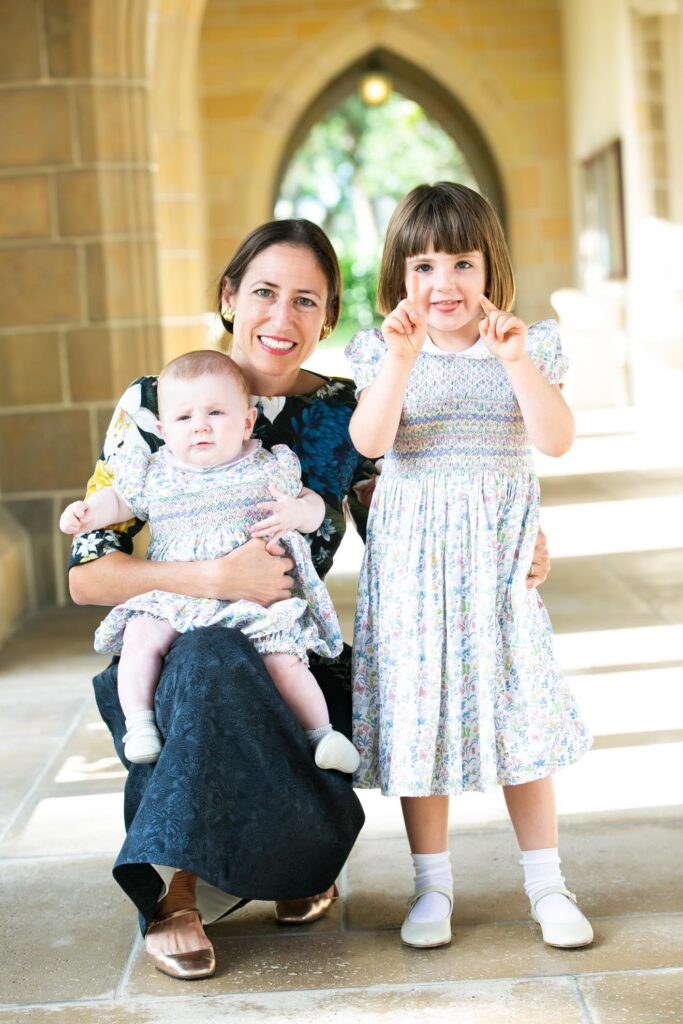
SBN: You are also a mother of two daughters, at a historically complicated inflection point. What are your observations about being female, as well as about public and private commentary now?
SB: This is another thing I’m actively working on. I just submitted a book proposal on intellectual property and gender bias. The argument is that female creators have long been inhibited from utilizing intellectual property measures.
There’s even a connection with this exhibition. Elizabeth Blackwell, the very first woman who brought a lawsuit under the landmark copyright law which protected the work of the above satirists, was able to bring her rights to bear by stopping publishers from pirating her botanical illustrations. She fought for her rights and won and her victory changed the way judges have been thinking about originality ever since.
I cannot wait to give voices to the stories of women artists through this book. As a woman with three children, the best thing I can do is parent by example. I work. I stay active and engaged. I am out there. We talk about politics. We read together.
We are now raising our children in Milan. They are lucky that in the 21st century, there are freedoms that weren’t always available to women. It’s also important for them to understand it, to know about this evolution.
SBN: They are fortunate for your example — as is the world. What are your other hopes for the future?
SB: My hope for the future is that what I did with this topic, I will be able to do again, and again.
This idea came to me relatively randomly, I had an intuition and just went for it. I taught myself to look, to write about Georgian Ireland, about copyright law back then. I gave it my all over five long years. This project became something a lot bigger than I anticipated. This happened because I truly believed I could do it.
I hope that moments like this will continue to present themselves, where I will be given a little something, a little seed, that catches my attention and I can run with it.
SBN: Then this is our hope for your future too — and that your example inspires others to trust their own instincts and pursue work that empowers, educates, and engages the world around them.
Ink & Outrage: 18th Century Satirical Prints in London & Dublin runs May 15 through Sept. 13, 2026, at the Driehaus Museum. Learn more and plan your visit.
How to Help
Beyond visiting Ink & Outrage, supporters can help sustain the Driehaus Museum’s ongoing exhibitions, preservation efforts, and educational programming through membership, donations, and corporate partner programs, helping to keep art, architecture, and design accessible to broader audiences.


Susan B. Noyes, founder of the Make It Better Foundation, which publishes Better magazine, is a mom, writer, strategist, philanthropist, and civic activist. She has served on numerous boards, including the American Red Cross, Chicago Public Education Fund, Harvard Graduate School of Education, Joffrey Ballet, Poetry Foundation, Rush Neurobehavioral Center for Children, New Trier High School District, and her beloved Kenilworth Union Church. Her work is driven by her commitment to helping people live, love, work, play, and give with greater purpose and joy.