 In 1947, at age two, Temple Grandin was diagnosed with autism.
In that era, that verdict usually led to a forgotten, institutionalized life. Instead, Grandin found her way to great success, as have so many similar others in Silicon Valley and beyond.
“Geeks, nerds, socially awkward and autism spectrum really are all the same thing—and Silicon Valley is full of them,” says Grandin, Ph.D.
As a child, Grandin suffered delayed speech development and hypersensitivity to noise and touch, as well as being the victim of extreme bullying. But her mother, Eustacia Cutler, along with a coterie of supportive mentors, helped Grandin develop the skills and confidence to became a successful inventor, professor and author. She’s now the “rock star” of autism advocacy, featured in Time magazine’s Time 100 List of Most Influential People, NPR, The Today Show, Prime Time With Larry King, documentaries and more.
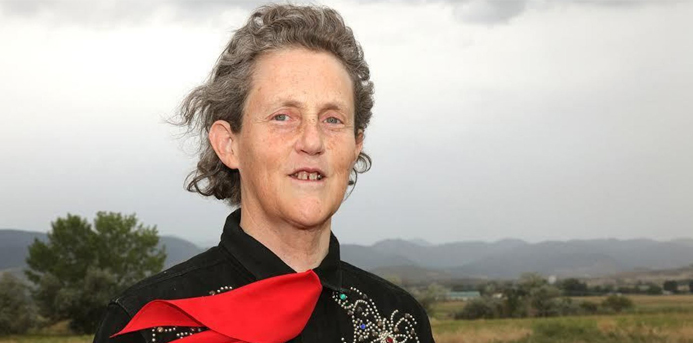
In her trademark western attire, Grandin and her elegant, eloquent 87-year-old mother recently spoke to thousands at a pair of speaking engagements sponsored by Family Action Network (FAN). Grandin also sat down for a Make It Better interview.
Mother and daughter offer common sense recommendations for parents of all children—not just those diagnosed in the autism spectrum. They also offer proof of why it is so important for society to work to engage the remarkable gifts and passions inside every child.
1. Don’t accept imposed standards.
“It took Temple six years to complete what ‘normally’ is five years of high school. Then she still couldn’t do the required college entrance exams. But one college accepted her anyway, and she graduated second in a class of 400,” Cutler says.
2.Limit reliance on computers.
“The Internet has made our culture shallow,” Cutler says. “We’ve become like baby birds with beaks open, waiting for Google to pop an answer into our lives, too comfortable to forage for our own insights.”
3.Engage more fathers and other men to help.
“Temple’s father could never accept (her). He kept thinking there would be an answer—perfect, immutable. But there were only choices.
“Too many autistic males are being raised by single mothers. Men take autism harder—somehow it strikes at their sense of honor.
“Ironically, far more males than females are autistic. Who is going to show them how to be a man, including simple things like how to use a public urinal?” Cutler says.
4.Teach social skills as they were taught in earlier eras.
“We need to teach social skills like parents taught me and others in the ‘50s: how to shop, shake hands, order food, look at someone when you talk to them,” Grandin says. “All families can and should do this.”
5.Get kids interested in learning through arts, robotics, band instruments, theater, cooking, crafts, welding, farming and more.
“These activities help kids discover passions which lead to jobs. And they are a bastion (against) bullying!” Grandin says. “For example, carpentry and horses saved me in high school. Take such skills out of schools and where do kids learn about them? Teach them welding and they could end up owning their own fabrication firm.”
6.Take sensory issues seriously.
“Sensory issues—like hypersensitivity to sound, smells or touch—are a very real problem. Teach kids to control what bothers them, and they will improve,” Grandin says.
7.Don’t overprotect your child; help them stretch instead.
“There is too much handholding by today’s parents. They need to let their children struggle more. Let them tackle problems that interest them and fail. The worst moments of our life can define the best that we become,” Grandin says.
8.Avoid labels.
“Kids feel trapped by labels, whether those labels are good or bad,” Grandin says.
9. Treat personality traits like music on a mixing board and learn to blend them harmoniously.
“There are different kinds of minds, and we need all of them to work together,” Grandin says. “I’m a visual thinker. Most people think in words and vague images. I learn and think in concrete images instead. This meant that I didn’t have enough mental bandwidth to get the words out at first. Engineers make things work. But we need artists like Steve Jobs, too.”
10. Help kids learn to do work that other people want; don’t let them disappear into video games.
“When kids do work that others want, their social skills improve, too. Don’t let them become recluses in their rooms playing video games,” Grandin says.
11. Unite parents and schools as a team, and never punish by taking away anything that could turn into a career.
“Parents and schools need to be on the same page about expectations and consequences. Limit television or other solitary screen time to one hour per day.
“Never take away art, playing an instrument or any other activity which could turn into a job as a punishment! Instead prohibit video games, iPad or phone for one night only,” Grandin says.
12. Make connections between the virtual and real worlds.
“Connect the digital, physical and social worlds as much as possible,” Grandin says. “For example, one mom got all the kids in the neighborhood to sand and paint blocks of wood. Then they had Mind Craft for the driveway.”
13. Risk. Trust. Change. Create hope.
“There is no one perfect course. We help our children to change. In the process, we change too. With change comes hope,” says Cutler.
Find full video of Grandin and Cutler’s FAN talks at Welsh Ryan Arena here. To learn more about Temple Grandin or purchase any of her books, visit her website.
Make It Better is proud to be a media sponsor of the following nonprofits dealing with autism:
- Autism Speaks, the world’s leading autism science and advocacy organization, which furthers research, advocacy and support. The organization funds global biomedical research into the causes, prevention, treatments and possible cure for autism; raises public awareness; and supports individuals with autism and their families. For more information, contact familyservices@autismspeaks.org.
- The Center for Independent Futures in Evanston, which helps adults with disabilities plan, support and sustain new and independent ways of living full lives in their community. CIF works with individuals and families to develop plans to live independently, including locating and securing employment and housing, developing skills and providing tools to succeed. For more information, email center@independentfutures.com.
- Park Ridge’s Have Dreams, which serves children, teens and young adults with autism with individualized after-school classes, life skills training, employment programs and diagnostic and family support services. The organization also provides best-practice autism training for professionals, in-home and school consultative services and a vocational program. For more information, call Have Dreams at 847-685-0257.