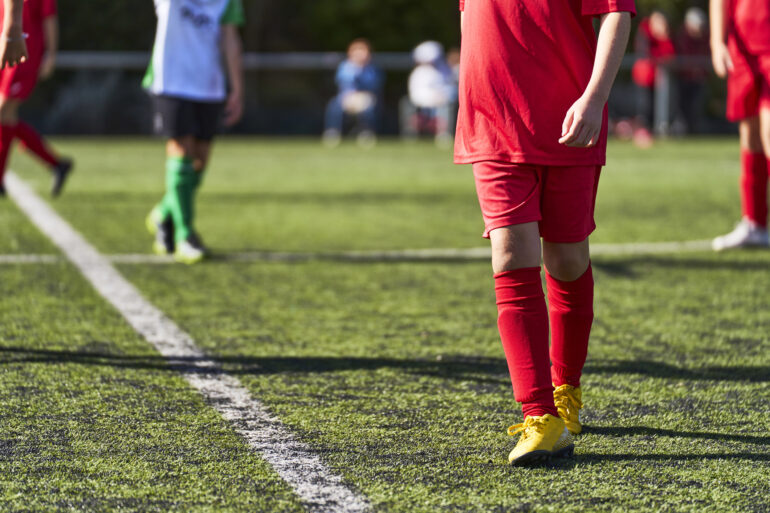
“We’re deeply committed to developing her extraordinary athletic ability,” a North Shore father was overheard crowing. “We’ve hired all the right specialists. This includes a sports psychologist, a personal trainer, a sports nutritionist, and only the most successful skills development trainers in each of her sports: soccer, basketball, lacrosse, softball, and swimming.”
At first, this real-life anecdote might not sound that unusual. The North Shore offers such abundant opportunities to play sports and improve skills that parents do tend to go a little overboard. But this father was talking about his 7-year-old daughter!
Which makes me wonder, did he ever take time to just shoot hoops or play catch with her? Did she ever get free time to just play whatever her imagination created?
Then I mentally turned the finger pointing back on my own family. How often have we failed to draw the appropriate sports boundaries? Worse yet, how often were we guilty of pushing our children into sports excess?
I do love my children’s sports. They teach valuable life lessons and develop healthier, growing bodies. We’ve structured great family fun around them, too. But sometimes we pushed too hard. I still cringe at my memory of forcibly carrying my kicking, crying, exhausted oldest child, then age 7, out of the house for a park district soccer practice. In hindsight, I acted on the wrong priorities that day — honoring a beginner team commitment just wasn’t as important as that young boy’s physical and mental well-being.
It’s not always easy watching your child make mistakes. But the only mistakes I remember now are the endearing ones. During the first hockey game of his life, my 5-year-old son, Pat, lost within all that equipment, earned a breakaway. But instead of charging — actually more like teetering — toward the goal, he stopped, turned, and left the puck behind to skate toward me, waving ferociously. Throughout that game, Pat and his teammates fell frequently — in unison and for no apparent reason. It appeared that flopping onto the ice, mysteriously coordinated by mental telepathy, rather than scoring goals, was the true aim of his team.
No, those falls were not always easy to watch, but they certainly were entertaining. In fact, that hockey game, genuine Comedy On Ice, may be my all-time favorite sporting event.
That Pat and his five siblings actually grew into authentic athletes pleasantly surprised my husband and me. Innate athletic ability isn’t obvious in our gene pool (ask teammates about my paddle tennis game).
But our locale, the North Shore, with its phenomenal amateur sports opportunities, helped develop abilities that might not have been nurtured elsewhere. Pick a sport, any sport, and you or your child can play it on or in some of the finest facilities in the country, under talented coaches — including the parent volunteers — and with enthusiastic, well-prepared teammates. Furthermore, an exploding number of professional specialists, like those mentioned above, will supplement your amateur training, too.
There are downsides to all this excellence, like that unhealthy balance or the sense of competition that can accompany even entry-level sports. But once these negatives are overcome, it is easy for almost everyone to improve in some area of athletic endeavor on the North Shore.
Pat actually developed into a decent travel hockey player, while he played baseball, softball, football, basketball, soccer, golf, and tennis, swam, skied, and skateboarded. Did we wander into an unhealthy extreme here? All I can say is, I hope not.
We supplemented Pat’s park district and travel team training with “experts.” For 10 years, he took private lessons from Rafe Aybar, a skating coach who develops kids into college and even NHL players. But his baseball and basketball development came straight from the Strike Zone and Hoop Zone.
In the end, and quite surprisingly, Pat didn’t play any of his youth sports for a high school team. Instead, he dove for the New Trier Boys Swimming and Diving team. So do I regret all the extra money and time spent on private instruction and other supplements to the sports that he ultimately abandoned? Absolutely not! Those experiences still honed skills, confidence, and a love of team and competition that served him well at the pool.
Furthermore, those efforts probably helped Pat get a better college education than he would have otherwise. He now competes for the University of Michigan (despite high school grades that put him in the bottom third of his New Trier class).
So now I’d like to turn it back to you:
What are appropriate guidelines for healthy youth and adult sports development? How do we make our sports better and maintain a healthy balance in life? And if we are willing to invest in additional training, who are the best of this mushrooming cottage industry of professional sports specialists?
In the meantime, please, whether they’re winning or losing, strictly amateurs or bound-to-be-pros, remember to enjoy the games.

Susan B. Noyes is the founder of the Make It Better Foundation, which publishes Better Magazine, writer, philanthropist and civic activist who has founded or served on many boards — including the American Red Cross, Chicago Public Education Fund, Harvard Graduate School Of Education, Joffrey Ballet, Poetry Foundation, Rush Nerobehavioral Center for Children, New Trier High School District, and her beloved Kenilworth Union Church.