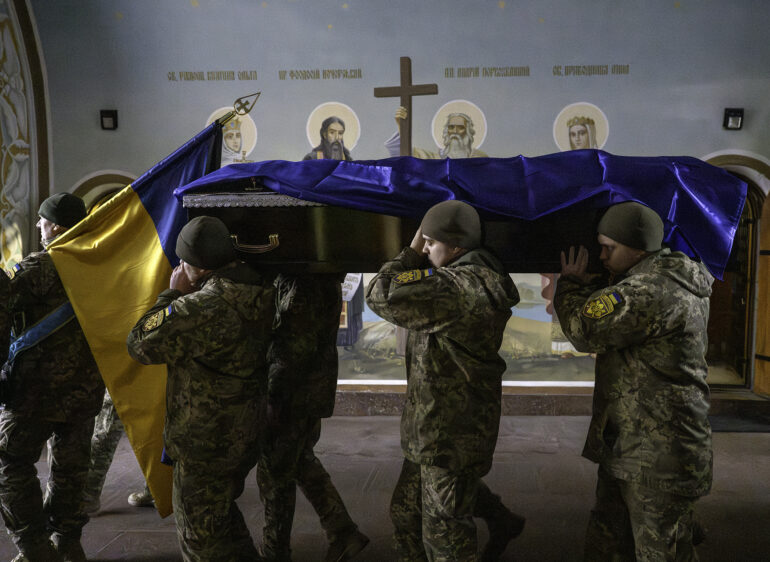
As the war in Ukraine enters another year, its consequences extend far beyond the front lines. Millions remain displaced, navigating daily uncertainty as civilian infrastructure and volunteer networks strain under sustained pressure.
During recent reporting in Ukraine, I focused on Internally Displaced Persons (IDP) near the front lines east of the Dnipro River and in Kyiv. In Dnipro, I was introduced to Max Maslennikov, co-founder of Revival of Ukraine, through Andrew Canning and the team at Ukraine Freedom Company, whose medical aid and logistics support in Ukraine’s frontline regions earned the organization a Make It Better Foundation 2026 Philanthropy Award. Through Max, I met Alina Subotina, deputy director of Children New Generation (CNG), and accompanied her team on a civilian evacuation mission into the “grey zone.”
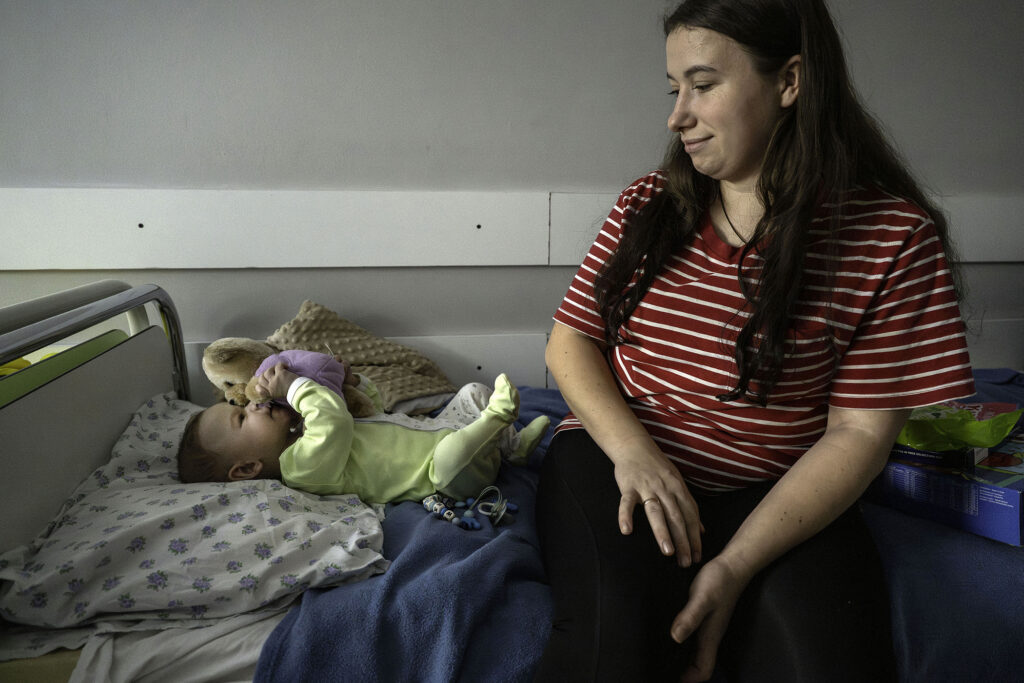
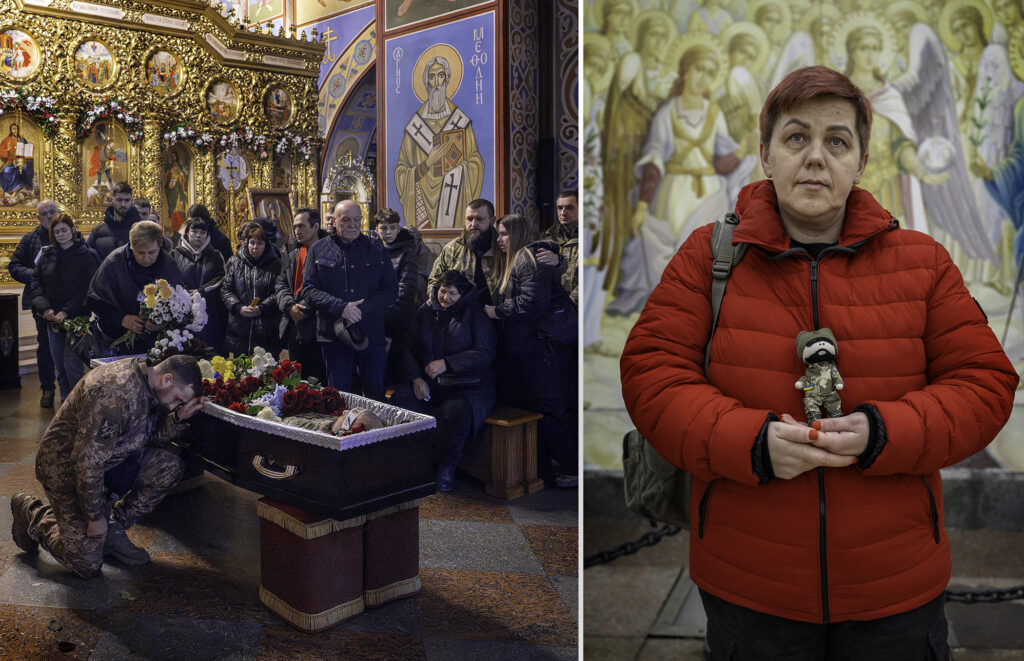
The photographs that follow document civilians living in the long shadow of war. The conversation that accompanies this essay brings together both Max and Alina, whose work reflects two interconnected fronts of the conflict: the construction of a vast shelter network for displaced families and the ongoing evacuation of civilians from areas under active threat.
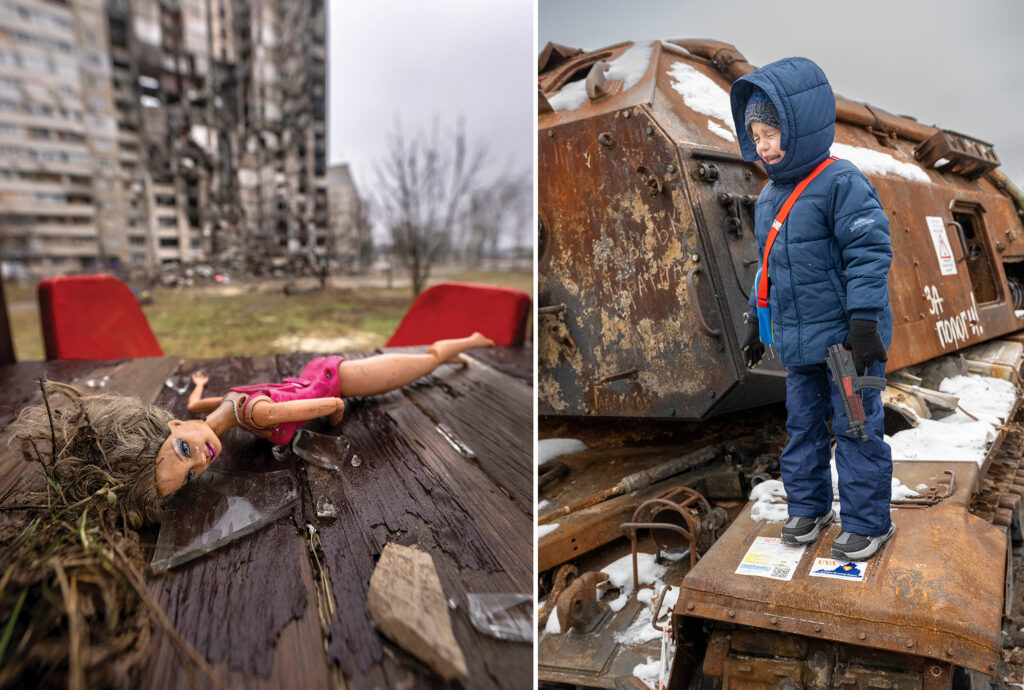
Building the Civilian Relief Effort
After visiting Gostyna, one of the shelters within the Shelter Union network for internally displaced persons, I sat down with Max Maslennikov to discuss how the civilian relief effort in and around Dnipro took shape.
Mark Edward Harris: When did you start devoting a significant amount of your time to volunteering?
Max Maslennikov: My volunteer activity began in 2022. In the beginning, we, meaning my partner Illia, his wife, and eight other people, focused on the civilian response to the Russian invasion. We started by collecting clothes and food for those in need as refugees began pouring into Dnipro in a massive migration from the Donetsk, Luhansk, Zaporizhzhia, and Kharkiv regions. Everyone passed through Dnipro. People arrived by trains, cars, buses, and evacuation convoys — tens of thousands of people every single day. Our first major project was providing these people with housing.
MEH: How did that evolve?
MM: Initially, we opened short-term shelters to give refugees a chance to catch their breath in a safer place and figure out where to go next. In total, more than 100,000 people passed through our shelters. Later, we founded the Shelter Union to share resources, find available beds, and equip facilities to the highest possible standard. Collectively, more than 1.4 million people have passed through the Union’s shelters over time. It’s been a migration of staggering proportions. Around 4.5 million people passed through Dnipro during this migration. And it continues.
As the crisis evolved, we began building long-term shelters. We wanted people to have a place to stay until they could recover economically, rent their own housing, receive compensation for lost or destroyed property, or decide on their next move.
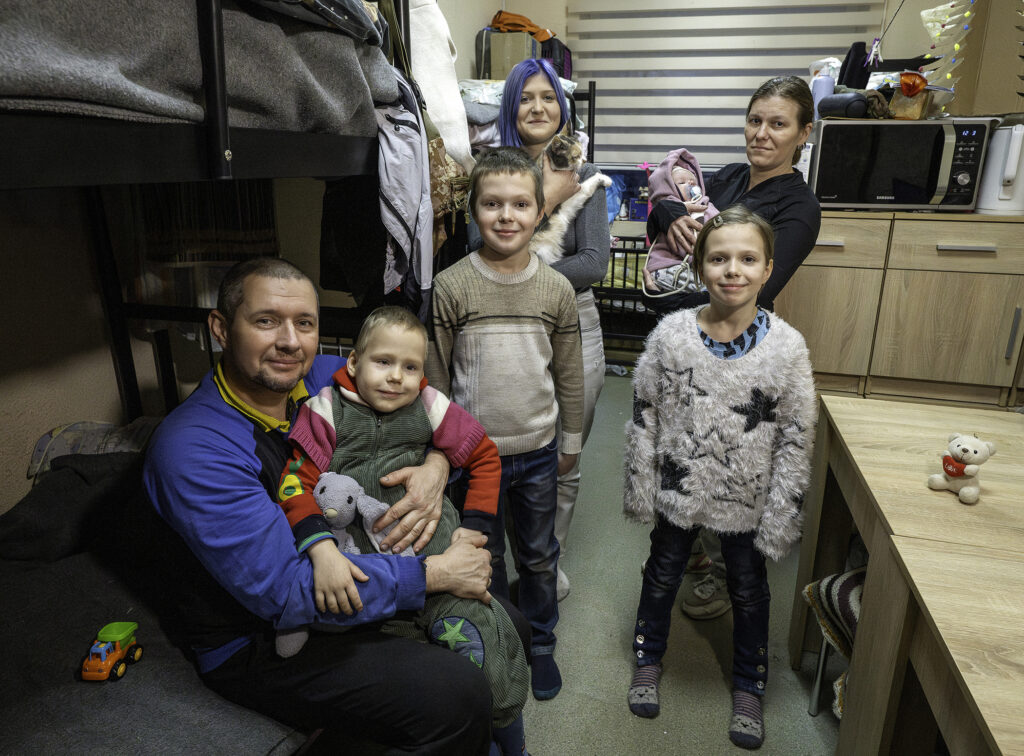
Shelter Union combines shelters, 80 percent of them are located in Dnipro and the Dnipro region, along with shelters in Zaporizhzhia, Kropyvnytskyi, and in the west of Ukraine, Ivano-Frankivsk and Lviv.
The number of connected shelters at last count was 134 shelters hosting more than 14,000 people in total. It’s even more now. All participants communicate with the manager of the union via a hotline for information exchange, requesting help, and so on.
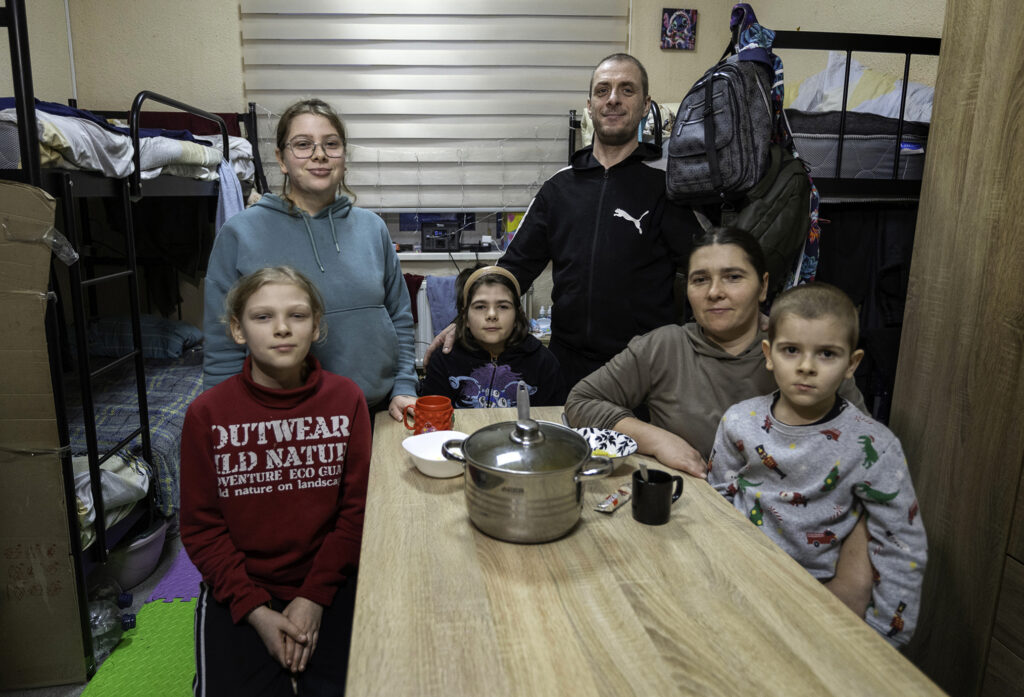
MEH: You and your team have also put your lives on the line for people in even more harm’s way than in Dnipro.
MM: We’ve worked extensively with communities along the front lines, delivering food, power systems, water, medicine, and hygiene supplies. We evacuated those who were willing to leave, bringing them back to our shelters in Dnipro. Our teams were active in the Kherson, Donetsk, and Zaporizhzhia regions. We also spent three months in Kherson following the flood caused by the Russians blowing up the dam there, assisting with the recovery efforts.
MEH: As the situation on the ground has evolved, your focus has shifted by tapping into your IT knowledge and your pre-war career.
MM: My personal focus has shifted. I moved away from housing and frontline aid to help displaced persons with economic integration. We found opportunities to provide people with training in professions where they could work remotely and helped them secure employment. Today, my priority is supporting the volunteer movement. I want to strengthen the capacity of the “Third Sector,” boosting their media presence and ensuring that the stories of these people are preserved for history. Our media projects include a SPIU Podcast in Ukrainian and an AI-translated SPIU Podcast International.
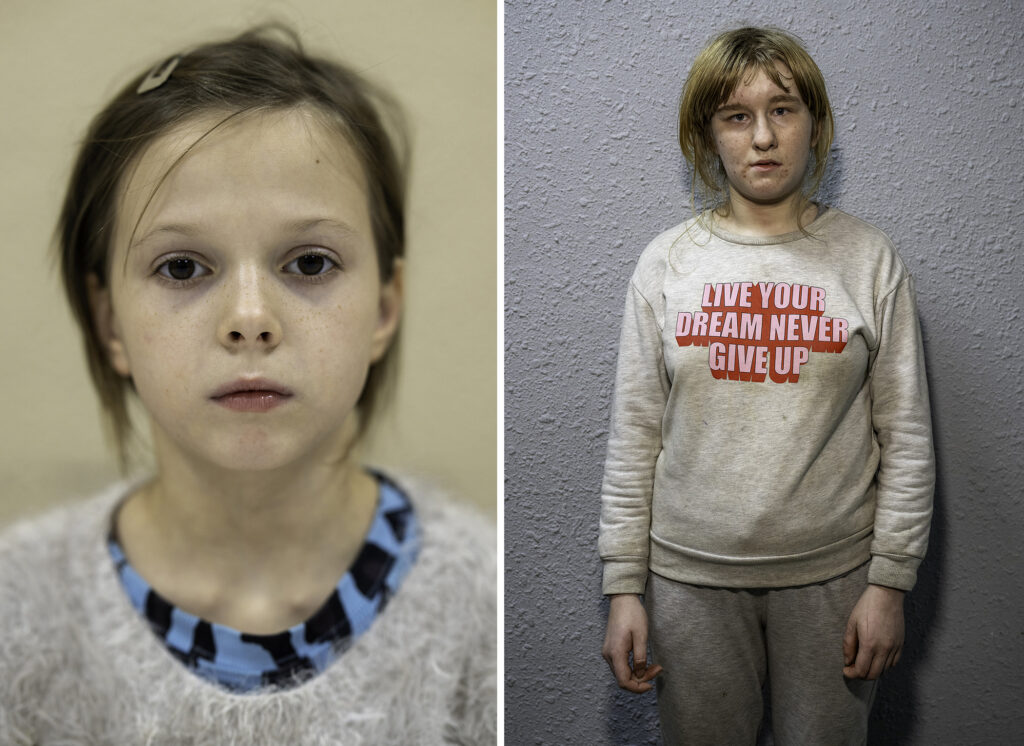
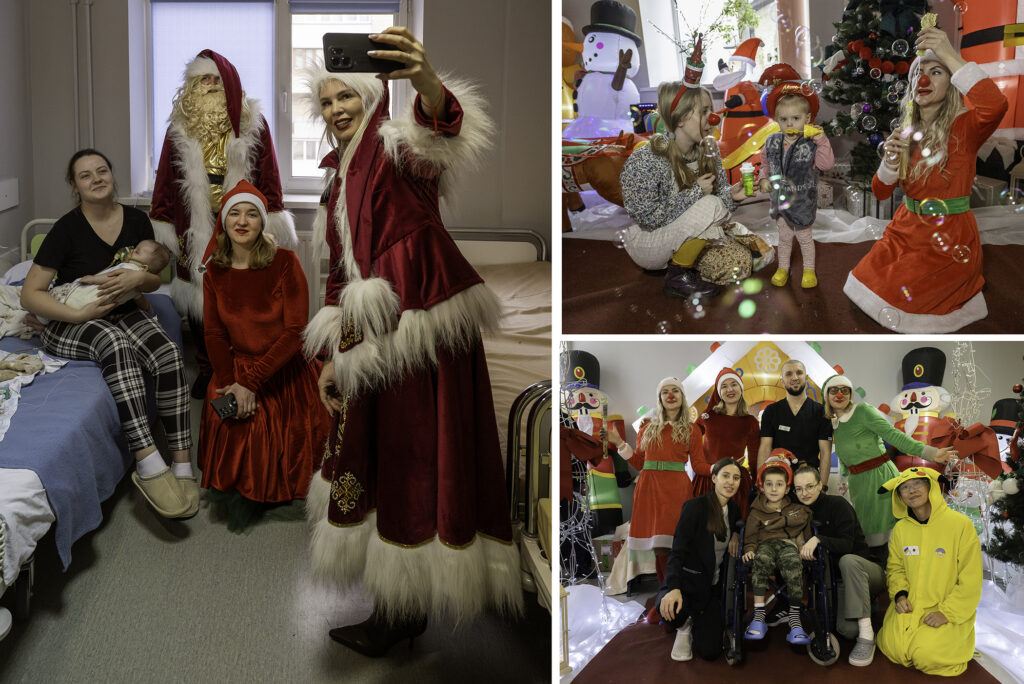
MEH: Who are some of your key partnerships?
MM: Currently, I represent our group and a coalition of more than a dozen Ukrainian organizations working in harmony. Our activities span from the line of contact, delivering food and essentials, to maintaining refugee hubs near combat zones, evacuations, shelters, psychological recovery, and economic integration.
Save Peace In UA, for instance, is a foundation with which I have a deep partnership regarding the podcast and the maintenance of the “NGO Space.” Another example is actor Liev Schreiber’s foundation, Blue Check Ukraine, which has provided us with an immense amount of support.
Andrew Canning, who introduced us, works with the Ukraine Freedom Company delivering medical aid and vehicles for the military every two months. We deliver the medical supplies to stabilization points for wounded soldiers near the front lines and hand over the vehicles to the military. We have successfully completed more than 15 joint missions.
MEH: Why do you do what you do?
MM: My work toward victory and my aid to civilians is my personal act of war and resistance. I know this could have happened to my family and me, and I would have wanted people to be there to help. That realization makes it very simple: I must help others.
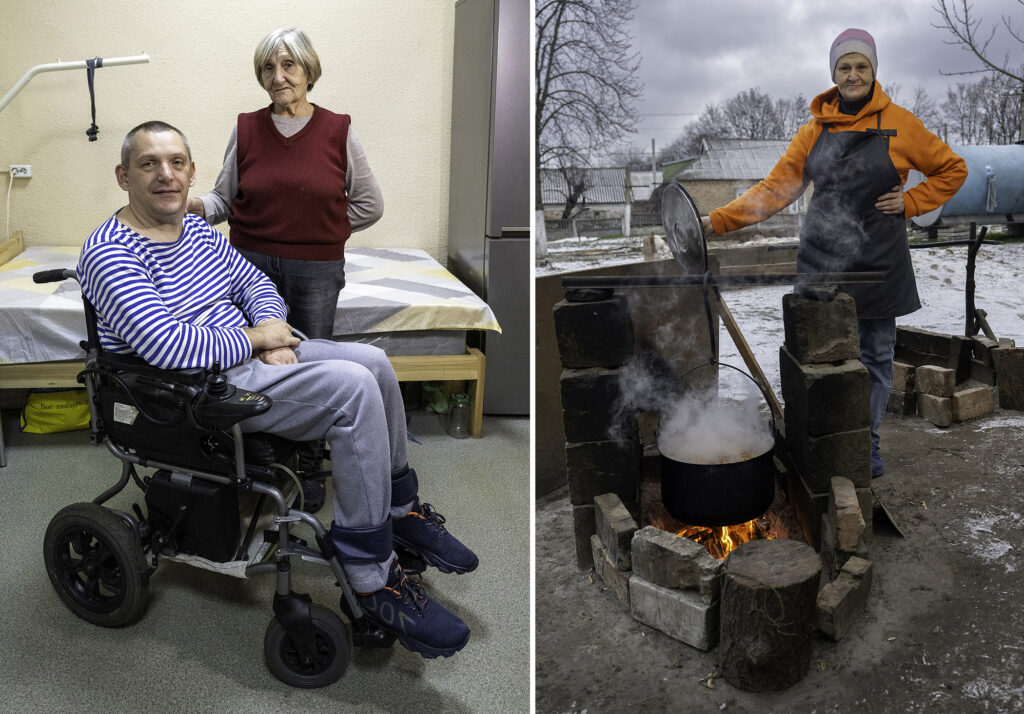
From Full-Scale War to Full-Scale Invasion
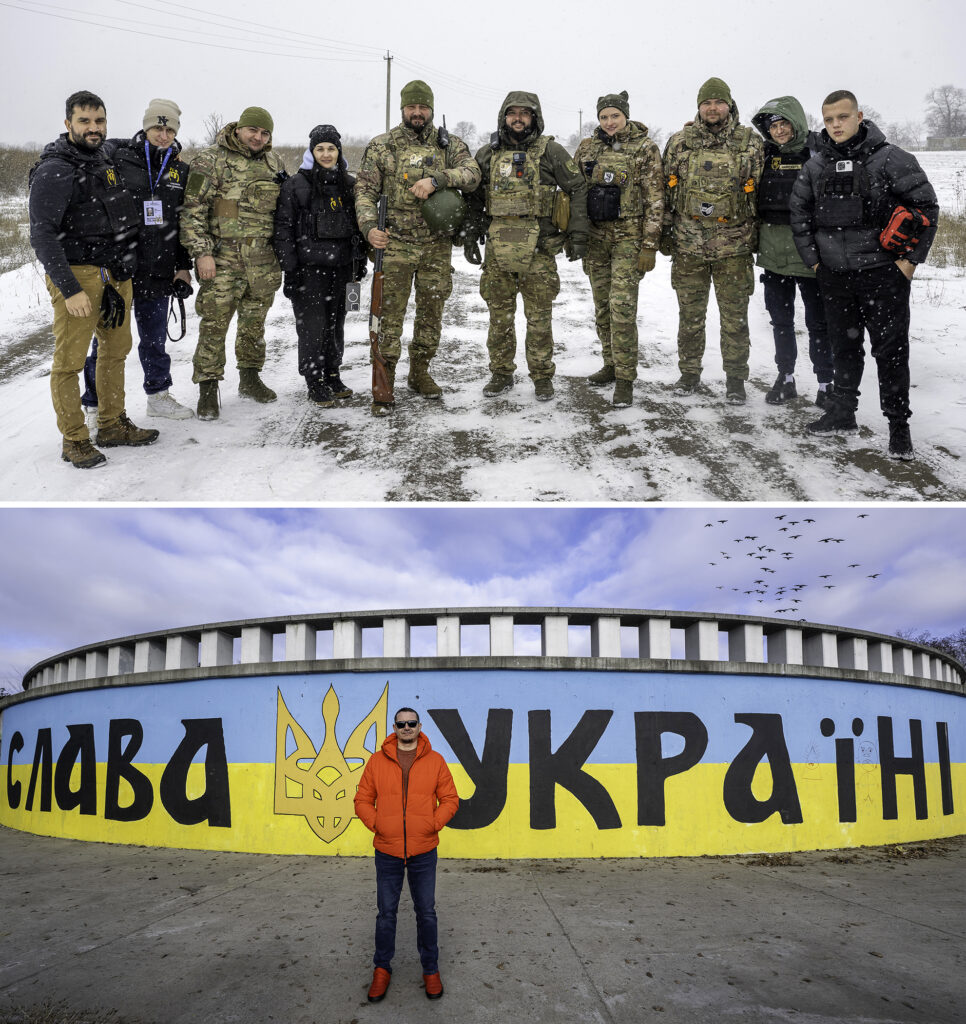
In the wee hours of the next day, Max drives me to Children New Generation (CNG) shelter, where I meet its Deputy Director Alina Subotina, before heading out donning body armor and loading into armored vehicles with her team on a civilian rescue mission. After we returned, Alina went into detail about CNG’s mission.
Mark Edward Harris: What was your NGO doing before the full-scale war, and how has it evolved since the full-scale invasion?
Alina Subotina: We have been operating as an organization since April 2021. Before the full-scale invasion, our work focused on supporting children from low-income families and vulnerable families in general – creating safe spaces, providing care, and helping children grow up in difficult circumstances.
After the start of the full-scale war in 2022, we completely restructured our work. We transformed our children’s club into a shelter to accommodate refugees with children and began regular evacuation missions. The realities of war changed people’s needs, and we shifted to an emergency humanitarian response. Today, our work includes rescuing civilians from frontline areas, operating shelters and transit shelters, support for Internally Displaced Persons (IDP), food distribution, provision of drinking water to frontline communities, and the delivery of coal, generators, and other critical assistance necessary for survival.
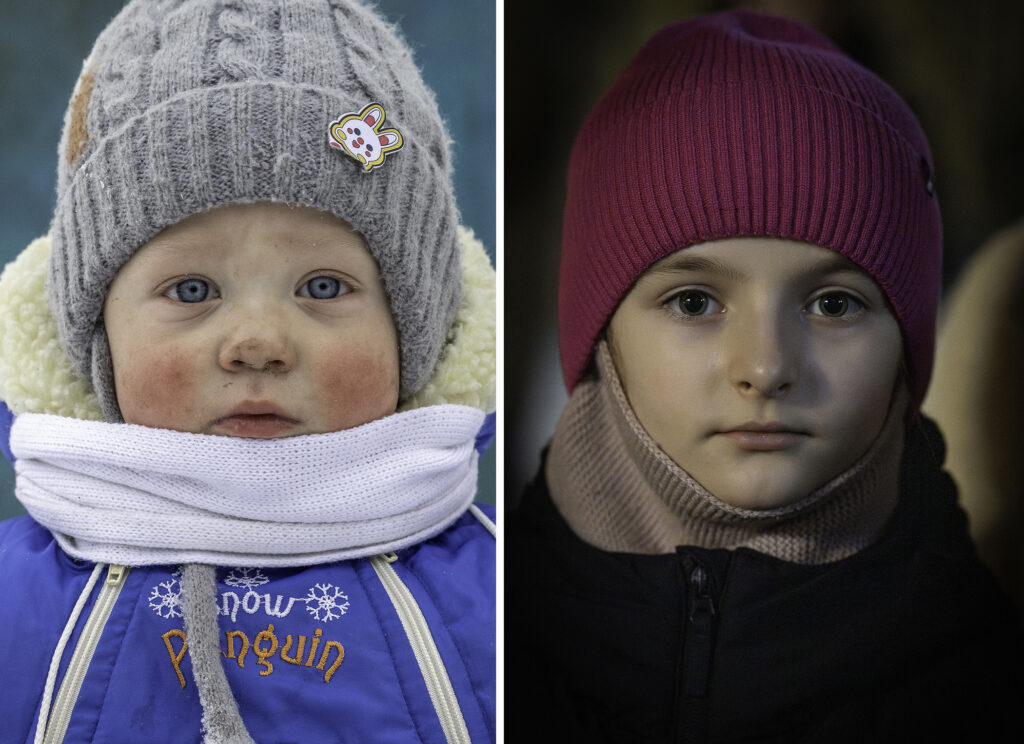
In 2023, CNG joined UHF’s (Ukraine Humanitarian Fund) Protection & Food Security Clusters and received recognition from major donors, including World Vision and UNICEF. At the beginning of 2024, CNG and World Food Program (WFP) launched a food aid project in the Donetsk region, serving 91,000 people a month.
At the same time, evacuation has become our primary focus. We have significant logistical capacity, including armored vehicles and buses, which allows us to regularly enter dangerous areas, inform people about evacuation options by talking to them and handing out pamphlets on how to contact us so we can transport them safely to more secure locations.
Over the past year, we have helped more than 15,000 people evacuate from various frontline regions of Ukraine. The Children New Generation shelter and its role are a humanitarian shelter for internally displaced people, primarily women, children, and elderly individuals. It is part of Shelter Union, a broader evacuation and support system. For many people, the shelter is not a final destination, but a place where they can recover after evacuation and constant shelling, receive humanitarian and economic assistance, restore documents, and decide on their next steps.
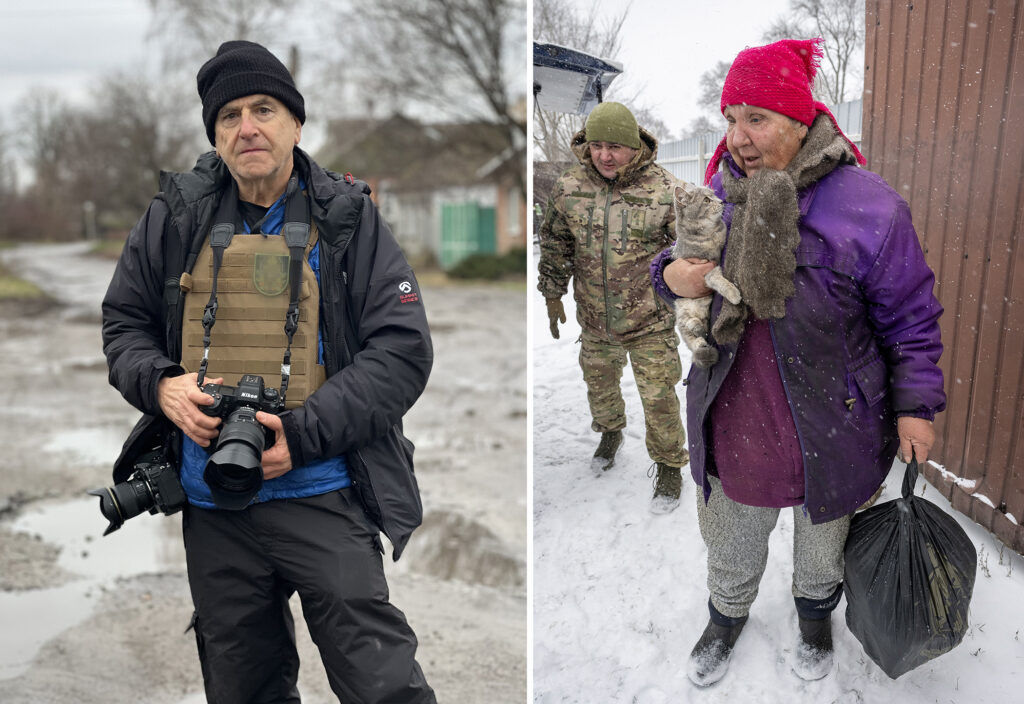
MEH: The psychological impact on these people can’t be underestimated. What specifically was the mission we went on?
AS: Many arrive having completely lost their homes, and often after second or third evacuations, and following months or years of living under the constant threat of attack. You accompanied us on an evacuation and civilian notification mission carried out jointly with the police unit “White Angel.” The people you documented were three adults from the Pokrovsk area.
MEH: What are the backstories of those individuals?
AS: One woman temporarily remained in Debaltseve, where she was provided with local accommodation. Two other people were evacuated to our shelter in Dnipro, where they received cash assistance and humanitarian aid. They were then able to continue their journey to their relatives. This was not simply a single trip, but one stage in a long and difficult path that thousands of people are forced to walk.
During the evacuation route, we stopped to eat at Kamysh Café in the village of Hryhorivka, a regular logistical stop during such missions. The café was opened by a woman who herself had previously been evacuated from Avdiivka. Today, due to the advancing frontline, she is once again facing the likelihood of displacement. This place has become a symbol of the repetitive nature of the war, people who once lost their homes, rebuilt their lives, and are now again at risk.
MEH: What information is on the leaflets you were handing out?
AS: These information leaflets are distributed to inform people about their evacuation options, their rights, available humanitarian assistance, temporary and longer-term accommodation possibilities, and legal and psychological support. For many people, these leaflets are the only source of reliable information at a moment of fear, exhaustion, and isolation. They help people understand that support exists and that they are not alone.
What is happening in Ukraine today is not a series of one-time evacuations. It is a cycle of repeated displacement of the same people, loss of homes, attempts to rebuild life, and forced departure once again. That is why evacuation alone cannot be the final solution. The country urgently needs sustainable housing solutions, real homes and apartments, not only temporary shelters. Without this, evacuation risks becoming an endless cycle.
How to Help
Ukraine Freedom Company, a Make It Better Foundation 2026 Philanthropy Award winner, faces an ongoing challenge of seeking financial and material aid to continue their support efforts in Ukraine. To donate funds, contribute materials, or learn more about UFC’s work, visit ukrainefreedomcompany.org.

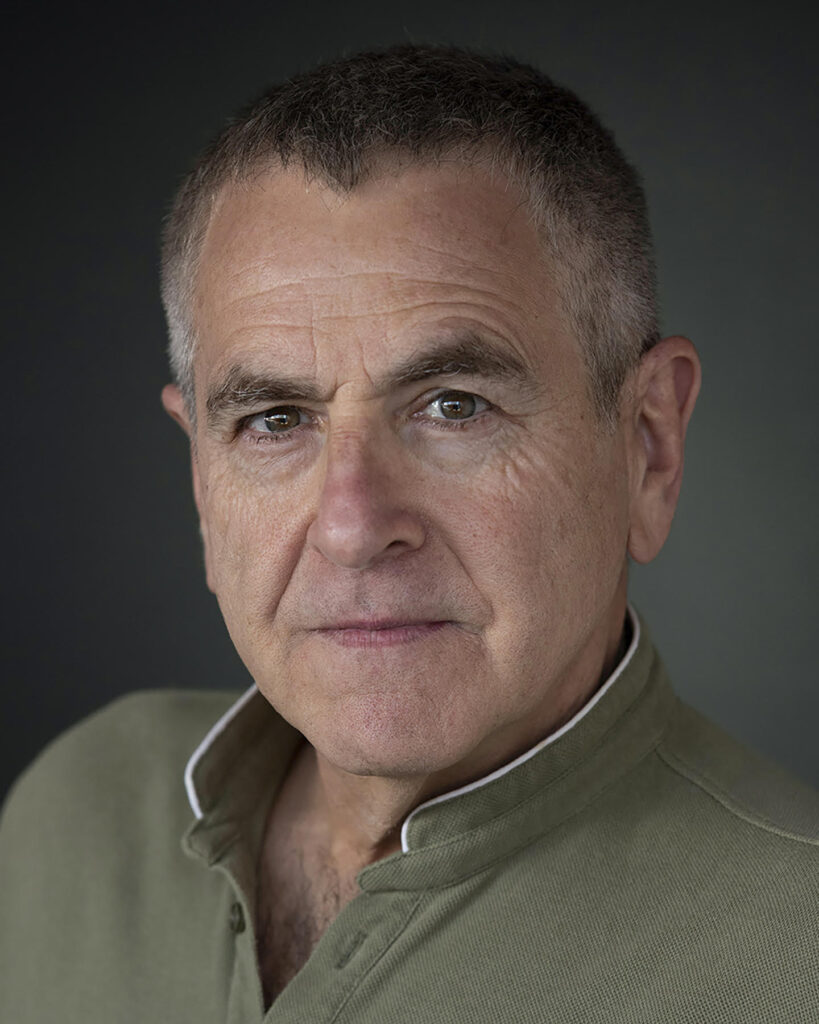
Award-winning Director of Photography Mark Edward Harris
Mark supports:
Center for Great Apes
Borneo Orangutan Survival Foundation
Search Dog Foundation
His books include:
Faces of the Twentieth Century: Master Photographers and Their Work
The Way of the Japanese Bath
Wanderlust
North Korea
South Korea
Inside Iran
The Travel Photo Essay: Describing A Journey Through Images
The People of the Forest