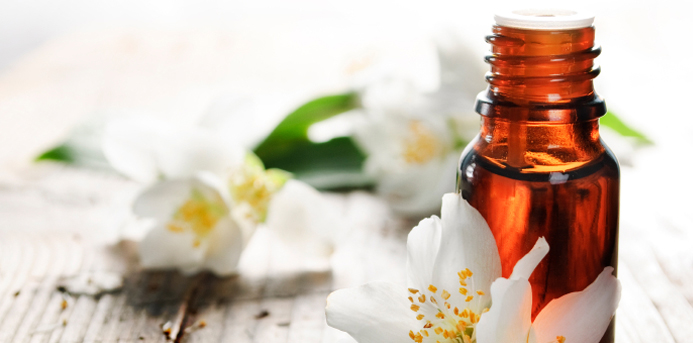
Put simply, an essential oil is the “oil of” the plant it comes from.
As for what makes it “essential,” that relates to the essence, or scent, of the plant itself. And while Wikipedia tells us that the earliest recorded mention of producing essential oils dates back to an Andalusian doctor in the 12th Century, there are a few important things you should know about them today.
1. Essential oils are used to promote wellness, create a sense of wellbeing, and even to clean your countertops.
This is why, according to Lynn Bednar, CNC, owner of Walsh Natural Health in Evanston, it’s important to be knowledgeable about how to use them, and what to look for.
2. Look for quality to maximize the therapeutic benefits of essential oils.
“There are different extraction methods for each plant,” Bednar says. “Organic and wild crafted oils are best as they will not contain contaminants from pesticides and herbicides.
Joanne Latona, co-founder of the Point Pleasant Wellness Day Spa in Fort Lauderdale, Fla., and an esthetician and essential-oil expert, agrees that quality is critical.
Essential oils that are tested and labeled as “CPTG—certified, pure therapeutic grade” are considered the highest quality of essential oil available to date, Latona says. “The designation is one that is not required by regulation, only by the desire of an essential-oil company to produce the highest quality level of oil that is possible.”
3. Essential oils can help prevent and fight illness.
Many essential oils are antifungal, antibacterial, and antiseptic, Bednar explains. They can be used to help combat colds and flu, while others are used for cleaning (the citrus oils are great for this) and for hormone balance.
“Essential oils have the ability to not only penetrate the cell walls of bacteria and destroy them, but they are also able to do that to viruses, which is something that antibiotics cannot do,” Latona says.
4. Test before you buy.
“We have testers of all of our oils and encourage our customers to play with them, as scent is so individual,” Bednar says.
Bednar’s customers use essential oils for uplifting mood or for massage (mixed with carrier oil such as almond, sesame and jojoba, which is a great moisturizer) for sore muscles and relaxation.
Bednar’s Best-Selling Oils
Lavender: Used for calming and muscle relaxation if combined with carrier oil, and it’s excellent for the skin. It has antiviral, antibacterial and antifungal properties, making it great for combating colds and flu. “Lavender Highland is true lavender and has the most potency in terms of its qualities,” Bednar says. Many people also use lavender for sleep, she notes.
Eucalyptus: Known for its ability to clear respiratory congestion, it can be inhaled directly from the bottle, diffused in a room, or mixed with carrier oil and used as a chest rub. It is antibacterial, antiviral and antifungal, so it is helpful for colds, flu and coughs. Heather Halpern, director of R&D for natural products company Kiss My Face, recommends the Kiss My Face Cold + Flu Shower Gel. “You don’t need to have a cold to be able to enjoy this popular pick-me-up with time-tested botanicals Eucalyptus, Fennel, Horehound and other aromatics,” Halpern says.
Tea Tree: Best known for its ability to get rid of athlete’s foot, nail fungus and lice, it can be helpful with blemishes and is found in many natural face washes. It is often a component of natural antibacterial wipes and sprays.