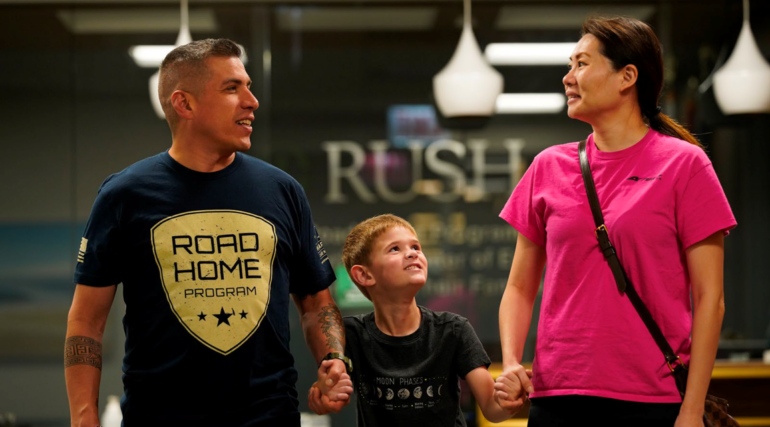
Housing and mental health care are often treated as separate challenges. For veterans, they rarely are.
As communities across the country look for better ways to support veterans, two Chicago organizations, both Make It Better Foundation 2026 Philanthropy Award winners, are demonstrating what a more integrated approach can look like. The Road Home Program: The National Center of Excellence for Veterans and Their Families at Rush helps veterans recover from trauma, providing free mental health care to veterans, service members, National Guard members as well as reservists and families. A Safe Haven Foundation helps them find a place to call home. Together, they’re working to make both easier to access.
In the past two years, A Safe Haven Foundation (ASHF) has opened two brand-new buildings offering permanent housing for veterans. One offers 90 units in Chicago, and another has 75 units in Hobart, Indiana.
“We continue to build off our mission of providing housing,” A Safe Haven Foundation president Mark Mulroe says. “The ecosystem here feeds into itself.”
For veterans facing housing instability, it’s hard to move forward if you don’t know where you’ll sleep.
“What therapists do — help someone come to terms with the past, teach them how to cope with emotions or think differently about themselves — can only really work if a person’s basic needs are met”, says Dr. Brian Klassen, clinical director of the Road Home Program and assistant professor in the Department of Psychiatry and Behavioral Sciences. “You might teach someone the best tools to regulate anxiety, but if that person is really worried about where they’re going to sleep tonight, you have completely missed the point as a clinician.”
In partnership with the Rush program, ASHF provides housing and case management, while veterans can access mental health education and other resources through Rush.
“It’s a great example of two organizations coming together to each do what they do best,” Dr. Klassen says.
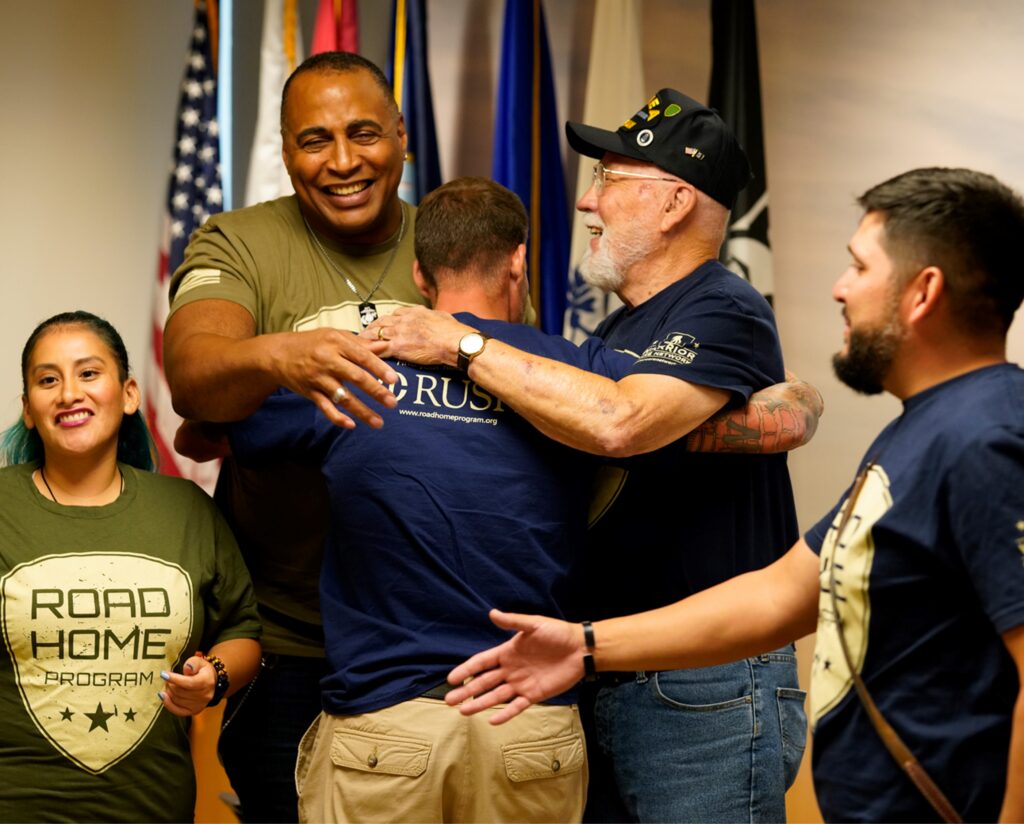
Having multiple needs met in one space can make it easier for veterans who are hesitant to seek help. For Bridgett Crawford, who experienced sexual trauma while in the military, as well as a traumatic brain injury, it took years of suffering and her pain coming out through addiction before she considered seeking help.
Her therapist suggested Road Home; even then, she hung up in the middle of the first phone call, nervous and scared of the shame attached to sexual trauma. “It felt like a scarlet letter,” Crawford says.
But eventually, Crawford walked through the doors. Staying there for two weeks, she found so much that helped — therapy, art therapy, meditation, sound therapy, acupuncture, and speaking to others who had experienced similar struggles.
“I was very hesitant because my trust had been shattered, being in the military, and reaching out for help and trusting individuals all around was a struggle with me,” Crawford says.
She remembers the first time someone there — a receptionist, with a calm voice and welcoming smile — told her, “It’s okay.”
“It just really felt like a weight was lifted off of me,” she says. “Before I went to Road Home, I was sort of like this shell of a human.”
Stepping Up When Grant Funding Falls Through
At ASHF, they previously offered the RISE program for veterans, with the acronym reflecting that they offer resources, information services, and empowerment. But two years ago, when A Safe Haven Foundation lost some grant funding, volunteers at Rush stepped in, providing suicide prevention services to the veteran residents.
Rush volunteers coordinate at both organizations, helping to streamline the onboarding process. Medical students provide mental health education and programming.
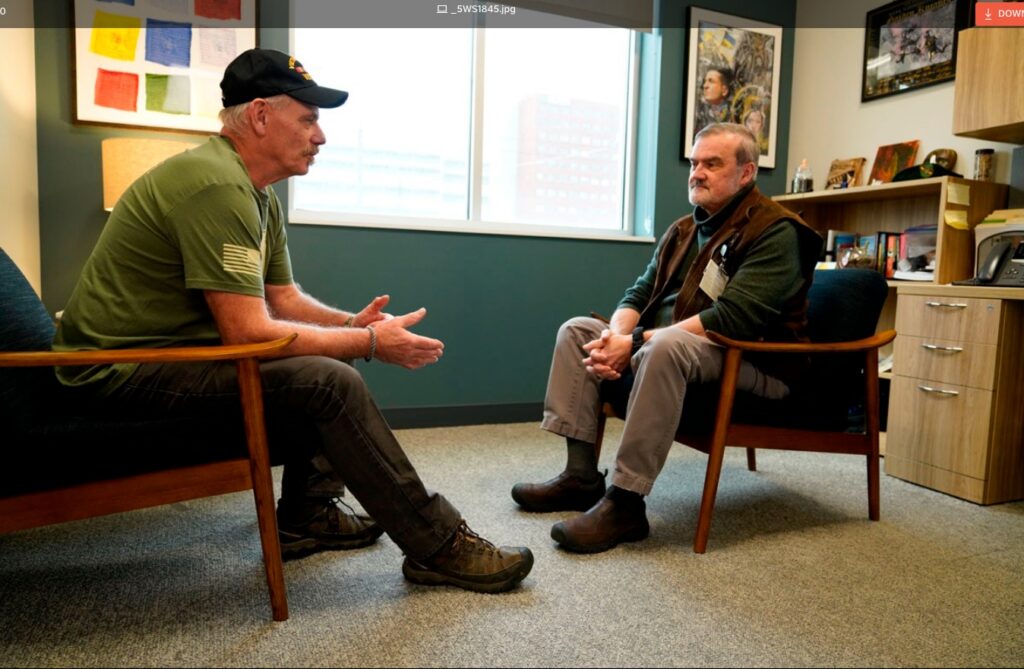
“They also provide a listening and compassionate presence,” Dr. Klassen says. “This may not look like much from the outside — getting someone a cup of coffee or offering to play Connect 4 — but for a lot of homeless veterans who are chronically lonely, these connections are powerful and even life-saving.”
Both groups have strong roots in Chicago. For years, the Road Home Program has provided veterans with a range of mental health services. The program specializes in treating PTSD that is resistant to typical methods of treatment and was recently featured by the American Medical Association for its accelerated PTSD treatment program, which helps veterans make progress in weeks rather than months.
And Safe Haven’s umbrella is wide, extending beyond veterans to people recovering from addiction as well as those experiencing food and housing insecurity.
In addition to the two new buildings housing veterans, A Safe Haven Foundation operates 39 veteran beds through the Department of Veterans Affairs‘ Contracted Emergency Residential Services program.
Overall, the program typically has a two- to four-week waitlist, and residents stay an average of 60 to 90 days.
A Team Approach to Supporting Veterans
If someone doesn’t have housing, it can be hard to feel rooted in any part of their life. The stress of not having a reliable place to sleep impacts everything from where one finds steady meals to their ability to get a job, with no address to put on a form.
“For a while now, we’ve been saying at Road Home that addressing the needs of returning veterans is a bigger job than any one agency, health care system, or nonprofit,” Dr. Klassen says. “It really needs to be the job of a grateful nation that finds expression in public, private, and academic partnerships.”
He adds, “People’s needs are complex, especially when they are returning from war or several years of military service, so what’s needed is a whole team of providers and organizations to wrap around that person and help identify what it is that they need to thrive and fully transition back to their life as a civilian.”
According to Rush, studies show that veterans who do not have housing are at significantly higher risk for mental health challenges and suicide. Integrated care that adds ease to veterans finding the help they need can bridge these gaps.
At Safe Haven, support for veterans has long been a priority. Cofounders Brian Rowland, a Navy veteran, and Neli Rowland drew on personal challenges, including Brian’s recovery from chemical dependency, and used those experiences to help shape the organization’s mission.

Crawford is now a Veterans Service Officer at the Veterans Assistance Commission of Sangamon County. She is the person telling others, “It’s okay.” And she sees firsthand how eliminating obstacles and providing integrated care help others like herself.
“That marks a huge difference because it can be overwhelming, if you’re dealing with a mental health issue, ‘What’s this going to be like?’” Crawford says. People worry about, she says, “I already need to worry about housing, what about my kids? I need to be able to attend my therapy appointments.”
She still opens the binder she got at Rush.
“Road Home just packs you full of all these resources and tools that you can take home with you,” Crawford says.
How to Help
The Road Home Program at Rush provides mental health care to veterans, service members, and their families, helping remove barriers to treatment and expand access to evidence-based care. Since its founding, the program has served more than 5,000 veterans, active-duty service members, and family members. Support their work with a donation.

A Safe Haven Foundation provides life-changing resources to help individuals and families rebuild their lives. Donations help empower people, including veterans and parents, to achieve stability and independence.
Upcoming Event: Gary Sinise & the Lt. Dan Band at Cantigny Park
The Road Home Program is one of the featured veteran-serving organizations participating in Rockin’ For Our Vets: America 250, a benefit concert featuring Gary Sinise & the Lt. Dan Band and special guest HunterGirl.
The event takes place July 11, 2026, at Cantigny Park in Wheaton, IL. Proceeds support organizations serving veterans and military families through programs, including the Road Home Program, that help provide housing, mental health care, and other essential services.
Doors open at 2 p.m., with Gary Sinise & the Lt. Dan Band taking the stage at 7 p.m. Tickets are $50 plus fees and include parking and on-site transportation.
Learn more and purchase tickets.

Alison Bowen is an award-winning journalist whose work has appeared in publications like The New York Times, CHICAGO magazine, Cosmopolitan magazine and the Chicago Tribune, where she was a staff reporter and editor for a decade. She is drawn to stories about maternal health, well-being, trauma and resilience.