Once the king of the supermarket checkout line, revered for its durability over paper, plastic bags are falling out of favor on many fronts.
Though Evanston may not be following suit quite yet, Chicago’s recent decision to restrict the use of plastic bags placed it in the growing ranks of more than 160 other plastic-bag-banning U.S. cities (and potentially a couple of states—hello, California and Massachusetts). Internationally, countries with plastic bag bans or levies range from China to Ireland, Italy and South Africa.
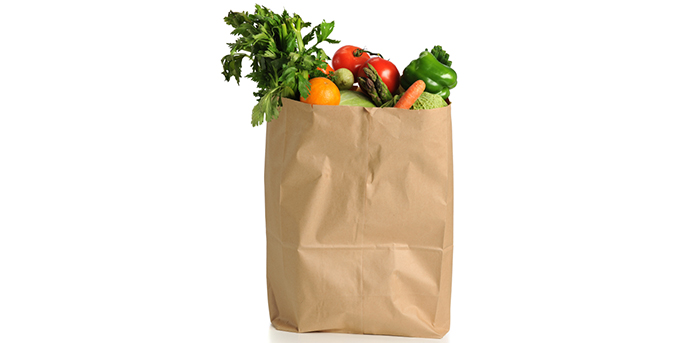
With so much momentum building in the effort to reduce plastic bag waste, it’s no wonder many people assume that a single-use paper bag is a greener choice than plastic. After all, plastic bags are made from fossil fuel, and they build up indefinitely in the environment, harming aquatic ecosystems, clogging drains and contributing to urban litter problems. Meanwhile, paper comes from trees as opposed to petroleum, breaks down fast in the environment, and is easy to recycle. Sounds like an eco-win, right?
It’s not that simple, according to Eric Masanet, Ph.D., of Northwestern University, who is concerned that plastic bag bans may take emphasis off the full impact of single-use bags of any kind. “The science shows that moving from plastic to paper is not necessarily ‘greener,'” he says, when you take into account the full picture of environmental impact.

Zooming in on cradle-to-grave impact
Life cycle analysis from production to distribution to end of life reveals that both paper and plastic have their holes in terms of resource use and greenhouse gas emissions.
- Making it: Though we often measure impact by the end of a bag’s life, how it’s made is also important, as processing raw materials and manufacturing causes pollution and requires energy and water. As it turns out, chopping down a tree and pulping it into paper isn’t exactly eco-magic. The UK’s Environment Agency’s life cycle analysis determined that the impact of paper production on human health and eco-toxicity is “significantly worse” than plastic’s.
- Moving it: Of course, bags have to be distributed from the plant to the store, which in turn creates more impact. The average paper bag is five to seven times heavier than its plastic counterpart, meaning more fuel—and therefore more greenhouse gas emissions—are required to move it.
- Discarding it: Compared with plastic, paper bags are easy to recycle and break down quickly in the environment—definitely more benign in terms of planetary bliss. On the other hand, plastic bags are much easier to reuse. The UK LCA mentioned above estimates that 76 percent of plastic shopping bags are reused at least once, which can help reduce the need for new trash bags and pet waste bags.
There’s way more where that came from, but suffice it to say: Measuring environmental impact of paper versus plastic is more complicated than meets the eye.
Such nuances are a big part of why California’s ban includes legislation requiring a 10-cent fee for carryout paper bags, meant to encourage shoppers to bring their own. It’s also why Austin, Texas, has banned businesses from providing single-use bags of any kind, instead recommending reusables.
Bringing your own bag for the win
So, which bag wins? Neither, says Masanet. Instead of comparing plastic to paper’s virtues, he recommends we call the whole thing off and BYOB.
Compared with both paper and plastic single-use bags, reusable bags are “an environmental slam dunk—if you reuse them,” Masanet says. If you need to buy a bag, opt for durable recycled plastic options over cotton, unless you plan to reuse the cotton bags hundreds of times.
So grab that tote and let’s toast to ending the reign of single-use bags, paper and plastic alike.
One green family activity: Make a reusable bag together
Reduce that stockpile of old plastic bags by adding a homemade touch to your collection of reusables. Just gather up 30 or so bags, and with an iron, turn ’em into one cool reusable bag. For older kids with access to a sewing machine, try this dressed-up version.
Psst: For more on the science behind all this, read the myth.