Many of the behaviors that show up in adult relationships — defensiveness, emotional shutdown, perfectionism, people-pleasing, fear of conflict — often begin as survival strategies long before adulthood.
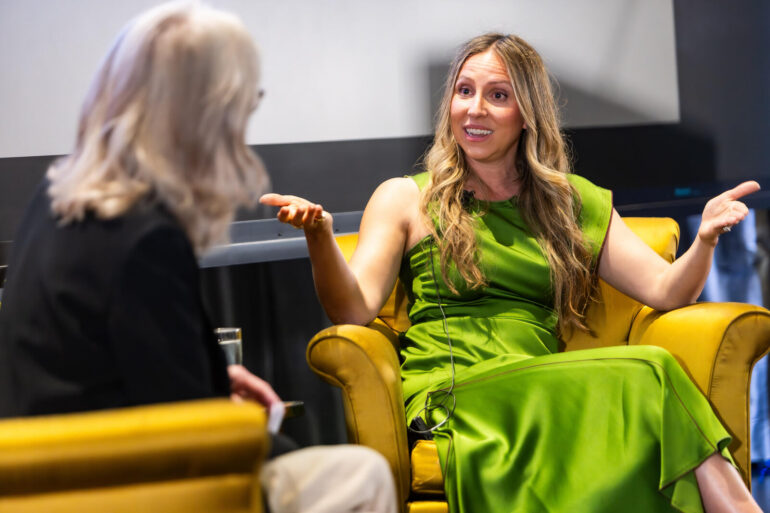
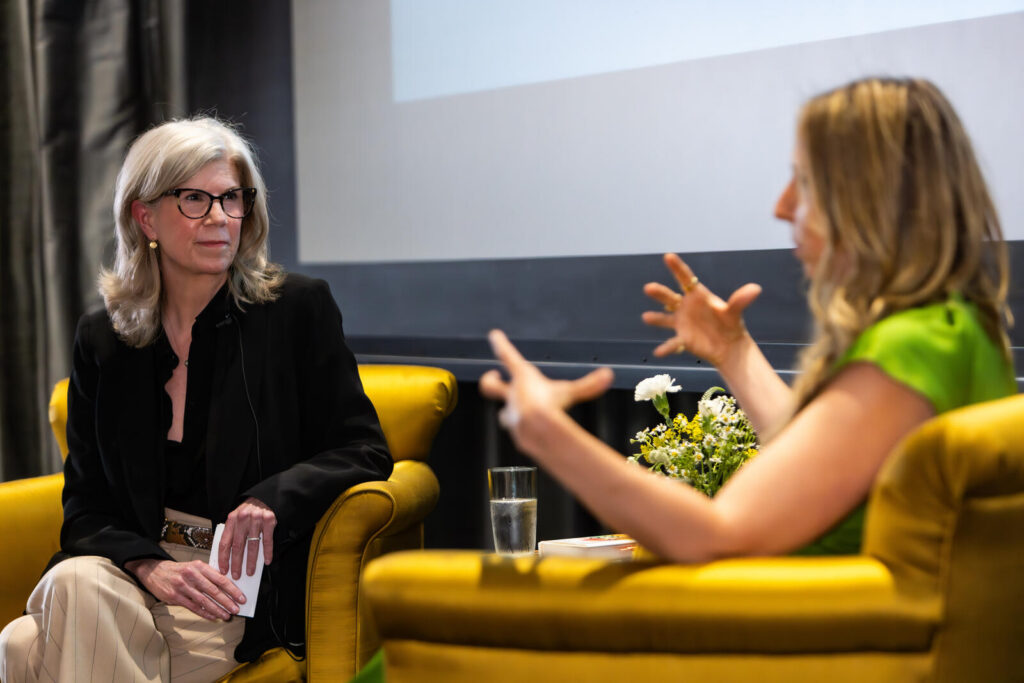
At a recent conversation hosted by The Family Institute at Northwestern University — a Make It Better 2026 Philanthropy Award winner — licensed marriage and family therapist and author Vienna Pharaon joined Nancy Burgoyne, the Institute’s Chief Clinical Officer, to unpack how childhood wounds shape the way people love, communicate, and protect themselves — and what healing can truly look like in practice.
Here are 10 of the biggest takeaways from the discussion.
1. Our relationship patterns are often survival strategies formed in childhood.
Many adult relationship behaviors — defensiveness, perfectionism, withdrawal, needing to be right, people-pleasing — began as ways to stay emotionally safe earlier in life. What once protected us can later disrupt intimacy.
2. Dysregulation is self-protection, not moral failure.
One of the most powerful reframes: when people become reactive, angry, shut down, or defensive, they are often entering a state of self-protection. Try moving away from shame and toward curiosity about what the nervous system believes is unsafe.
3. Healing begins when we replace shame with curiosity.
Instead of asking “What’s wrong with me?”, ask: What is familiar about this reaction? Why does this behavior feel necessary? That shift opens the door to understanding rather than self-condemnation.
4. The goal of healing is moving from survival to choice.
The shift from survival to choice is about creating enough pause between trigger and reaction that people can consciously choose how to respond instead of automatically reenacting old patterns.
5. The “pause” is one of the most important relationship tools.
Healthy conflict is not about never becoming activated — it’s about learning to pause before reacting. Repair cannot happen while someone is dysregulated, and sometimes the healthiest option is stepping away temporarily and returning later.
6. Strong relationships are built through repair, not perfection.
Conflict itself is not the problem. What matters is whether people can reconnect after difficult moments. A sign of a healthy relationship: partnerships can weather difficulty while remaining intact.
7. Understanding a partner’s history creates compassion.
A partner is not just the adult in front of you, but someone shaped by a lifetime of experiences, wounds, and family dynamics. Curiosity about each other’s emotional history can be an act of love.
8. Pain that goes unacknowledged keeps resurfacing.
Unresolved emotional pain repeatedly shows up in patterns, reactions, and relationships until it is acknowledged. Rather than trying to destroy us, pain is asking to be witnessed and understood.
9. Honesty without care can damage connection.
“Brutal honesty” is not automatically healthy. Instead, strive for “relational honesty” — truth delivered with care, awareness, and consideration for how it will land with another person.
10. Mental health work is deeply relational and communal.
The work goes beyond individual healing — healthier relationships actually strengthen families and entire communities. Therapy, storytelling, vulnerability, and connection can all reduce isolation and foster resilience.
How to Help
For more than 50 years, The Family Institute at Northwestern University has been at the forefront of mental health services and research. Donating to the Family Institute helps support mental healthcare for all. Your gift allows The Family Institute to serve the needs of all families, regardless of their ability to pay. Your contribution helps establishes an incubator for research and education, connecting science with practice as researchers, educators and therapists collaborate with clients. Your generosity creates change for children, adults, couples, families, and our community.


Jane Bodmer is the digital marketing manager at Make It Better Foundation. She has built her career around leveraging storytelling to drive social change, covering community and gender-based violence, refugee and immigration reform, and mental health for organizations like Heartland Alliance, READI Chicago, and Depression and Bipolar Support Alliance. Her favorite nonprofits to support are Open Books, Openlands, and PAWS Chicago.