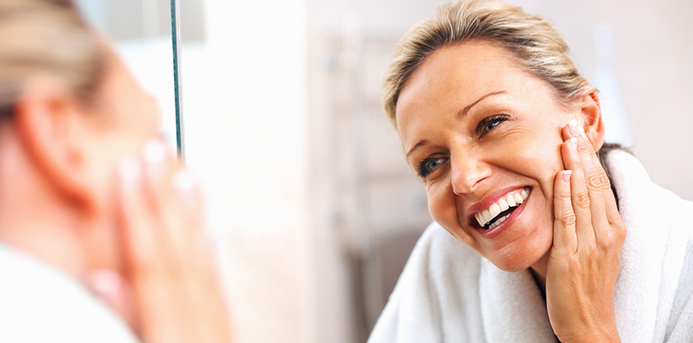
I recently asked my girlfriends about their skincare regimen.
I discovered that most of them barely removed their eye makeup at night, let alone applied a moisturizer, vitamin cream or serum.
What’s the big deal for your skin? The skin is the largest organ of your body and as we age, a lot of changes happen to our skin: it thins, loses elasticity, gets drier and becomes less resistant to the sun’s damaging rays.
You might choose not to use fillers or Botox, but at least consider what a good at-home skincare routine can accomplish.
Sunscreen
The number one way to take care of your skin is by using a sunscreen; it’s truly the ultimate anti-ager. Even if it’s overcast outside, you’re still exposed to the sun’s rays; a sunscreen acts as a shield. Amy Brodsky, M.D., dermatologist at The Derm, recommends to “look for a sunscreen with zinc or titanium (safe mineral sunscreens) as the active ingredient.” The rule of thumb is that a shot-glass size of sunscreen is the minimum amount you’ll need to cover the exposed areas of your face and body. Remember, if you’re outdoors, be sure to reapply every 1-2 hours.
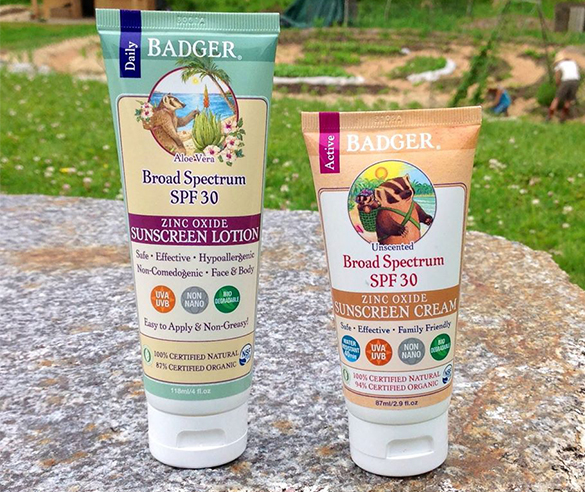
Photo via Facebook.
Try:
- Badger Balm All-Natural Sunscreen Cream, Unscented
- La Roche-Posay Anthelios 60 Ultra Light Sunscreen Fluid
Vitamins C and E
Both vitamins C and E are antioxidants with a boatload of protective properties. Vitamin C reduces inflammation, increases the efficiency of sunscreen actives, encourages collagen production and slows the rate of free radical damage. Vitamin E has moisturizing and healing properties, protects skin against UV radiation and works as an anti-inflammatory as well. “In the morning, I recommend an anti-oxidant serum, containing vitamin C or green tea polyphenols, which help reduce free-oxygen radicals that damage and age the skin,” says Jordan Carqueville, M.D., dermatologist at The Skin Care Center. Apply your serum first and follow with sunscreen.
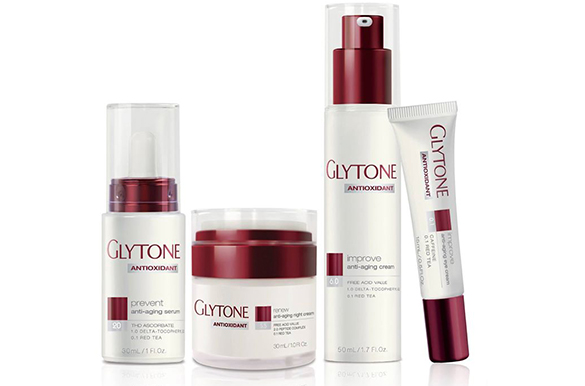
Photo via Facebook.
Try:
Retinol/Retinoid
Retinol and retinoid are both derivatives of vitamin A and proven to improve blotched pigmentation, wrinkles, skin tone and hydration levels. Retinoid is prescription-strength and more effective, while retinol is milder and more tolerable. Carqueville explains, “As long as you are not breastfeeding or pregnant, a retinol or retinoid product used at night after cleansing the face reduces fine lines and wrinkles, minimizes pore size and stimulates the production of new collagen.” Apply a hydrating moisturizer about five to 10 minutes after application. Brodsky also recommends the use of a retinoid and says, “An evening routine should have a retinoid and anti-oxidants, but know that the over-the-counter products have less efficacy then prescription-strength products.”
Tips:
- Start off slow. Your skin will need to get used to a retinoid. Apply a pea-size amount every three days for around two weeks. Then you can bump it up to every other day, and eventually daily.
- Only use a retinoid/retinol at night, as it’s more sensitive to sunlight.
- Your face should be totally dry when applying a retinoid. Better yet, wait to apply a retinoid/retinol 20 minutes after washing your face. This will reduce the possibility of irritation.
Try:
Moisturizer
Look for a moisturizer that’s compatible with your skin type and consider the season. For instance, if your skin is dry in the winter, a cream is ultra hydrating. During the summer, a cream can be too rich while a lotion is lighter weight, yet still moisturizing. If you’d rather skip a step, there are now many moisturizers that contain sunscreen. If you choose to use sunscreen in addition to moisturizer, apply your sunscreen first and let it set before you add your moisturizer.
Tip:
- Apply moisturizer to neck, face and décolletage using upward sweeping motions. You want to lift the face, not pull the skin downwards.
Try:
Eye Cream
It’s never too late to start using an eye cream, and once you’re in your 20’s, an eye cream should be a regular part of your skin care regimen. Beauty guru and YouTube celebrity Michelle Phan explains, “The skin around your eyes is much thinner and more delicate than other areas, so it’s more prone to damage and will start showing signs of aging sooner.” It also tends to become dryer as it has fewer oil glands than the rest of your face. Your eyes are constantly being exercised—all that blinking, squinting and smiling—and all of this movement can lead to crow’s feet in the outer corners. An eye cream is specifically formulated to moisturize this sensitive area of skin and to plump wrinkles.
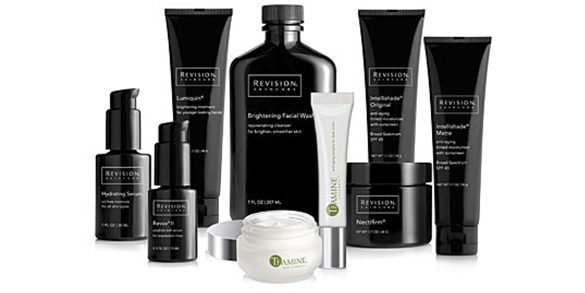
Photo via Facebook.
Tip:
- Gently pat the eye cream onto the entire lid, underneath the eye and at the outer corners. It’s a good idea to try a different eye cream once you’ve finished the jar. Your skin can get used to the same product when used repeatedly and changing up the formulation can often help the product stay effective.
Try:
Here’s your cheat sheet:
- Morning: Apply serum, then eye cream. Follow with sunscreen or moisturizer/sunscreen combination.
- Evening: Apply a retanoid/retinol. Wait five to 10 minutes and then apply a face moisturizer and eye cream.