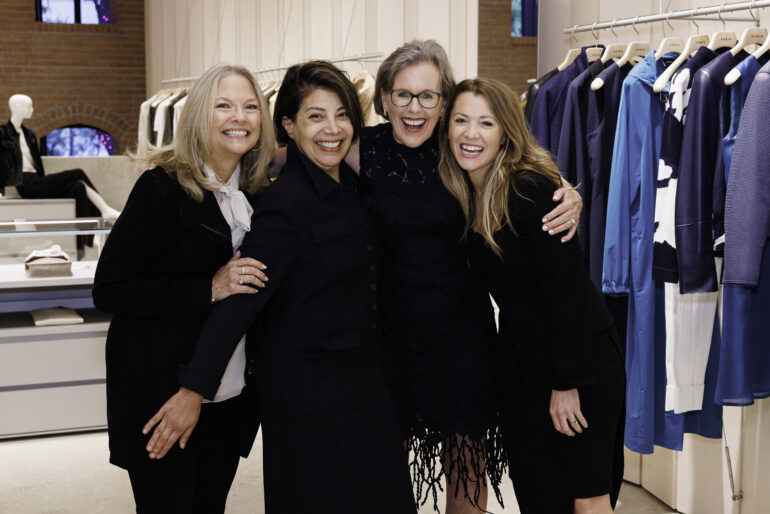
The best leadership lessons rarely come from classrooms or corporate playbooks; they come from people who live them every day — leaders who elevate others and approach their work with a sense of purpose that’s both personal and practical.
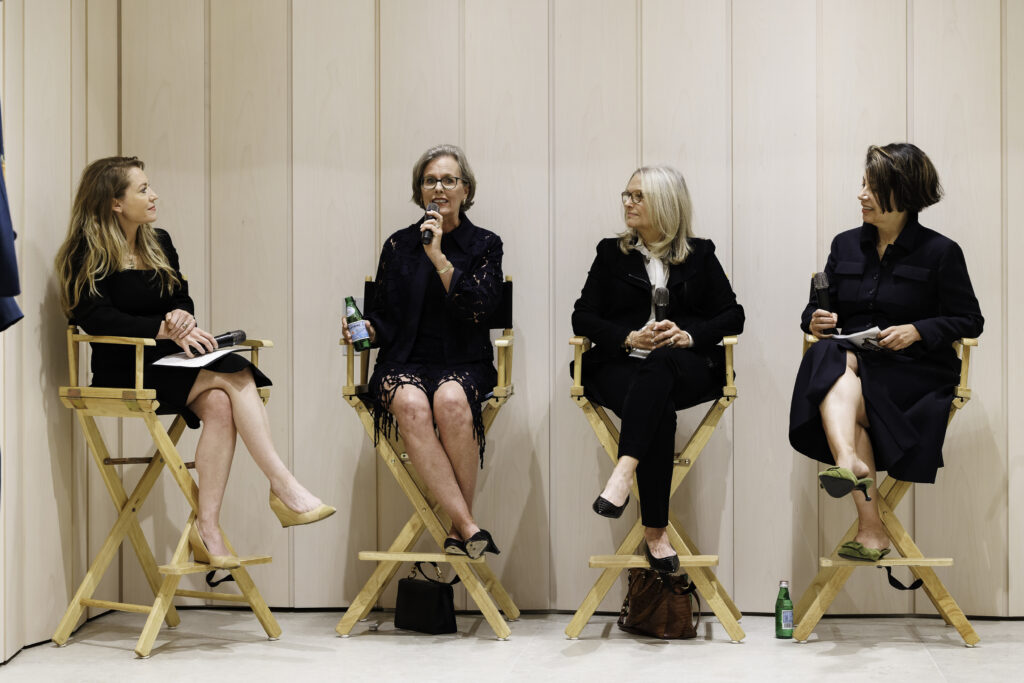
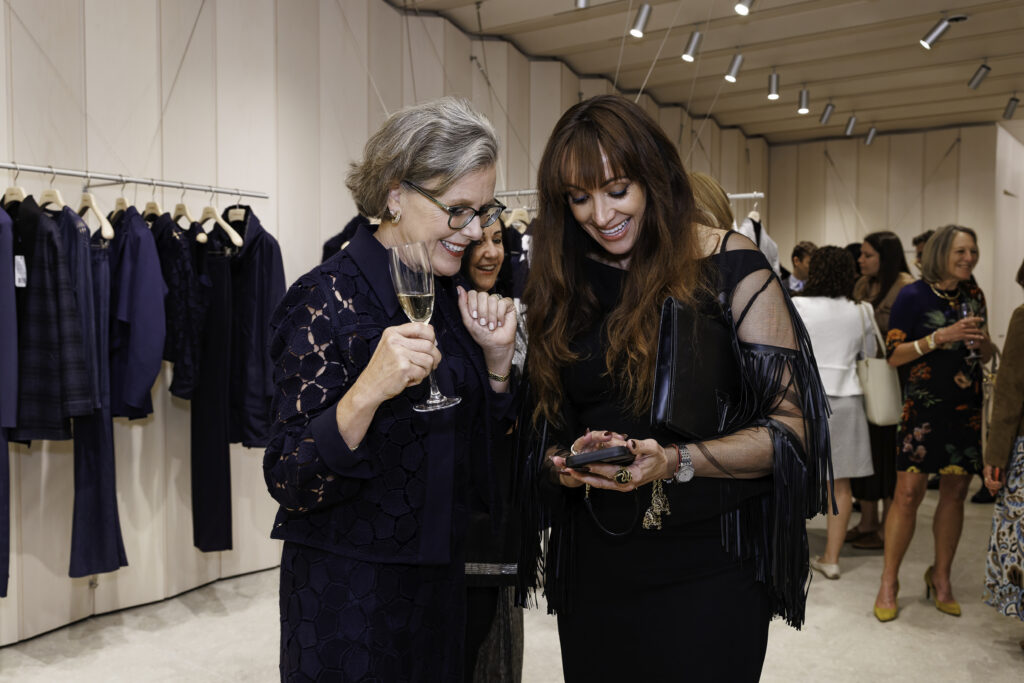
Three women who embody that approach — Michelle Sybil Melendez, Managing Director of Strategic Partnerships at Lever for Change; Nancy Santi, philanthropist and civic leader; and Susan Noyes, Founder and Chief Visionary Officer of the Make It Better Foundation — recently shared how passion, purpose, and integrity have shaped their lives and work, during a panel discussion moderated by Catanna Berger, Vice President of Marketing and Events for Akris Inc. at Akris’ Chicago store on Oak Street.
Surrounded by an audience representing organizations including Apple, Graf, MacArthur Foundation, CBS, NBC, Lyric Opera, Harris Theatre, JP Morgan Chase, Thierer Family Foundation, Women’s Library Club, and Luxury Real Estate, the panel of powerful women leaders offered seven timeless takeaways about what it means to lead with purpose to create lasting social impact.
1. Leadership Is Reflected in Collaboration
For Michelle Sybil Melendez, leadership isn’t about power — it’s about partnership. As Managing Director of Strategic Partnerships at Lever for Change, a nonprofit affiliate of the MacArthur Foundation, she connects major donors and philanthropic networks with bold, scalable solutions to the world’s most urgent problems, from climate resilience to racial equity. Through this work, Melendez operates at the intersection of philanthropy and impact investing, helping donors align capital with long-term, values-driven outcomes.
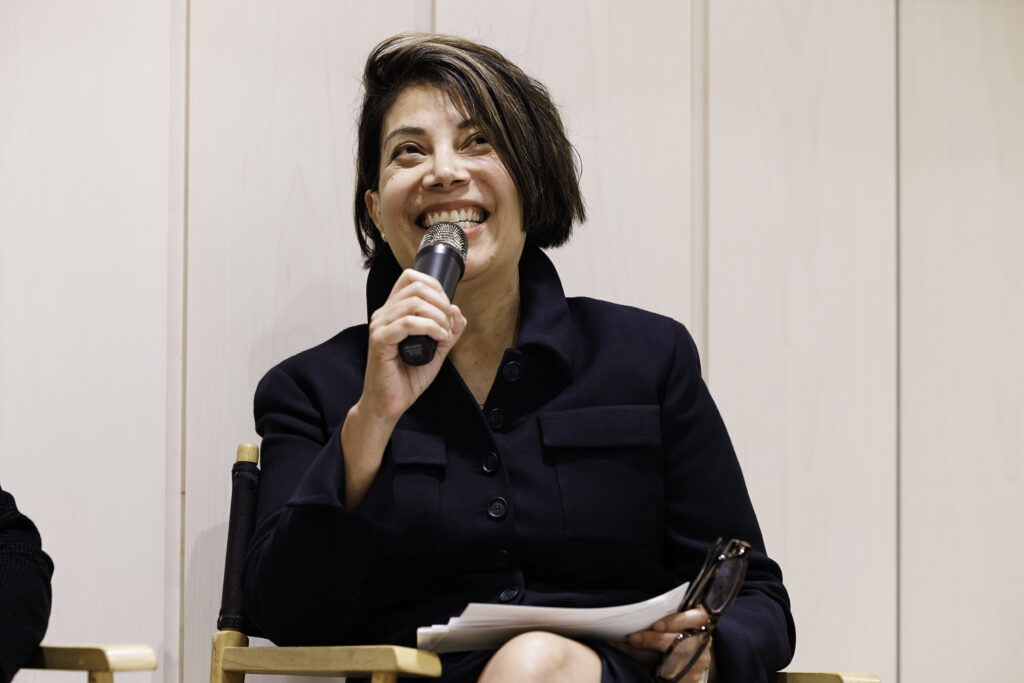
But her earliest lesson in leadership came long before her professional success. Growing up in a small town in rural Illinois, she recalled overhearing her parents worry about paying bills, feeling determined to help, and finding a willing collaborator in her sister.
“I told my sister, ‘Everyone says I’m a good artist. What if I draw pictures and you sell them?’” she recalled. “[My sister] said, ‘Yes, you are a good artist, and I’ll sell your art.’ That was my first experience of leadership reflected in someone else. We don’t do this alone.”
Melendez also spoke about how her early understanding of shared leadership now shapes her work at Lever for Change, where she operates at the intersection of philanthropy, systems change, and accountability. As Managing Director of Strategic Partnerships, she works with donors, foundations, and nonprofit leaders to structure large-scale, trust-based giving that prioritizes long-term impact over short-term wins.
She emphasized that effective philanthropy depends on listening to communities and resisting the urge to impose top-down solutions. “Leadership,” she said, “is not about being the loudest voice in the room. It’s about noticing who isn’t being heard and making space for them.”
That philosophy, she explained, is central to Lever for Change’s model, which brings together networks of experts to evaluate proposals while ensuring that nonprofits retain agency over their missions and strategies. The goal, she noted, is not just to fund good ideas, but to help them grow sustainably and ethically.
2. Service Enriches the Giver as Much as the Recipient
Nancy Santi didn’t set out to become a civic leader — but her decades of board service have made her one of Chicago’s most trusted advocates for the arts and education. A former elementary school teacher, she has served on boards for PAWS Chicago, the Boys & Girls Clubs of America, Chicago Symphony Orchestra, Art Institute of Chicago, the Women’s Board of Lyric Opera of Chicago, as a trustee for the Harris Theater for Music and Dance, and as the Anniversary Fund Co-chair of LEARN Charter School Network.
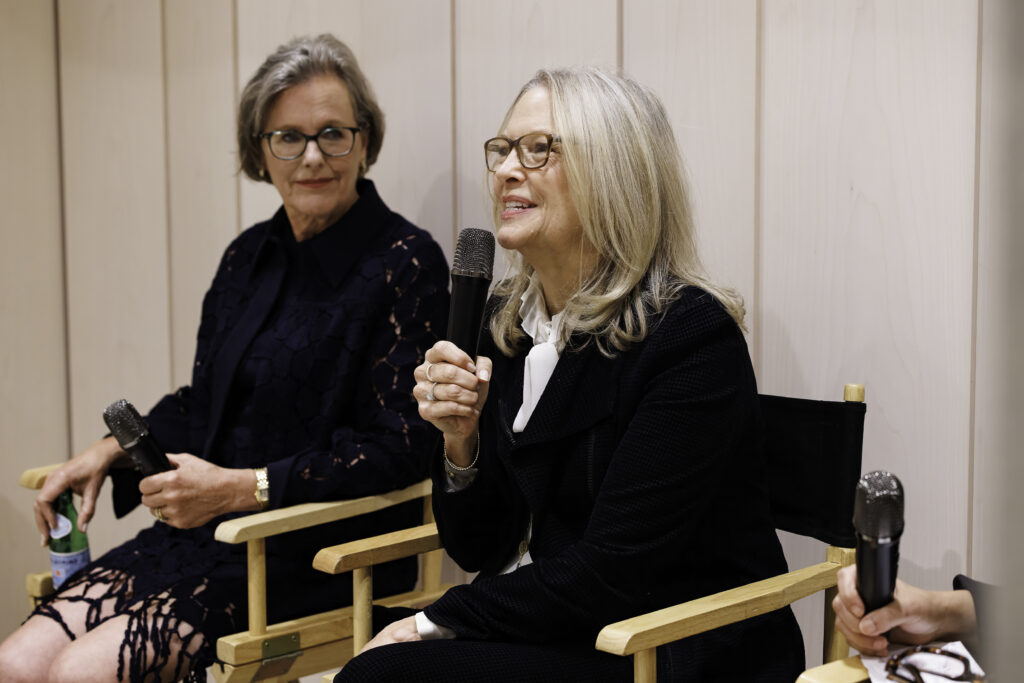
Demystifying board service, Santi stressed that meaningful civic leadership often begins informally and grows organically. She traced her own path from classroom teaching to board leadership through hands-on involvement, curiosity, and a willingness to say yes before feeling fully prepared.
“My first board was my kids’ nursery school board,” she said. “I noticed there wasn’t a writing center or literacy books, and suddenly I was running a workshop for teachers. Before I knew it, I was the chair.”
She described how that pattern repeated throughout her life, whether through arts institutions, charter schools, or youth-serving organizations like the Boys & Girls Clubs. Each opportunity, she said, came not from ambition but from passion. “I never thought of myself as ambitious,” she said. “I just wanted to make a difference.”
Her remarks offered a reframing of leadership as something built through consistency and care rather than credentials. For Santi, service was not a line on her résumé but a way of understanding the world more fully.
3. Technology Should Expand Access, Not Create Barriers
For Susan Noyes, technology is not about disruption or innovation for its own sake. It is about access, visibility, and giving organizations the tools they need to be seen, heard, and sustained.
She reflected on the early days of Make It Better Magazine and its evolution into the Make It Better Foundation and its publishing arm, Better Magazine. She recounted that nonprofits that were doing meaningful work in their communities but lacked even basic digital infrastructure. “We worked with organizations that didn’t have a website, didn’t have social media, and didn’t know how to tell their stories online,” she said. “They were doing incredible work, but no one knew about it.”
Noyes emphasized that helping nonprofits build digital capacity was not about branding, but about leveling the playing field. Access to technology, she noted, often determines whether an organization can attract donors, recruit volunteers, or advocate effectively for its mission. That conviction became a major driver behind her creation of the Make It Better Foundation’s Philanthropy Awards, which are designed to pair funding with visibility rather than treating the two as separate goals.
Rooted in a venture philanthropy approach, the awards focus on directing resources and sustained storytelling toward nonprofits positioned to grow their impact. In 2026, that commitment includes a $1.25 million investment and a full year of collaborative storytelling supporting 43 organizations selected through a rigorous review process.
Noyes see the real power of technology lies in its ability to clear barriers and widen who gets to participate, rather than simply amplifying the loudest voices.
4. Family Is the First Teacher of Purpose
Each panelist traced her sense of direction back to family — those early examples of compassion and courage that quietly shaped their worldviews.
Melendez shared how her parents, both first-generation Americans, modeled integrity when they discovered a group of boys of color had been excluded from joining a Cub Scout den.
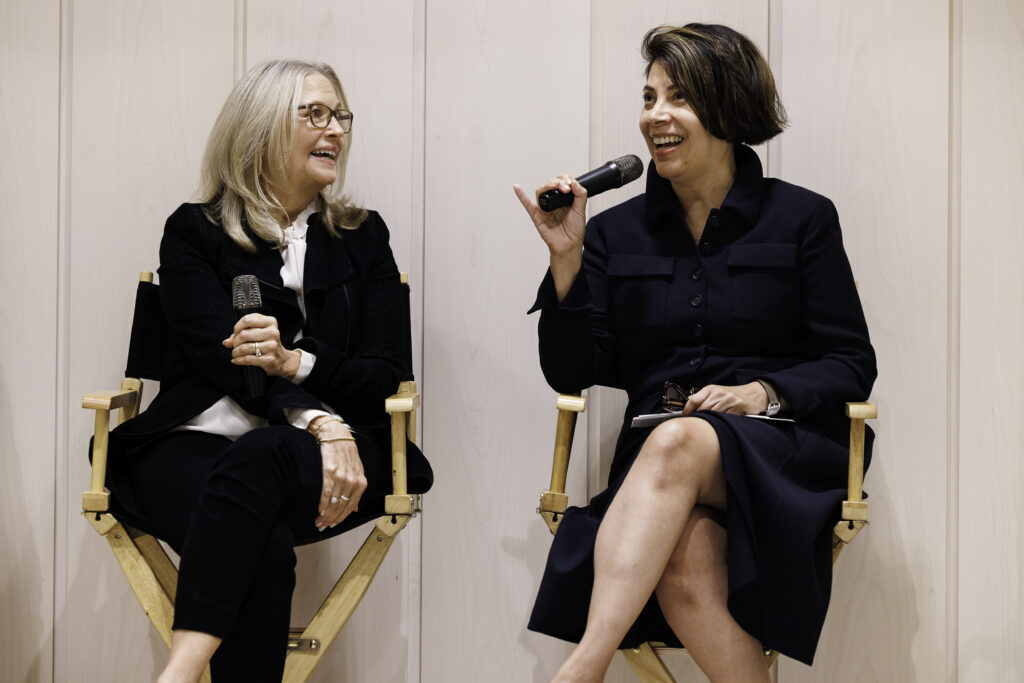
“My parents had no aptitude for camping,” she laughed, “but they knew it was the right thing to do. That moment taught me that purpose is inevitably anchored in integrity — and that all you can do is set your compass to what’s deep inside.”
Noyes credited her mother for demonstrating what active citizenship looks like.
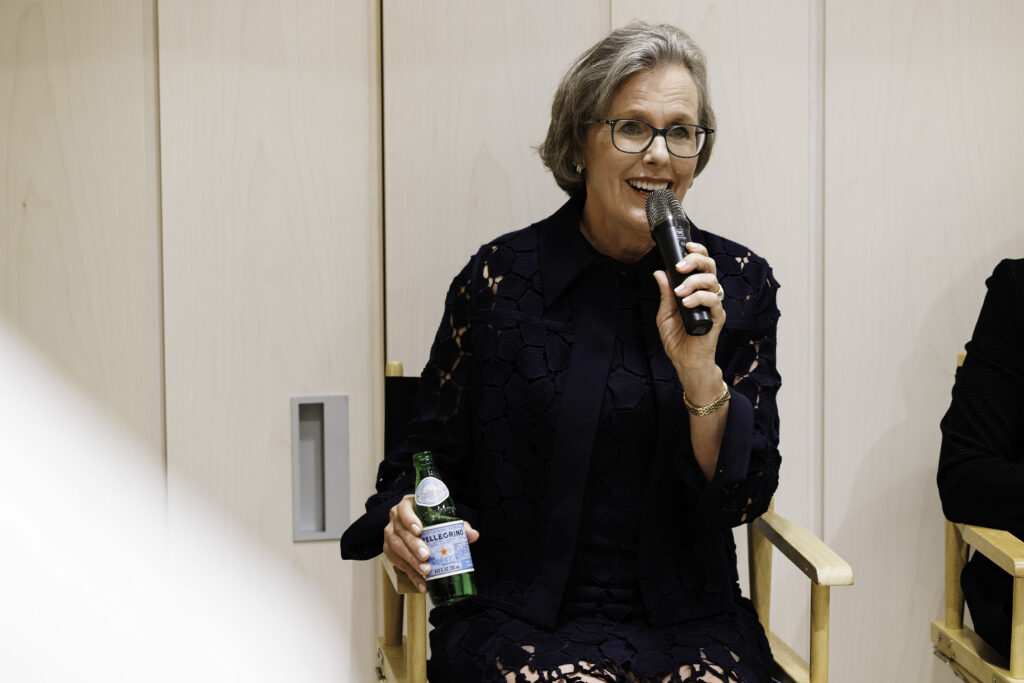
“She was out in the community, raising five kids, helping my father grow a business, and making things happen,” she said. “Who I am is who I watched her be.”
And for Santi, it was her father who made service second nature.
“He didn’t talk about volunteering — it was just something you did,” she said. “It became part of our lives.”
5. Faith Over Fear: Finding Courage in the Face of Self-Doubt
When the conversation turned to imposter syndrome, the women spoke with humor and honesty about self-doubt and resilience.
“My mantra? Fake it till you make it,” Santi said. “There are moments when you think, Can I really do this? But you pull from your strengths, step out there, and then realize — yes, I can.”
Melendez agreed. “Keeping the faith in yourself,” she said, “is one of the most generous acts you can offer your community.”
For Noyes, faith also means trust — in purpose, timing, and process. “It’s not just faith in yourself,” she said. “It’s knowing you’re doing what you’re supposed to be doing.”
6. Growth Often Begins in Difficult Seasons
Moments of transition and challenge, Noyes noted, can also be catalysts for clarity.
“We grow the most when times are really tough,” she said. “It’s easier to find your purpose in response to that.”
For Melendez, those inflection points often test and refine integrity.
“Sometimes the hardest choices are the most right ones,” she said. “All you can do is set your compass to what you notice is deep inside.”
Each woman echoed the idea that discomfort often signals direction — proof that courage and purpose are rarely found on easy ground.
7. Leading With Gratitude
By the evening’s close, one theme tied the conversation together: authentic leadership begins with gratitude.
“We are the fortunate few,” Noyes said. “If you own your home, if you have a good job, if you have health insurance — we have to model paying that blessing forward.”
She spoke about recognizing privilege not as guilt but as responsibility, using it to create opportunities and build stronger, more compassionate communities.
Santi echoed that perspective, describing gratitude as the foundation of service.
“It’s about being thankful for what you have and finding ways to give back,” she said. “When you share your time or your energy, it comes back to you tenfold.”
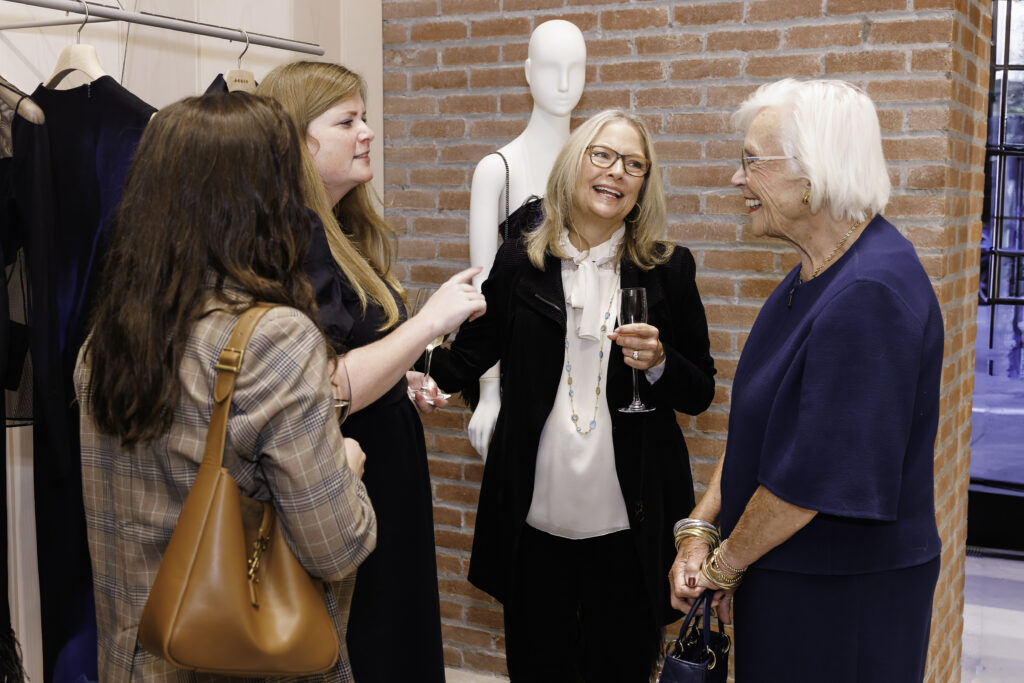
For Melendez, integrity and gratitude are intertwined. “Purpose can evolve as we do,” she said, “but it should always be anchored in integrity.” Living with gratitude, she added, means recognizing that leadership is never a solo act — it’s about how we show up for one another.
Their stories collectively emphasized that leadership isn’t about hierarchy or perfection; it’s about connection, faith, and the willingness to act on what matters most. Whether through mentoring, philanthropy, or quiet example, these women continue to prove that passion, guided by integrity, is what transforms purpose into impact.
How to Help
We’re grateful to AKRIS Chicago for hosting the Women With Purpose event and to everyone who attended. Following the event, AKRIS generously donated 10 percent of in-store purchases made by event guests for a period following the event to three nonprofit organizations represented and championed by the panelists. Learn more and support each organization here:
Lever for Change creates open, transparent funding opportunities that connect ambitious funders with under-recognized nonprofit leaders working on large-scale challenges including racial equity, gender inequality, economic opportunity, and climate change. Donate
LEARN Charter School Network, a network of tuition-free, high-performing public elementary schools focuses on preparing all students for college and long-term success. Donate
Make It Better Foundation supports trusted nonprofits through our cornerstone program, the Philanthropy Awards, as well we through impact-driven storytelling that helps readers engage more meaningfully with the causes they care about. Donate