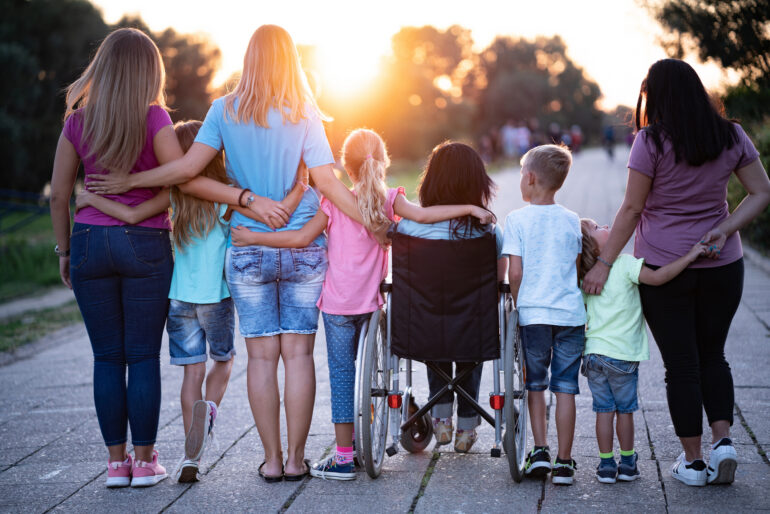
Over the last few months, it feels as if our country has repeatedly experienced the kind of public, unpredictable brutality that collapses time. From bombings to school shootings to federal agents killing civilians, current events are forcing many families to absorb the psychological weight of violence that feels both distant and alarmingly close.
For parents and guardians, this comes with a painful reality: the recognition that no amount of love or vigilance can fully protect our children from a world that feels increasingly unsafe. In homes across the country, they wonder: What do we do now — now that our words fail us?
Sometimes when one searches for language that might soothe fear or restore a sense of order, the usual reassurances fall flat. We fall quiet — not because we don’t care, but because the depth of our care feels beyond words. These are moments that fracture our confidence in words themselves, leaving us uncertain about what to do or how to help.
We may not immediately have the words to talk about what happened, but there are other ways to communicate a sense of safety, agency, and belonging. When words fail us, sometimes simply showing up can help us ground ourselves and our children in ordinary, everyday human connection.
While there is no one formula for recovering from trauma, there are paths forward that respect our human limitations and honor our responsibilities as caregivers. These paths won’t shield us from pain, but they will help us stay present, tend to well-being, and model resilience. Even in an age of violence, we retain the power to shape our response.
Show Up and Be Present
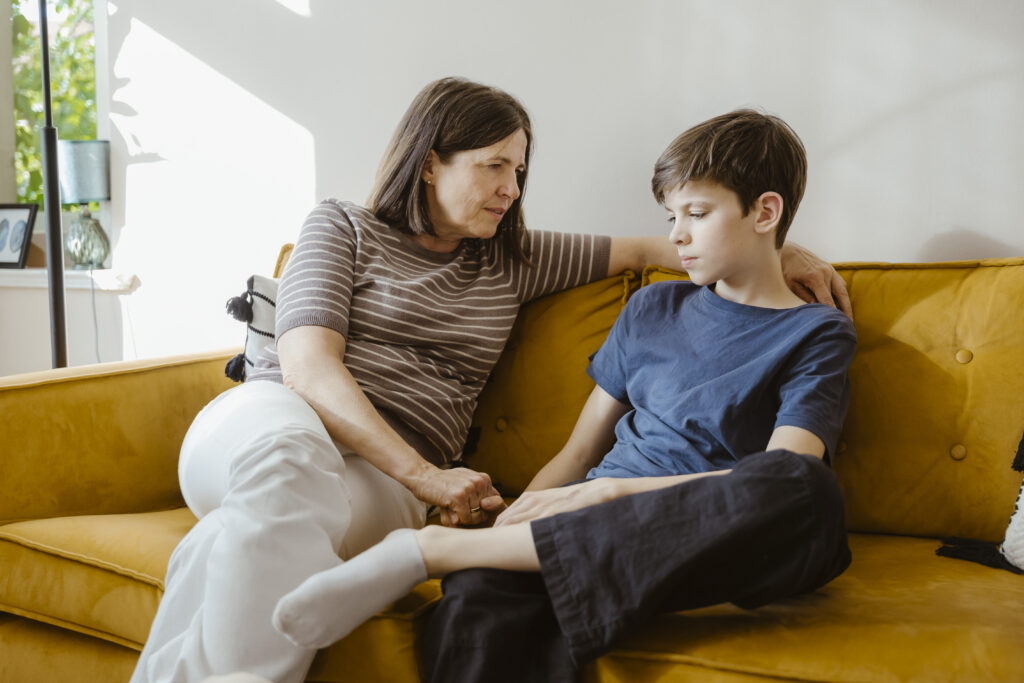
Presence reminds us that safety is not only something we explain. It is something we embody.
When words feel insufficient, being with becomes its own form of care. There is deep power in leaning into tenderness and presence — accompanying rather than advising, staying a little longer than you thought you would, reaching out instead of pulling back. Sometimes the most healing message we can offer is simply: I’m here. You don’t have to go through this alone.
This kind of presence often includes silence. That can feel unsettling in a culture that values answers and reassurance. But silence is not avoidance. It is space for understanding to unfold slowly, for emotions to settle without being hurried, for psychological safety to grow. Feelings don’t need to be fixed in order to be held.
For some, gentle physical connection can speak when words cannot. Sitting quietly together communicates trust. A welcoming hug, a soft touch on the shoulder, a shared moment of stillness can signal care and solidarity in a profoundly human way. When students returned to Brown University after violence touched the community last December, many were greeted this way — offered a brief hug at the entrance, alongside increased security measures. It was a simple gesture, but a powerful one: You matter. You are seen. You belong here.
Let Routines Signal Safety
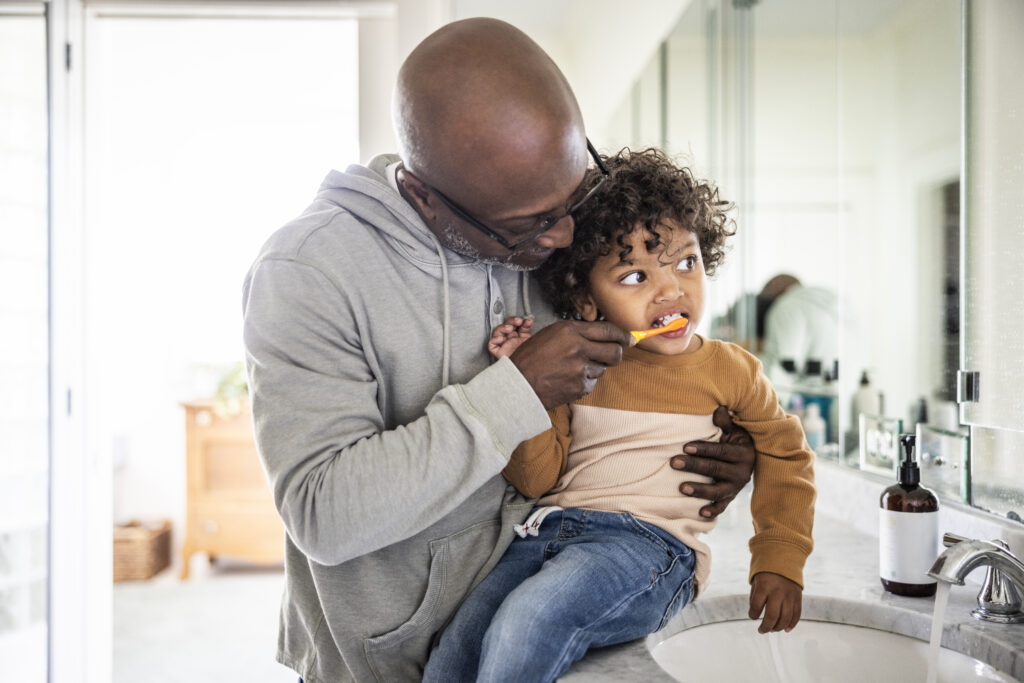
When violence disrupts the rhythms of daily life, parents often oscillate between two extremes: the desire to protect at all costs and the urge to talk incessantly about the event. Both stem from love and fear. Neither needs to be the whole story.
Start by offering your child certainty where you can: What routines will stay the same? When will school, meals, or sleep happen? Who is available to talk? In moments of fear, structure can be a grounding force. It sends a message: Yes, bad things happen, but we continue to live, breathe, and connect.
Seek Healing In Community
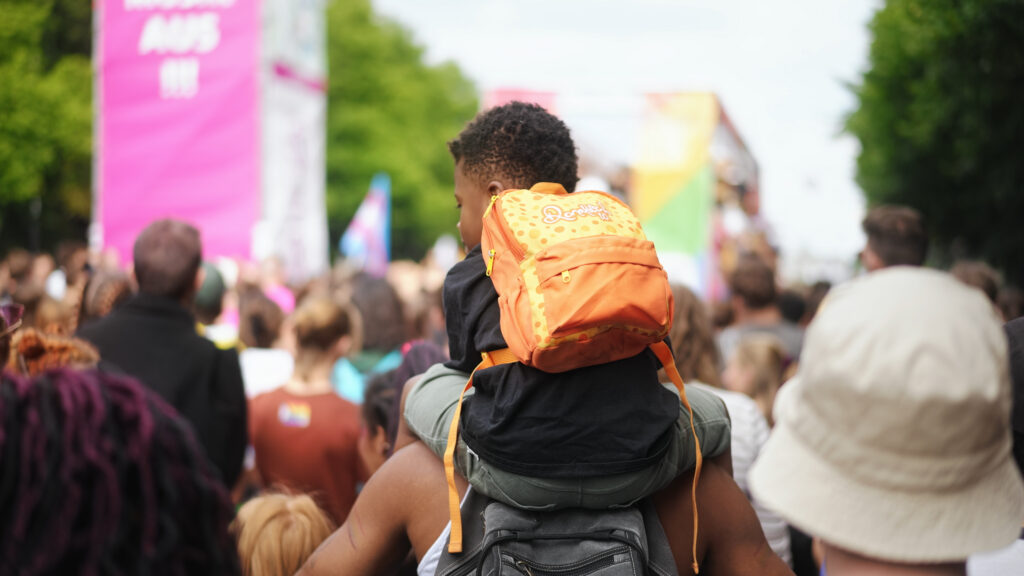
In times of fear and loss, humans have always turned toward one another — not only to talk, but to gather. Shared practices like singing, dancing, and listening to music help regulate our nervous systems and remind us that we are not alone.
The late Angeles Arrien, a cultural anthropologist and beloved mentor and teacher, often spoke about the restorative power of silence and music. When people came to her overwhelmed and struggling, she would gently ask, “When was the last time you sang or danced?” She embraced these practices regularly, not as performance, but as ways of reconnecting to vitality, meaning, and one another.
Joining others in these ways does not erase pain. But it softens isolation. It reminds us that fear is easier to bear when it is shared and that healing often happens not in solitude, but side by side, breath by breath, step by step.
Channel Fear Into Meaningful Action
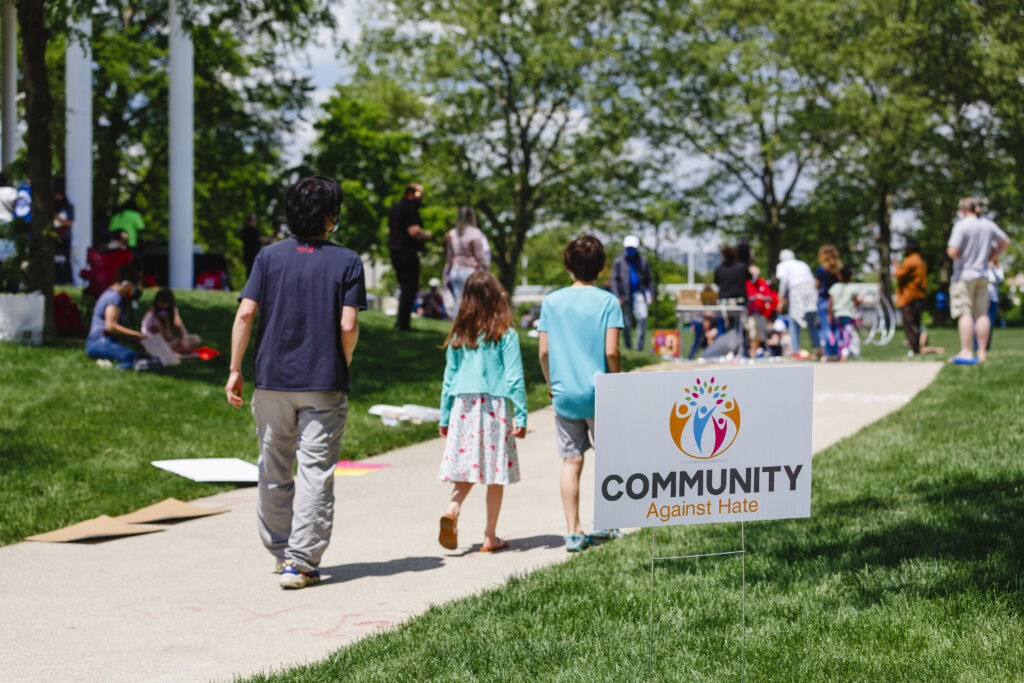
One of the most corrosive feelings after violence is powerlessness. It seeps into the body and the imagination. For parents especially — those whose deepest instinct is to protect — the realization that we cannot shield our children from everything can feel unbearable.
Powerlessness scares us. It often leaves us feeling that because we cannot control the larger forces at play, we control nothing at all.
But there is always a next right action.
The shift is subtle yet powerful: move from what you cannot control to what you can influence. Choose actions that steady your nervous system, support others, or channel your concern into constructive engagement. Even small acts restore agency. And agency restores hope.
When we do this in front of children, our steadiness signals safety. Our choices become a template. We are quietly teaching them. When fear rises, we pause, ground ourselves, reach for others, and respond with care.
Care for Yourself So You Can Care for Them

Practice physical mindfulness.
Slow your breathing. Drop your shoulders. Let your tongue fall from the roof of your mouth. Feel your feet on the floor. Gently remind your body: In this moment, I am safe. As the nervous system settles, clarity and compassion return. Children borrow this calm long before they can generate it themselves.
Use sensory resets.
Rinse your face with cool water. Hold a cold cloth to your cheeks. Try gentle tapping or placing a hand over your heart. These simple interventions interrupt spirals of fear and signal to the brain that the immediate threat has passed. They are tools you can model and practice together.
Engage in community action.
Volunteer. Attend a school board meeting. Join a neighborhood safety initiative. Support organizations aligned with your values. Being with others who care transforms isolation into solidarity. Collective action counters helplessness and shows children that concern can become participation.
Let kindness ripple outward.
In the earliest hours after tragedy, silence, holding, and presence may be enough. In the days that follow, opportunities for compassion emerge — writing a note, checking on a neighbor, preparing a meal. Small gestures accumulate. They remind us that even when we cannot change everything, we can shape the climate around us.

Action does not erase grief. It does not undo harm. But it interrupts paralysis. It brings us back to ourselves. And it teaches our children something essential: when the world feels frightening, we steady our bodies, gather our people, and choose our response with care.
Adults often get stuck in analysis and blame, but for kids, actions — even small ones — create meaning. When young people engage in purposeful activities like writing letters of support, organizing a moment of silence, or supporting a friend, they move from a place of dread into one of engagement.
Sometimes, the most meaningful actions come not from filling the silence with words, but from sitting with it, honoring it, and allowing it to guide our next steps. In an age where news headlines often make us feel small and reactive, parents play one of the most influential roles of all: guiding children toward emotional fluency and purposeful action.
We can’t promise a world without violence. But we can promise to show up steady, present, and aware for the young hearts entrusted to us.
Because when there are no words left, what we do can matter as much — or more — than what we could say.
This post was submitted as part of our “You Said It” program.” Your voice, ideas, and engagement are important to help us accomplish our mission. We encourage you to share your ideas and efforts to make the world a better place by submitting a “You Said It.”
How to Help
The Yale Center for Emotional Intelligence, a Make It Better Foundation 2026 Philanthropy Award winner, is a leader in advancing the science and practice of emotional intelligence, translating decades of research into tools and training that help schools and communities thrive. Support fuels rigorous research, large-scale studies, and the development of accessible, evidence-based curricula, digital resources, and coaching for educators and leaders, with a focus on reaching under-resourced schools. This work strengthens well-being, creates safer and more inclusive learning environments, and builds the emotional, relational, and leadership skills students and adults need to succeed in school, work, and life.

Robin Stern, Ph.D., is the co-founder and senior adviser to the director of the Yale Center for Emotional Intelligence, a psychoanalyst in private practice, the author of “The Gaslight Effect Recovery Guide” and the host of “The Gaslight Effect Podcast.”
Diana Divecha, Ph.D., is a developmental psychologist and assistant clinical professor at the Yale Child Study Center and Yale Center for Emotional Intelligence. She writes about research on children and families on her blog, developmentalscience.com.
The authors’ views are their own and not those of the Yale School of Medicine.