The tension in the room was palpable. Board members dug in on opposing positions. A staff leader threatened to resign. The group’s leader called for a timeout before a vote to buy time.
The scene was the 2022 board meeting of the India Philanthropy Alliance. The board members were debating a collective fundraising effort called India Giving Day. The contention was whether nonprofits outside the Alliance would be allowed to participate in the initiative.
It had been a big step months earlier when the Alliance agreed to adapt the “giving day” model popularized by mid-sized cities, small states, and universities to raise money for work in India. Now the group debated whether to invite any organization doing good work in India to apply or keep it limited to those already in the network.
Supporters saw an opportunity to build an inclusive national movement for giving to India and felt “the more, the merrier.” Opponents feared that including outside groups would dilute their ability to maximize revenue. Ultimately, the big tent idea based on an abundance mentality won out; the final vote was unanimous.
Nonprofits Working Together Benefits All
This leap of faith, grounded in the idea that it is better to grow the philanthropic pie than to fight over who gets the biggest slices of one that is fixed, has turned into a growing campaign that has contributed to a significant uptick in Indian American philanthropy in general.
The strategy mirrors a growing shift across the U.S., where nonprofits are testing collaborative fundraising models to expand donor bases rather than compete for the same dollars.
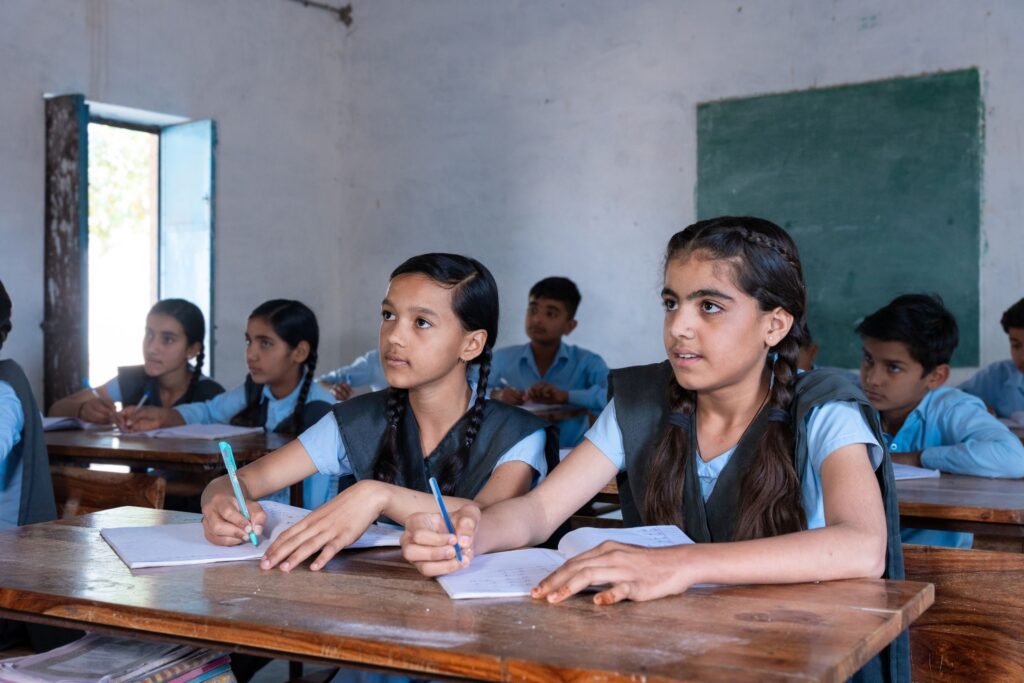
The first year of India Giving Day produced $1.38 million in revenue through 1,031 donations benefitting 25 nonprofits. Four events were held to celebrate it. That experience served as the proof of concept. The next year, 2024, mobilized 1,770 donations totaling $5.54 million for 33 organizations. More than 40 events were held nationwide. During the second campaign, the number of mostly youthful peer-to-peer fundraisers grew from 36 to 181. And in 2025, $8.87 million was raised for 36 organizations, more than 60 events were held, and 400 people served as peer-to-peer fundraisers. In 2026, 51 organizations signed up to fundraise on the IGD platform.
Stakeholders asked whether or not these donations were additive. To discover whether the pie was actually being enlarged, campaign leadership commissioned the global consulting firm Dalberg to repeat a survey conducted in 2018 that had estimated that Indian American philanthropy totaled $1 billion annually. When a similar methodology was used to measure the community’s philanthropic activity in 2024, it found that total donations had grown to $3-$4 billion (from a base of $1 billion) in just six years.
This experience suggests that when nonprofits adopt an abundance mindset and act in solidarity, they can reshape the landscape in a relatively short period of time. For nonprofit leaders and donors alike, the takeaway extends far beyond a single campaign: expanding who participates in giving may be one of the most effective ways to grow impact.
How to Help
India Philanthropy Alliance works to enhance collaboration among organizations working to advance the development agenda in India. The alliance comprises 23 philanthropic and nonprofit organizations that have cumulatively impacted more than 70 million people with their programs spanning education, health care, livelihood support, agriculture and water management, and other essential services.

This post was submitted as part of our “You Said It” program.” We encourage you to share your ideas and efforts to make the world a better place by submitting a “You Said It,” which can earn a nonprofit that you champion a $1,000 donation from the Make It Better Foundation and eligibility for a Philanthropy Award, grant content partnership, and greater engagement with our audience.