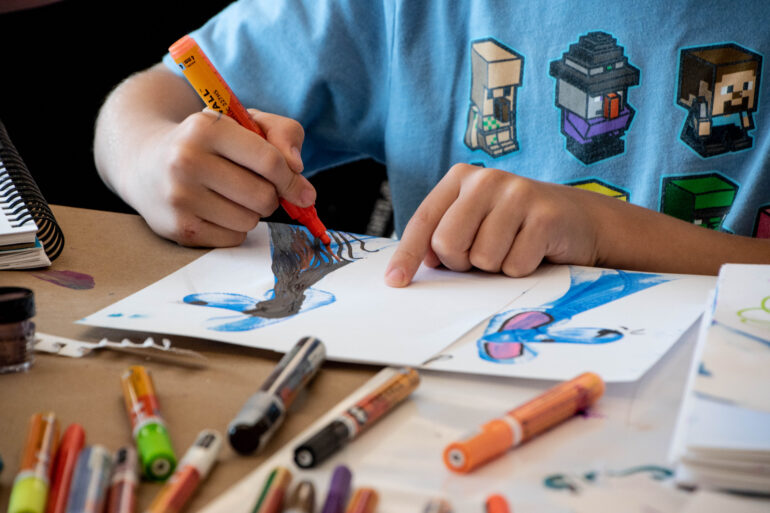
In a world where the most respected careers are doctors, lawyers, engineers, and scientists, why should kids be encouraged to pursue art?
Despite drastic underfunding of the arts in U.S. schools — especially in communities with more non-white, low-income, and non-English speaking students — art education remains vital. Creative experiences help children thrive, benefiting their well-being and future fulfillment.
This challenge reflects a growing crisis in American creativity, as creative thinking becomes increasingly undervalued in society and, as a result, less frequently encouraged or applied. Research conducted by Kyung Hee Kim of the School of Education at the College of William and Mary found that “people of all ages, kindergartners through adults, have been steadily losing their ability to elaborate upon ideas and detailed and reflective thinking; people are less motivated to be creative; and creativity is less encouraged by home, school, and society overall.”
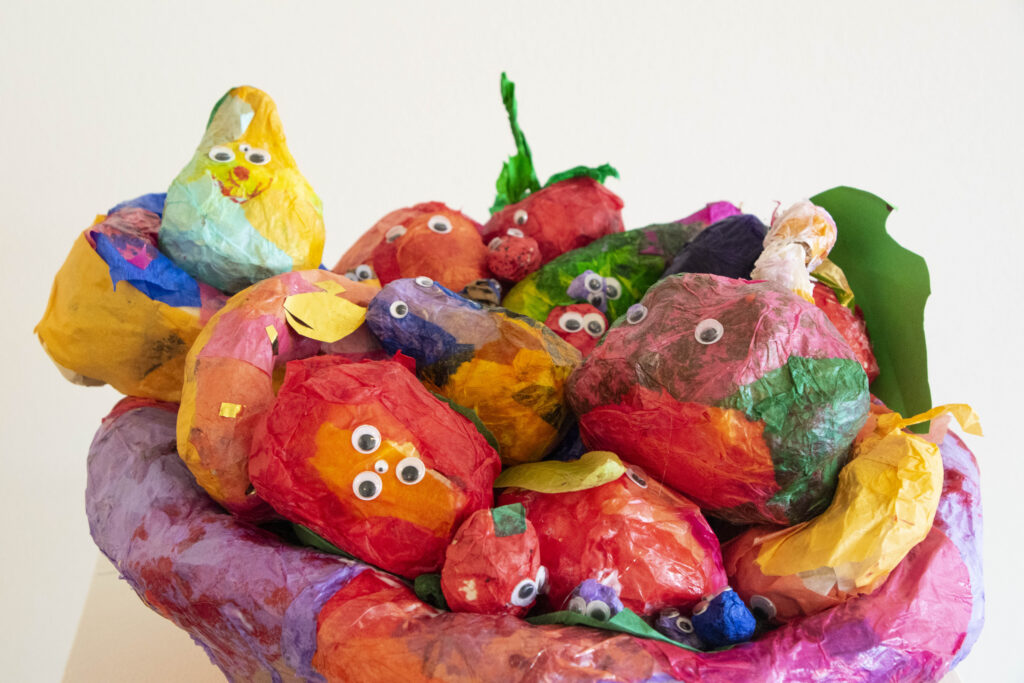
Children are often encouraged to prioritize measurable academic performance over creative exploration, as artistic pursuits are increasingly treated as secondary to subjects tied to testing and college admissions. In the face of high-stakes standardized tests and intense competition for college acceptance, many students feel growing pressure to devote more time to math and science coursework at the expense of creative expression and the arts.
According to Jancee Dunn of the New York Times, research suggests that regular engagement with art and creativity can benefit both mental and physical health, helping “slow cognitive decline, reduces the risk of heart disease and increases well-being as we age.” Given that the arts are comparable to exercise, sleep, and diet in terms of lasting health benefits, why aren’t children taking part?
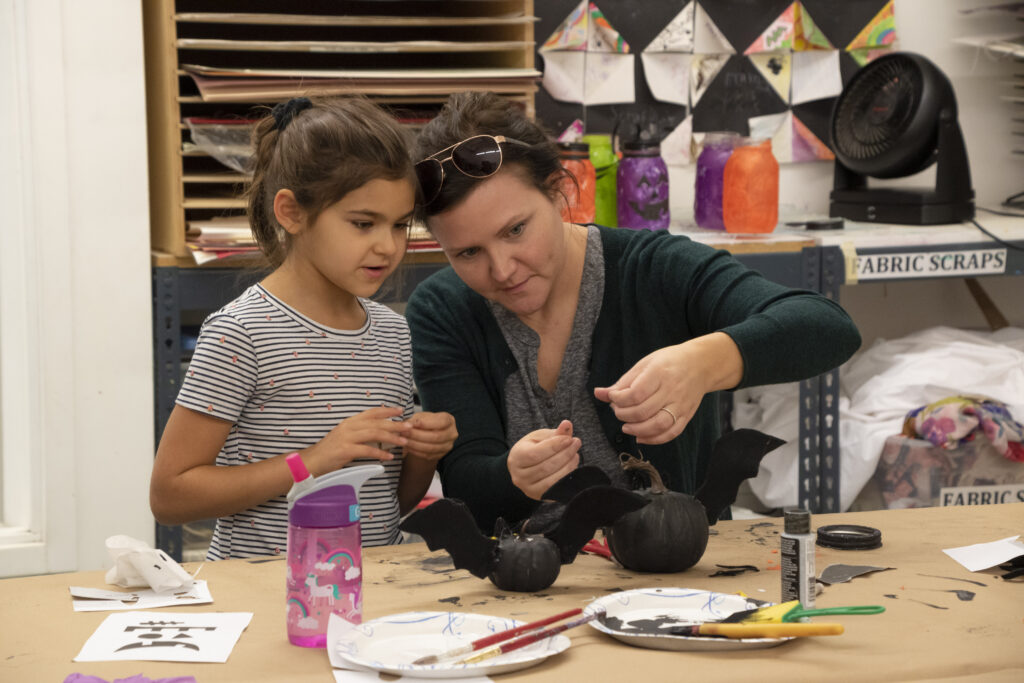
The biggest reason is the lack of arts education in American schools. President Trump’s proposed federal budget for 2026 would drastically reduce funding for the arts in schools because they’re not considered core subjects. The National Endowment for the Arts has found that access to arts education has declined steadily over the past three decades. This decline is particularly pronounced in lower-income, marginalized communities, where state funding requirements force cuts to “non-essential” art classes to make way for English and math.
Nevertheless, countless studies have shown that involvement in the arts improves a child’s well-being, and, according to California State Superintendent of Public Instruction Tony Thurmond, “arts education boosts school attendance, academic achievement, and college attendance rates; improves school climate; and promotes higher self-esteem and social-emotional development.”
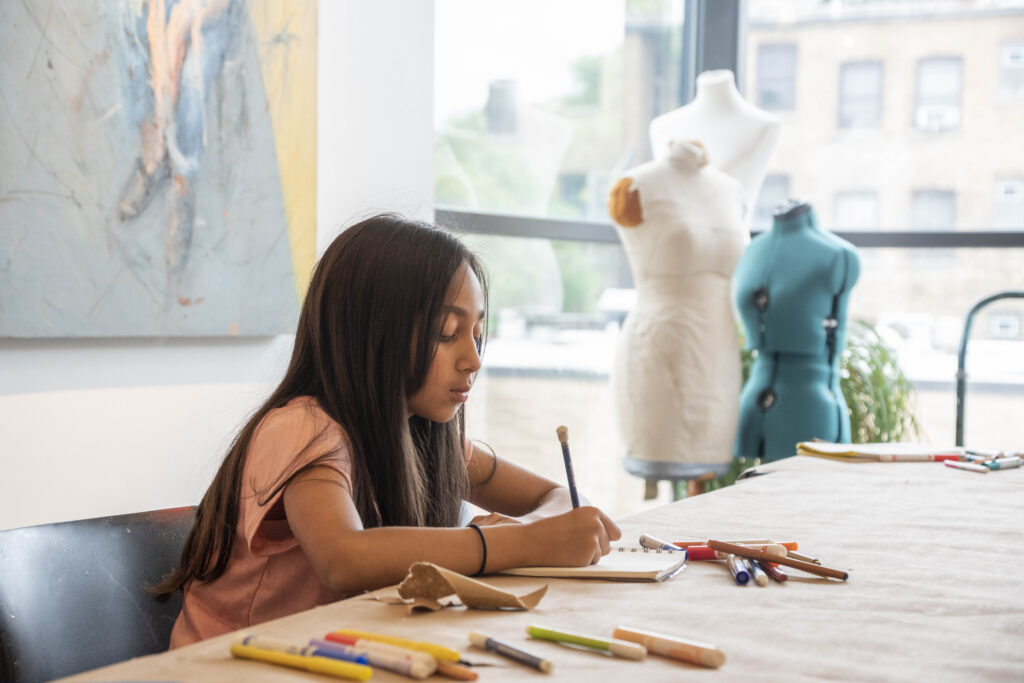
This gap in arts education is why non-profit organizations, such as the Evanston Art Center, are so essential for preserving creativity in kids today. The Evanston Art Center (EAC) is based in a northern Chicago suburb and focuses on providing accessible art classes to its community. As of 2025, the EAC has welcomed around 2,200 youth students from diverse backgrounds into its classrooms, offering financial aid and scholarships to truly drive home the message that art is for all. Youth fine art teacher Cheryl Steiger, who has been teaching for over 30 years, shares how she deeply values exploring the individual as a puzzle and discovering their unique journey to express themselves through art.
The EAC is one of the largest non-profit visual arts organizations in Illinois and relies on grants and donations to foster art and culture for the next generation of creative thinkers. Supporting organizations like the EAC is essential to upholding the main argument: children need consistent access to arts education for creative and personal growth, especially as government funding for the arts is at risk.
How to Help
The Evanston Art Center (EAC) is one of the largest non-profit visual arts organizations in Illinois. EAC provides accessible art classes to more than 2,200 youth students from diverse backgrounds. Donations help EAC offer financial aid and scholarships to youth wanting to explore the creative arts.

This post was submitted as part of our “You Said It” program.” Your voice, ideas, and engagement are important to help us accomplish our mission. We encourage you to share your ideas and efforts to make the world a better place by submitting a “You Said It,” which can earn a nonprofit that you champion a $1,000 donation from the Make It Better Foundation and eligibility for a Philanthropy Award, grant content partnership, and greater engagement with our audience.
More from Better
- David Byrne’s ‘Theater of the Mind’ Turns Neuroscience Into an Immersive Experience
- Art’s Defiant, Healing Power: Sandro Miller on Dance, Photography and Creative Resistance
- Vic Mensa on Art, Advocacy, and Investing in the Chicago Community That Shaped Him

Lily Adams is an arts administration intern at the Evanston Art Center. They were born and raised in Cincinnati, then moved to Chicago after getting their BFA in Acting from Ohio University in 2023.