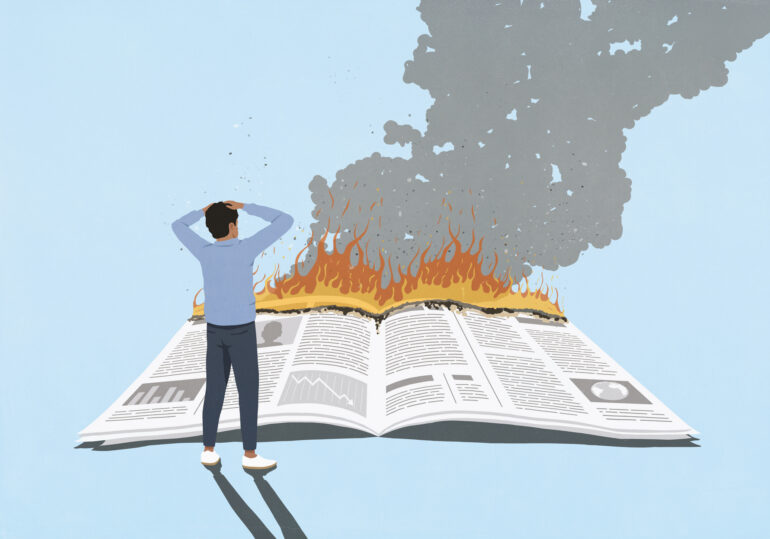
You pick up your phone to check one thing — perhaps the weather, a text message, or the score of a game. A few minutes later, you have read three election headlines, watched a clip from a debate, skimmed dozens of comments, and somehow learned that democracy, the economy, your health care, and the future of the planet may all be in danger before breakfast.
If this sounds familiar, you are not alone.
Election season can make the news feel unusually personal. The issues on the ballot can affect our finances, health, schools, communities, and rights. At the same time, the way we now encounter political information — constantly, emotionally, and often in fragments — can leave us feeling overloaded rather than informed.
There is even a name for this experience: election stress. The Mayo Clinic describes it as the overwhelming anxiety some people feel during an election cycle. And surveys from the American Psychological Association suggest that elections have become a significant source of stress for many Americans. In the lead-up to the 2024 presidential election, for example, 72% of adults said they were worried that the results could lead to violence, and 56% said they feared the election could mark the end of democracy in the United States.
It is understandable to feel unsettled when an election seems to carry serious consequences. But anxiety is not always a problem to get rid of; in small doses, it can direct our attention toward what matters. It may motivate us to learn, vote, volunteer, have difficult conversations, or support people affected by political decisions.
The problem begins when information meant to help us engage instead keeps our nervous systems in a constant state of alarm.
Why elections can feel so stressful
Part of election stress comes from the uncertainty it elicits. We do not know who will win, what policies will change, or how the people around us will respond. Research suggests that uncertainty itself can be stressful because people naturally want to understand and predict the environment around them. When we feel unable to do that, we may feel less safe and less in control.
News can intensify that uncertainty. Negative news is often more attention-grabbingthan positive news, and conflict, danger, and outrage make especially compelling headlines. That does not mean journalists are intentionally trying to harm us. Reporting on threats and problems is an essential part of journalism. But a steady diet of alarming information can shape how we feel about the world, especially when it leaves little room for context, solutions, or signs of human cooperation.
This can create a difficult cycle. When people feel anxious, they often seek out more information in an effort to regain a sense of control. Yet the more election news they encounter — particularly news marked by uncertainty, conflict, and emotional intensity — the more anxious they may feel. Then they check again.
In other words, we may turn to the news to calm ourselves down, only to leave feeling more activated than before.
Why today’s media environment makes it harder
Political stress is not new. But the way we receive political information has changed dramatically.
When John F. Kennedy and Richard Nixon debated on television in 1960, viewers watched in a far more contained media environment. There was no endless stream of clips, reactions, memes, push notifications, and commentary arriving at every hour of the day. People could discuss the debate afterward, but they were not also carrying the debate around in their pockets.
Today, election news can follow us almost everywhere: to the grocery store line, the waiting room, the car, the dinner table, and bed. Social media makes it easier for people to participate politically and amplify voices that were once excluded from public conversation. Those are meaningful benefits. But the same technology can make political information feel impossible to put down.
It also encourages us to consume news in small, emotionally potent pieces. A headline while brushing our teeth. A video clip while waiting for coffee. A dramatic post at a stoplight. These snippets can provoke strong feelings without giving us enough context to understand the story fully.
That matters because headlines often tell us what to feel before they tell us what happened. Pew research found that five out of eight Americans (63%) said they only read news headlines rather than full news articles, specifically when scrolling through social media. When people repeatedly take in emotionally charged fragments of news, they may feel a growing sense of threat while having less detailed information to guide their judgments.
When stress turns into news avoidance
Faced with this constant emotional demand, some people keep checking the news compulsively. Others decide they have had enough and stop paying attention altogether.
News avoidance can offer temporary relief. If every update makes you tense, angry, or helpless, closing the app may feel like self-protection. In fact, a report from the American Press Institute found that a third of Americans want to disengage from news because it feels stressful and overwhelming.
But avoiding news altogether comes with costs, especially during an election year. It can make it harder to participate in democratic life, understand issues that affect our communities, or distinguish reliable reporting from misinformation passed along by friends, influencers, or highly partisan accounts.
The goal, then, is not to consume more news or no news. It is to develop a healthier relationship with news: one that helps us stay informed without asking our nervous systems to be on call all day.
Three ways to stay informed — and calm
1. Choose a news source that includes solutions, not only problems.
During stressful times, it can help to seek out reporting that does more than identify what is going wrong. Constructive journalism still covers serious problems, but it also provides context, examines solutions, and asks what people and communities can do next. This approach is not about pretending everything is fine. It is about giving readers a more complete picture: What is the problem? Who is affected? What is being tried? What can citizens realistically do? Solution-oriented reporting may be especially helpful during elections because it can replace helplessness with a more grounded sense of agency and hope for the future.
When you choose a news source, consider asking: Does this reporting leave me better informed? Does it help me understand the issue, or does it only make me feel alarmed? Does it explain possible solutions as well as the threat?
2. Balance distressing news with inspiring media.
We do not need to force ourselves to be positive about difficult realities. But we can balance the emotional weight of election coverage with media that remind us of human goodness, beauty, courage, and connection.
Research suggests that stories of kindness, moral courage, and collective care can evoke feelings such as elevation, gratitude, and hope. These emotions can broaden our view of what is possible and help us feel more connected to other people. And new research from the University of Santa Barbara suggests that these emotions can even reduce stress.
This might mean watching a short video about neighbors helping one another after a disaster, reading a profile of local organizers working across differences, listening to music that helps you settle, or returning to a film or show that leaves you feeling more hopeful about people, or nostalgic about the past.
Think of this as building a more balanced media diet. Election news can be an important part of that diet, but it should not be the only thing we feed our minds. Just as eating one healthy meal a week does not transform our physical health, one inspiring story will not undo chronic stress. Over time, though, regularly choosing media that restore us, physically and mentally, can help cultivate resilience, hope, and perspective.
3. Create boundaries around when you check the news.
Finally, consider treating news less like a snack and more like a meal.
Snacking on news all day can mean consuming a lot without ever feeling nourished. You absorb a headline here, an alert there, and a few comments in between—but never get enough context to make sense of what you are seeing. The result can be a lot of emotional calories and very little understanding.
Instead, choose one or two intentional times to engage with the news. You might read a full article over breakfast, listen to a trusted news program on your commute, or set aside 15 minutes at lunch to review the day’s major stories. If you are prone to checking headlines compulsively, digital wellness strategies such as app limits or notification settings can make those boundaries easier to keep.
It may also help to avoid making late-night news “snacking” part of your bedtime routine. By the end of the day, our emotional and cognitive resources are often already depleted. A stream of alarming headlines can quickly turn into doomscrolling: the repeated consumption of negative online content that leaves us more agitated and less able to sleep.
Giving news its own place in the day does not mean becoming indifferent. It means making room to take in information carefully, in context, and with enough emotional space to respond thoughtfully.
Staying engaged without staying alarmed
Election stress is real because elections matter. Feeling concerned about the future does not mean that something is wrong with you; it may mean you are paying attention.
But paying attention does not require constant exposure to distress. We can choose reporting that informs and empowers us, balance difficult coverage with media that reminds us of human possibility, and set boundaries that give our minds a chance to rest.
The aim is not emotional numbness. It is becoming the kind of informed citizen who can face difficult news, stay connected to what matters, and still have enough calm and hope left to act.
This article originally appeared on Greater Good, the online magazine of the Greater Good Science Center at UC Berkeley.
How to Help
The Greater Good Science Center at UC Berkeley, a Make It Better Foundation 2026 Philanthropy Award Winner, is a trailblazer in the science of compassion, well-being, and connection. Through evidence-based articles, podcasts, online courses, and practical tools, Greater Good empowers individuals — and the communities they shape — to lead more resilient, empathetic lives.
Whether you’re an educator, a parent, or simply someone seeking more meaning and joy, Greater Good offers guidance grounded in research — and filled with heart. From stories about the power of gratitude and friendship to thoughtful essays on mental health and parenting, their content meets readers where they are, including during emotionally charged moments from Election Day to the holidays to Mother’s Day and Father’s Day.
Learn more about Greater Good, and support their work by donating to the Greater Good Science Center Annual Fund, which helps bring research-based tools for well-being to individuals and communities, empowering them to lead healthier, more connected lives.
Get regular content from GGSC and share with those who might benefit — especially educators, mental health providers, and school administrators.

Sophie H. Janicke, Ph.D., is a positive media psychologist working as an associate professor at Chapman University, who investigates the role that new and traditional media play in promoting and affecting character development, self-transcendent emotions (such as elevation, gratitude, and awe), prosocial behavior, and happiness. Her research and teaching focus is on positive psychology, media and new communication technologies, and media and spirituality. Outside of academia, she is the director of research at the Digital Wellness Institute, which focuses on reclaiming productivity and well-being in the digital era.