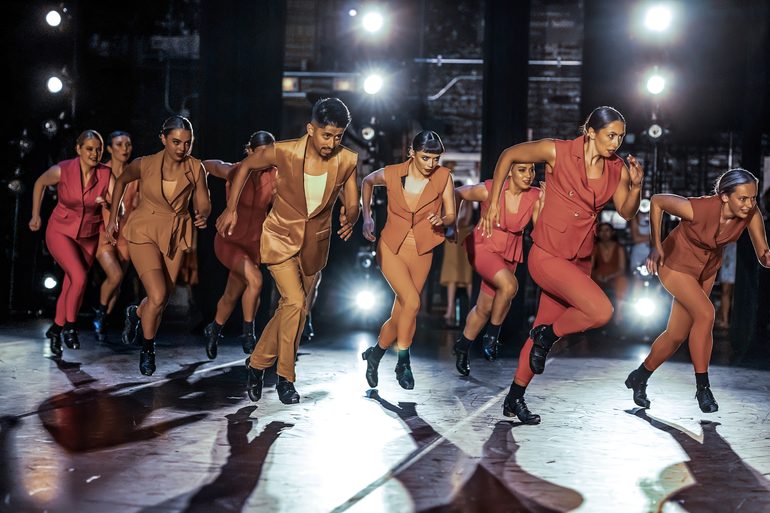
Growing up as an Irish dancer in Denver, Chelsea Hoy was attracted to the form’s rhythms and movement. From a young age, Hoy found an unparalleled power and safety in the precision and control that the art of Irish dance requires.
When Hoy was nine years old, her aunt drove her and her sister up a mountain through a snowstorm to see the Trinity Irish Dance Company. For Hoy, this was a group of fierce women who ignited a love of Irish dance and captured her imagination. To the world, they are a trailblazing performing arts company that created its own genre and paved the way for Irish dance to be celebrated as serious art.

After 21 years, Hoy is preparing to drive back up that mountain and set foot on that very stage — this time as a Trinity Irish Dance Company dancer, choreographer, and its recently named co-artistic director. Hoy’s beginning — one of a wide-eyed nine-year-old dancer with dreams and a drive to create — has circled back around, grounded by the strong downbeats of a cultural tradition that has become her life’s purpose to nurture and protect.
Igniting a Cultural Evolution
The Chicago-based Trinity Irish Dance Company (TIDC) is a place for Irish dance to flourish in an artistic space. Founded in 1990, it set out to bring a social dance form turned competitive sport into the world of the performing arts.
Central to TIDC’s mission is the understanding that cultural arts need to evolve to remain relevant to a contemporary audience. When the art form in question helped hold Irish culture together, rising up against British oppression, there is a responsibility to handle its evolution with integrity and care.
Part of this evolution traces to TIDC’s Founding Artistic Director, Mark Howard, who developed progressive Irish dance: a style that has influenced Irish dance worldwide. As a record-breaking competitive coach, he helped America’s first Irish dance world championship team earn gold medals, an achievement celebrated on The Tonight Show Starring Johnny Carson.
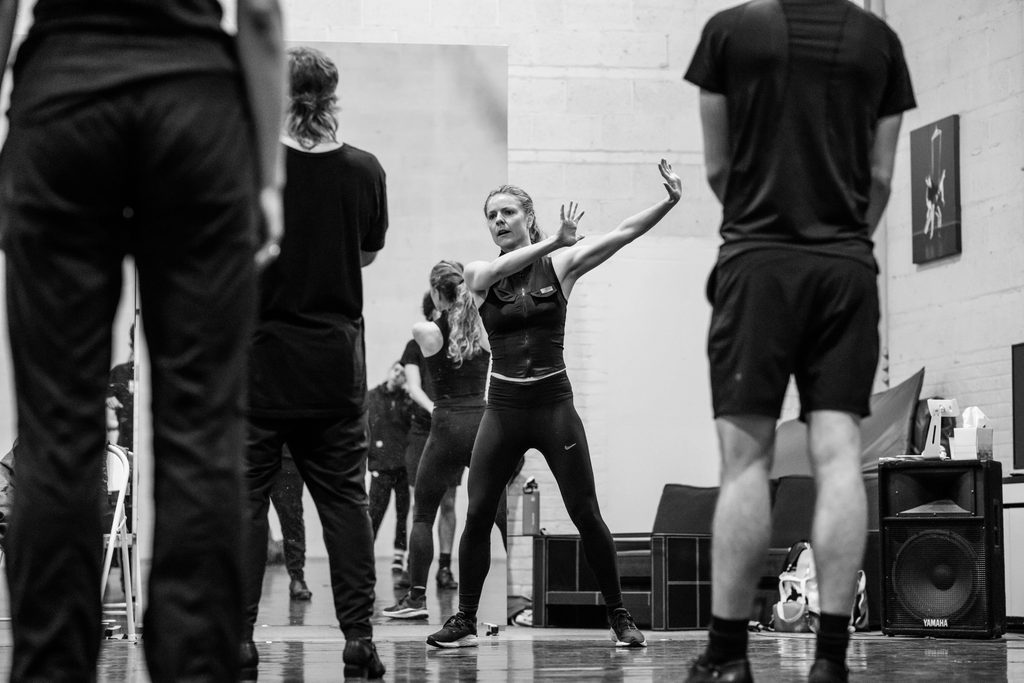
TIDC was built as a creative forum to nurture Irish dancers through their own evolutions. From highly trained technicians to versatile artists, TIDC provides the tools to expand their vocabulary and broaden their scope of influences while celebrating the origins of their movement.
Like a cultural dance form, a nonprofit arts organization has to adapt to survive, especially as arts funding in the United States shifts. TIDC has forged new traditions, artistically and organizationally, challenging the status quo and existing as an open channel to unlikely inspiration.
Inclusivity, Diversity, and Collaboration
To evolve is to innovate. Innovation comes from the inclusion of diverse perspectives, something that has been central to TIDC’s genre-defying vision since inception. In recent years, TIDC’s focus on artistically progressing Irish dance with integrity while evolving its organizational structure has meant an increased focus on collaboration across cultures, including bringing in international artists such as main company artist Francisco Lemus to build a community that is representative of Irish culture today.
Lemus, hailing from Puebla, Mexico, arrived at TIDC five years ago. He started tap dance at age seven and learned his first Irish dance steps on YouTube before his father started driving him to an Irish dance class three hours away every Saturday.
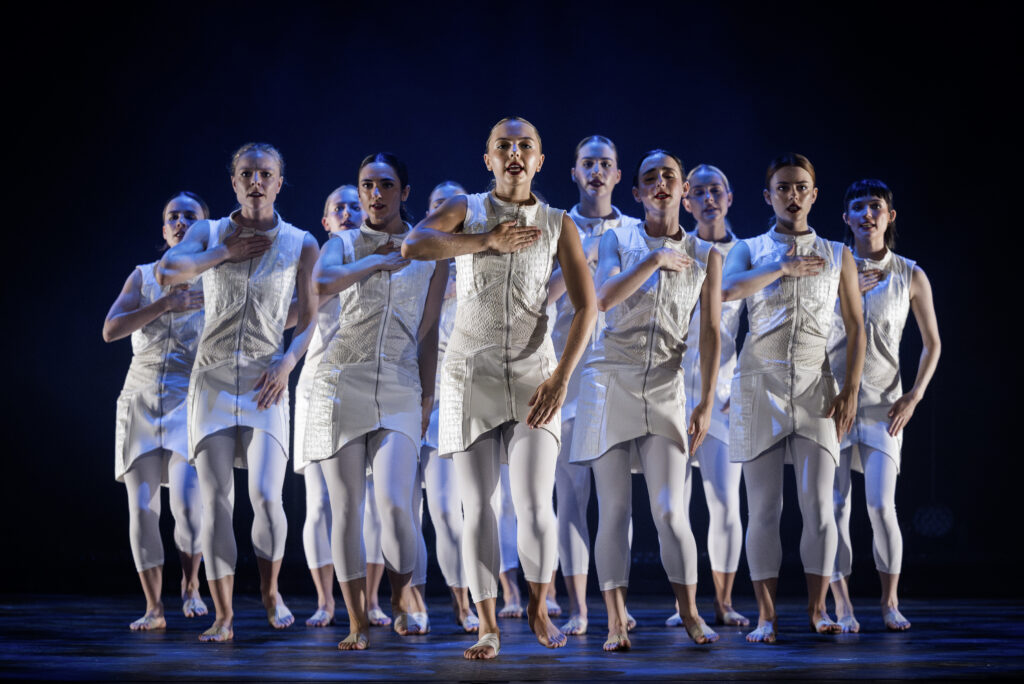
For six years, Lemus and his father made the drive together. Lemus went on to set competitive records for Latin American Irish dancers before finding his artistic home at TIDC. In his first few years as a professional performing artist, Lemus contributed major advances to TIDC’s ever-evolving genre of progressive Irish dance, recognized as a standout mover across all genres as one of Dance Magazine‘s 2025 Top 25 to Watch.
Lemus’s footwork has widened audiences’ sense of what the form can do, and his place in the company makes a case for representation in the arts. His commitment to TIDC’s mission to redefine perceptions of a cultural form inspired other artists from his home country to join him in Chicago to celebrate individuality and become part of a unique family of artists representing Mexico, the US, Canada, and Ireland.
Empowering Female Dancers
While Irish dance is centered on an innate percussive power, both its traditional and modern-age forms are characterized by gendered stereotypes and overt female objectification. In stark contrast to a chorus line of women serving as a backdrop to a male savior out front making noise in his hard shoes, TIDC celebrates males and females on equal footing.

The women of TIDC bring the thunder, breaking down stereotypes through rhythms that invite audiences to engage with a cultural practice in an empowering way. In a predominantly female company, the recently announced shared leadership between a male and a female artistic director, with Hoy stepping into that role, reflects Howard’s and TIDC’s commitment to gender equity and longstanding emphasis on the power of women to create social change.
Each performance begins with the potential to create a spark like the one a 9-year-old girl felt 21 years ago, lifted by the power of fierce women on stage — an invitation to dream, and to know that her voice and her rhythms matter.
How to Help
Trinity Irish Dance Company is a Chicago-based nonprofit performing arts company that elevates the traditional form of Irish dance, and pursues gender equity through its performances and collaborations.
To learn more about TIDC’s mission and legacy, view upcoming performance dates, or support their artists with a tax-deductible donation, visit trinityirishdancecompany.com. If you are interested in serving on Trinity Irish Dance Company’s board of directors, please contact info@trinityirishdancecompany.com.


Chelsea Hoy works as a choreographer and dancer. She has been celebrated by audiences and critics worldwide – from New York City’s Joyce Theater to Jacob’s Pillow Dance Festival to Tokyo’s Orchard Hall. A Denver native, Hoy saw the Trinity Irish Dance Company (TIDC) at the Vilar Center for the Performing Arts as a nine-year-old. Following dreams and fate, she joined TIDC in Chicago in 2014, became Associate Artistic Director in 2018, and was named Co-Artistic Director in February 2026, becoming one of the youngest artistic directors in the industry.