
At 2 a.m., a mother rocks her crying two-month-old, exhausted and unsure what to do next. She tries soothing, then distraction, then silence. Nothing works. By morning, guilt sets in. She wonders, like so many caregivers: Why didn’t anyone teach me how to do this?
Most people will one day be responsible for another person, whether as a parent, caregiver, sibling, or mentor, yet most receive no formal education. And if they do, it’s only after unintentional harm has taken its toll.
Teaching Caregiving Skills to Adolescents
Adolescence— when identity, values, and relational patterns are forming — is the time to introduce caregiving skills.
Schools teach students to solve equations, write essays, and prepare for careers, but rarely teach how to build healthy relationships, manage emotions, or care for others — the very skills that are needed to shape families and communities.
Research underscores what’s at stake. Harvard University’s Center on the Developing Child shows that responsive caregiving interactions build the foundation for brain development and lifelong health. The CDC links adverse childhood experiences (ACEs) to increased risks of chronic disease, mental health challenges, and reduced life outcomes.

In Evanston, Illinois, students raised an insightful question: Why aren’t young people taught skills that shape healthy families? Students themselves identified the gap. From this question, ParentABLE was born.
Today, ParenTeach Institute offers ParentABLE as an upstream prevention strategy. “We teach the skills that most adults were never taught but are expected to perform every day,” says founder Katharine Bensinger.
Instead of intervening after harm occurs, ParentAble equips students in grades 8 through 12 with emotional regulation, empathy, caregiving, and child development knowledge, shifting from reaction to a crisis to prevention and relational health.
“These are not ‘soft skills,’ they are survival skills,” Educator Amanda Perez says,
Students Apply Caregiving Skills Instantaneously
For students, the impact is immediate and practical. They apply what they learn while babysitting, caring for siblings, and navigating friendships.
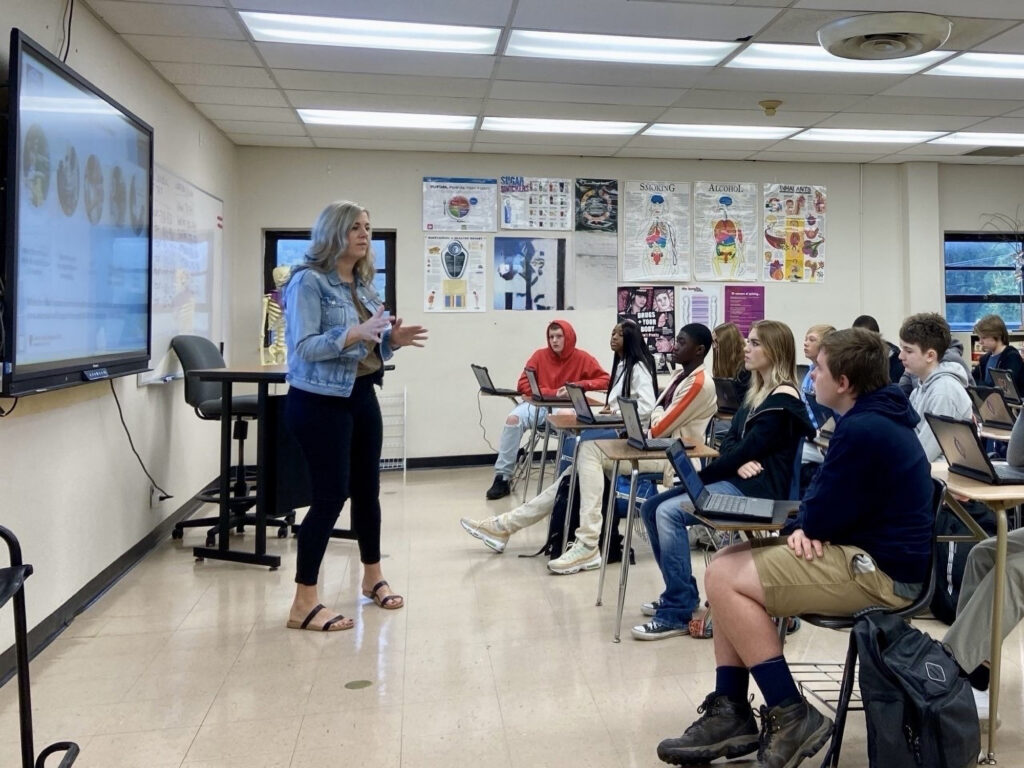
Over the past six years, ParentABLE has expanded across Illinois, partnering with the Harvard Graduate School of Education to evaluate its impact, showing statistically significant gains in students’ knowledge of parenting, caregiving, and child development.
The effects extend beyond students. Educators report using these skills in their own lives. Integrated into existing Health and Career and Technical Education courses, the program adds support without adding burden.
What began in one community is now informing broader efforts, including HB4997, which recognizes that caregiving education is foundational and not merely a personal issue but a public health priority because the evidence is clear: the quality of relationships shapes the quality of lives.
By introducing parenting and caregiving skills before one faces a 2:00 am challenge, we can prevent frustration, fear, fatigue, and confusion while ensuring children receive the care they need to thrive.
How to Help
ParenTeach Institute is working to expand access to parenting and caregiving education for students and families. You can support this work by making a donation, which helps bring evidence-based programming to more schools and communities. There are also opportunities to become involved through volunteering or by sharing your professional expertise. ParenTeach Institute is currently seeking board members with experience in marketing, sales, and fundraising to help grow its impact. If interested, please contact Katharine Bensinger at Katharine@parenteach.org.

This post was submitted as part of our “You Said It” program.” Your voice, ideas, and engagement are important to help us accomplish our mission. We encourage you to share your ideas and efforts to make the world a better place by submitting a “You Said It,” which can earn a nonprofit that you champion a $1,000 donation from the Make It Better Foundation and eligibility for a Philanthropy Award, grant content partnership, and greater engagement with our audience.
More from Better
- ‘She Helped Me Be the Mom I Wanted to Be’: Help Nurse-Family Partnership Provide Life-Changing Support to Families
- She Faced Crisis as a New Mom — And Found Strength Through One Life-Changing Program
- Alzheimer’s Association Celebrates Caregivers, Spotlights Impact of Balancing Work With Care of a Loved One