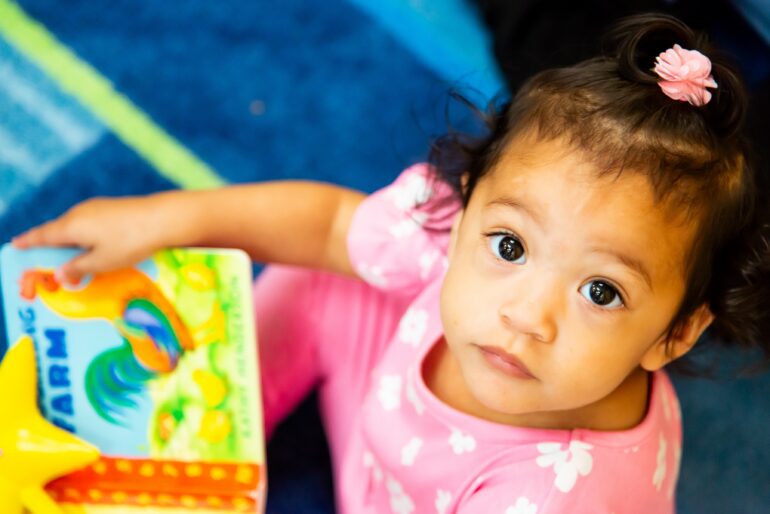
Dion is a mother of four residing in the South Side of Chicago. Like many families with young children from the city’s south and west sides, Dion wants to set her kids up for success. And through Educare Chicago, Dion finally found a safe and welcoming environment, income-based tuition that expands educational opportunities, and deep relationships with teachers and other families. She also found wellness groups and access to services that supported her own growth.
Most importantly, Dion found that her children thrived socially, emotionally, and academically because they were in classrooms where teachers celebrate every small win. “On the South Side of Chicago, we are used to being given less. But Educare shows us what our kids really deserve. Real quality, real care,” says Dion.
Stories like Dion’s are powerful, but unfortunately, not unique. Across the country, many children still enter kindergarten without the skills they need to succeed. The 2023 to 2024 Kindergarten Readiness Assessment Report from the Maryland Department of Education found that only 44 percent of students entering public schools were fully prepared to participate in the curriculum. This stark gap illustrates what is at stake when children do not have access to high-quality early learning experiences.
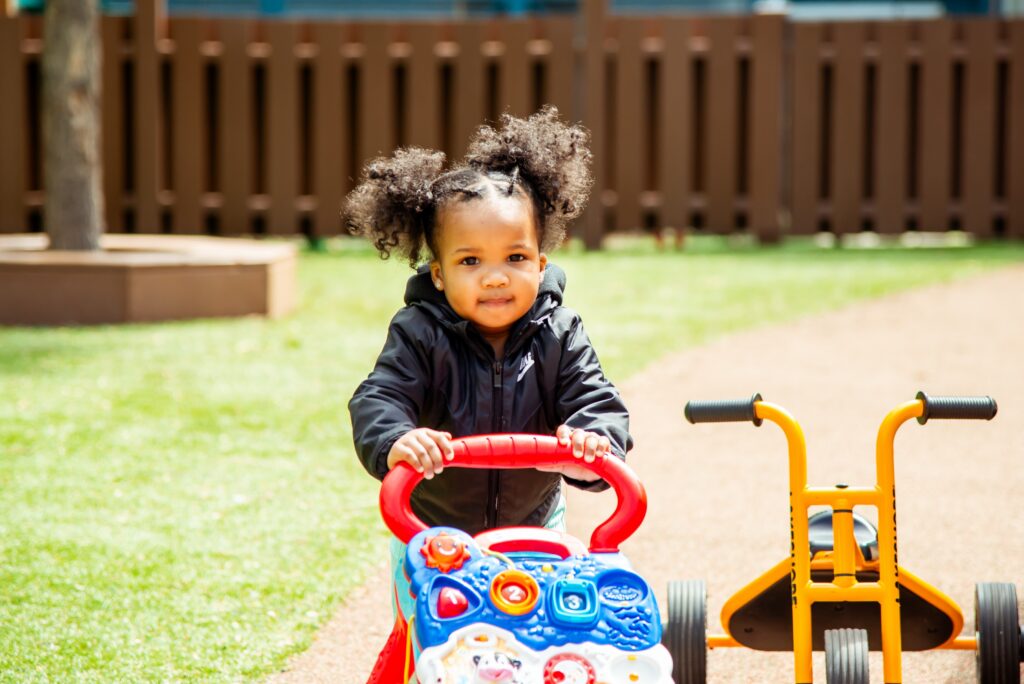
Decades of research reinforce that early childhood education is one of the strongest tools to close opportunity gaps. A 2023 report from the Centers for Disease Control highlighted analyses showing that early childhood education can counter disadvantage, improve social and cognitive development, and increase the likelihood of school readiness, employment, income, and stronger long-term health. In November 2024, UNICEF reported on the essential nature of the first three years of life, emphasizing that children from disadvantaged backgrounds face increased risks of learning delays.
Access to high-quality early education can close these gaps and lead to improved cognitive outcomes. And that’s where Start Early steps in.
Investing in Young Children and Families
Start Early has been serving children and families across Illinois since 1982. Founded as the Ounce of Prevention Fund, the organization began its comprehensive child development and family support program, the Beethoven Project, in the Robert Taylor Homes in 1986. A thorough evaluation of this program, along with changes in Chicago’s Grand Boulevard community, inspired the development of the Educare model. In 2000, Start Early opened Educare Chicago, the first built-to-suit birth-to-five school in the nation. Educare serves to deepen and scale high-quality, center-based early learning.
Today, this school, founded in Chicago’s Grand Boulevard neighborhood, has grown into the Educare Network, a national model for comprehensive, high-quality early learning and care, and Educare Chicago remains one part of Start Early’s multi-decade continuum of services. The network includes 25 schools, with two more on the way, including a new state-of-the-art early learning school in the Lake County community of Zion. Educare looks forward to breaking ground soon and serving 174 additional children in a community with tremendous need.
The long-term Educare Chicago study found that kindergarten teachers rated Educare graduates as prepared overall for school, with 54 to 67 percent meeting or exceeding literacy proficiency benchmarks. A study conducted by Tulsa Educare and the University of Oklahoma, Tulsa, reported that children in Educare demonstrated statistically significant increases in vocabulary, oral comprehension, and math skills compared to children attending other programs or no program at all.
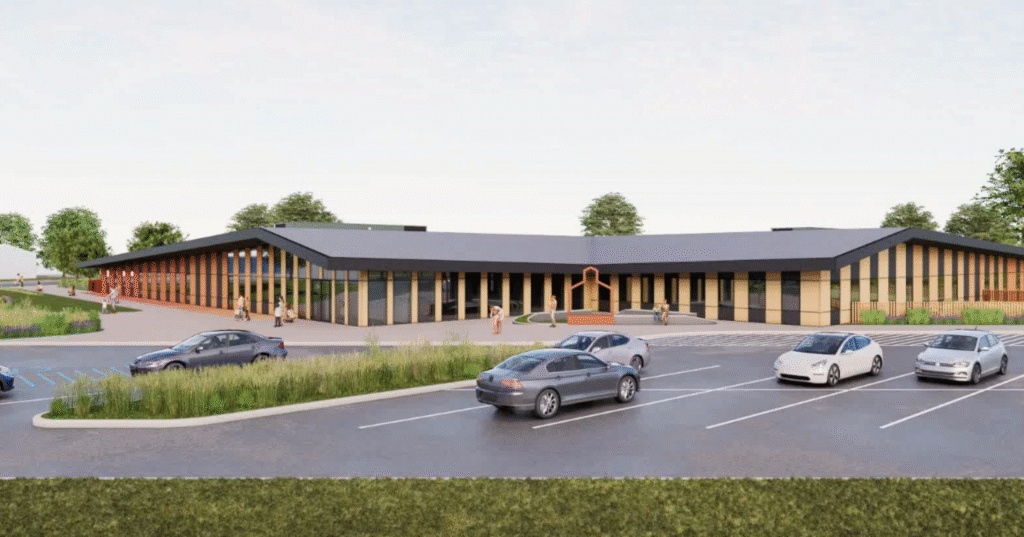
In Lake County, Educare’s primary work is building early learning capacity in a community that has been identified as an early care desert. While construction of the permanent Educare Lake County site is underway, Start Early is already strengthening the county’s early childhood system. Educare is operating interim programs in Waukegan and Beach Park, in collaboration with LEARN Charter School and Beach Park School District, while connecting local programs to data-driven coaching and providing workforce support and professional development for early childhood educators.
Working with Children and Family Beyond Education
Access to early education isn’t the only aspect of helping children and families succeed. It’s also about helping families secure personal goods and household essentials. The Start Early Family Support Initiative operates resource stores that provide essential supplies such as diapers, formula, groceries, hygiene items, children’s books, and learning materials. Families also receive bilingual mental health support, transportation stipends, and connections to developmental services. These services stabilize families and create the foundation children need to thrive in school and in life.
The growth of Start Early and Educare reflects a simple truth that has guided the organization’s work for more than 40 years. Investing early works. Start Early sees this in the confidence and progress of students and in the voices of parents who describe the impact that high-quality early learning has had on their families.
Educare’s 25-year journey and its evolution into a national exemplar of inclusive, family-driven early childhood education is a reminder of how much work remains. Communities across the country still struggle with unequal access to resources, persistent poverty, and limited early learning options. Millions of young children continue to face barriers that hinder healthy development.
Why Early Learning Is Essential Infrastructure
Start Early advocates for early learning rooted in strong family engagement, continuous professional development, high-quality teaching, and data-driven improvement. The organization urges lawmakers, funders, and advocates to treat early learning as essential infrastructure. Expanding programs like Head Start and Educare is not optional. It is necessary to ensure that every child can learn and grow with high-quality early learning experiences.
With Educare celebrating 25 years of success, this is a pivotal time to recommit to generational change. Educare and Head Start have opened doors and removed barriers for countless families. Yet many children still face obstacles that these programs have the power to eliminate. By ensuring all children have quality early learning, strengthening family support systems, and opening schools like the new Educare Lake County, a future where young children, in every community, have the opportunity to thrive is possible.
How to Help
Start Early works to ensure that every child in America can reach their full potential in school and life. Donations to Start Early help provide access to early learning and care for children living in under-resourced communities.

This post was submitted as part of our “You Said It” program.” Your voice, ideas, and engagement are important to help us accomplish our mission. We encourage you to share your ideas and efforts to make the world a better place by submitting a “You Said It.”

Diana Mendley Rauner, Ph.D., learned early from her parents the importance of participating in the community. As a young adult, Diana spent time volunteering at a settlement house in New York to help teach ex-offenders to read. After witnessing the education inequities in our country first-hand, she realized this was an issue she wanted to focus on long-term. Today, Diana serves as President of Start Early, based in Chicago with impact across the country. Diana joined Start Early staff in 2007 and was appointed president in January 2011, having previously served as a board member. Prior to joining Start Early, Diana was a senior research associate at Chapin Hall Center for Children at the University of Chicago and an associate at private equity firms in San Francisco and Chicago. Diana holds a doctorate in developmental psychology from the University of Chicago, an M.B.A. from the Stanford Graduate School of Business, and a B.A. from Yale University. She and her husband, Bruce, are the proud parents of six children and grandparents of Ella.