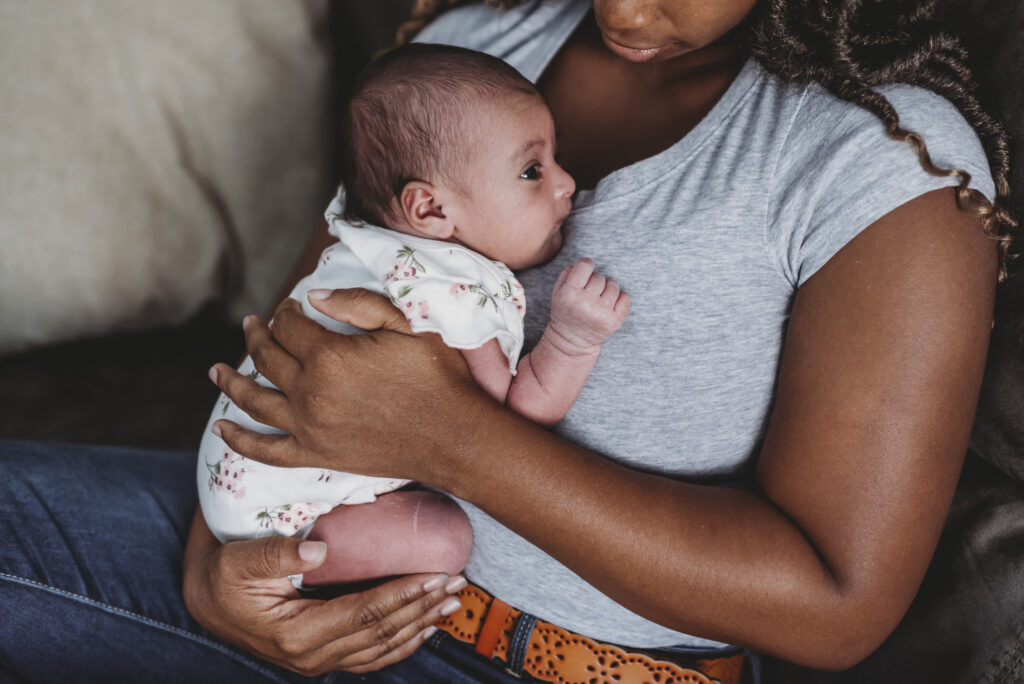
At six months pregnant, Courtney Williams of Palm Beach County, Florida, was in a dark place. Pregnancy complications forced her to stop working at the job she loved. At home, her partner abused her.
“I felt like I was dying inside,” Williams recalls. She suffered from depression and PTSD, which also threatened the well-being of her pregnancy and her 10-year-old son.
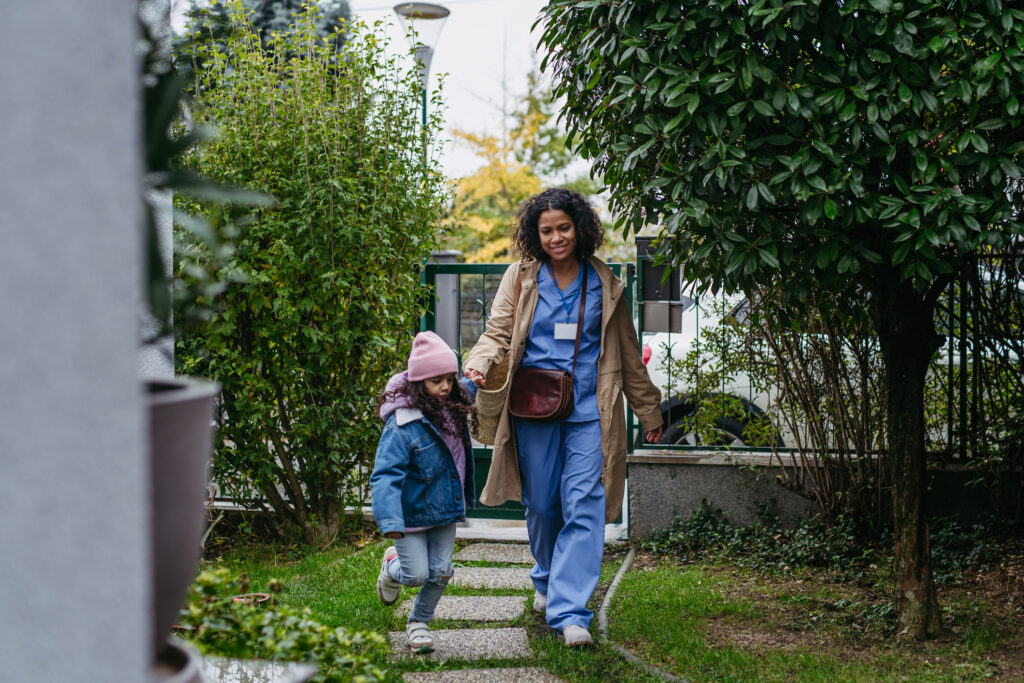
Everything turned around for Williams after she started working with Child First, a program of the nonprofit Changent. Home visits from Child First’s signature team of a mental health clinician and a care coordinator helped Williams get healthy mentally and connected her with needed services, from a supportive program for her son to diapers and other supplies for her newborn.
Today, Williams is a confident parent. She even started a new career as a certified doula, helping other mothers through birth and early parenting. Her story illustrates why Changent has been recognized by both the Make It Better Foundation and the University of Pennsylvania’s Center for High Impact Philanthropy (CHIP) in 2026 as a charity that makes the most of donors’ investments.
What Makes a Nonprofit High-Impact?
CHIP’s High Impact Giving Toolkit is a guide designed to help donors — from individuals giving a few dollars to ultra-high net worth families and professional grantmakers — make the most of their charitable investments.
But what actually is “high impact philanthropy”? According to Katherina M. Rosqueta, Founding Executive Director of CHIP, it’s about making as big a difference as you can with your charitable dollar.
“We think about high-impact philanthropy as a practice by the donor to use their philanthropic funds in a way that can create greater social impact — make the world a better place,” Rosqueta says.
The toolkit, available for free on the center’s website, lays out four principles of high-impact philanthropy:
- Focus on social impact
- Use the best available evidence
- Link impact and cost (“bang for buck”)
- Assess, learn and improve
These principles also reflect the approach of venture philanthropy, which applies strategies associated with venture capital, including rigorous evaluation, long-term support, and a focus on measurable results, to charitable giving.
Changent is a new nonprofit with decades of history — it was created in 2025 by uniting two established national programs that use home visits to help children thrive: Child First and Nurse-Family Partnership. Both programs fulfill CHIP’s four principles, Rosqueta says.
In terms of social impact, helping children thrive creates a ripple effect benefiting all of society.
“We’re intended as an intervention that affects families in many different aspects of their lives, from their health to their economic sustainability and employment,” says Michele Werner, Changent Chief Philanthropy Officer.
Changent stands out when it comes to the second principle, using the best available evidence, Rosqueta points out. Both programs have extensive research showing their effectiveness, from controlled academic trials to internally generated data.
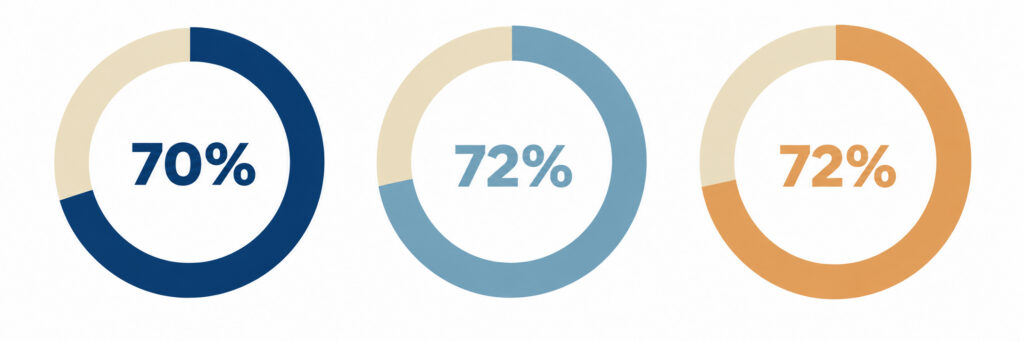
For example, Williams is part of the 70 percent of caregivers in the Child First program who experience improvement in depression, as well as the 72 percent who see improvement in PTSD symptoms, and the 72 percent who improve their interactions with their children.
Changent is also a shining example of linking impact and cost. Public policy researcher RAND did a study showing that every dollar that Nurse-Family Partnership spends helping families returns more than a $5 benefit to society.
“That’s because the program helps the kids thrive so well that there are lower social welfare costs, fewer emergency room visits, and increased tax revenue — because the kids and their moms finish school, and are able to contribute productively to the economy,” Rosqueta says.
Finally, Changent carries out the principle of assess, learn, and improve by continuing to collect and evaluate data as they carry out their programs.
“We’re continuing to validate that we’re effective and that we’re changing lives by the work we’re doing today,” Werner says.
Why How You Give Matters as Much as Where You Give
Lever for Change, Lever for Change, whose social impact partners include the Make It Better Foundation, has partnered with CHIP to identify nonprofits worthy of inclusion in its giving guide. While it doesn’t use the same principles as CHIP, Lever for Change has long focused on helping donors choose philanthropies that change the world.
Lever for Change creates open calls, in which organizations can apply for funding. While only a limited number of charities can rise to the top and win the funding, the process leaves Lever for Change with well-researched lists of worthy charities. Lever for Change has shared lists of excellent applicants with CHIP for inclusion in its giving guides.
Besides choosing where to give, Lever for Change President and Co-founder Kristen Molyneaux points out that donors can make their gifts more impactful by choosing how to give.
While it’s tempting for donors to earmark a gift for a specific program, an unrestricted gift can be even more impactful, strengthening organizations to allow them to have a greater impact in the future. Similarly, a multiyear funding commitment can help organizations plan, Molyneaux says. Both approaches reflect the emphasis on long-term organizational strength that is central to venture philanthropy.
Such gifts enable nonprofits to invest in technology, infrastructure and staffing, and “allow them to pivot, learn, adapt — not always be in bootstrap mode, so that they can have the impact they want to have on the ground,” she says.
How High-Impact Giving Strengthens Communities
Along with Changent, the Make It Better Foundation’s 2026 Philanthropy Awards honored Metropolitan Family Services (MFS), self-described as a nonprofit that “empowers families to learn, to earn, to heal, to thrive” in the Chicago area.
MFS and Changent work together; in Chicago’s Southwest suburbs, MFS is the local operator of Changent’s Nurse Family Partnership program.
Kelly Tavormina, the local program’s nurse supervisor, sees both the Nurse Family Partnership and MFS as a whole as strong examples of high-impact philanthropy.
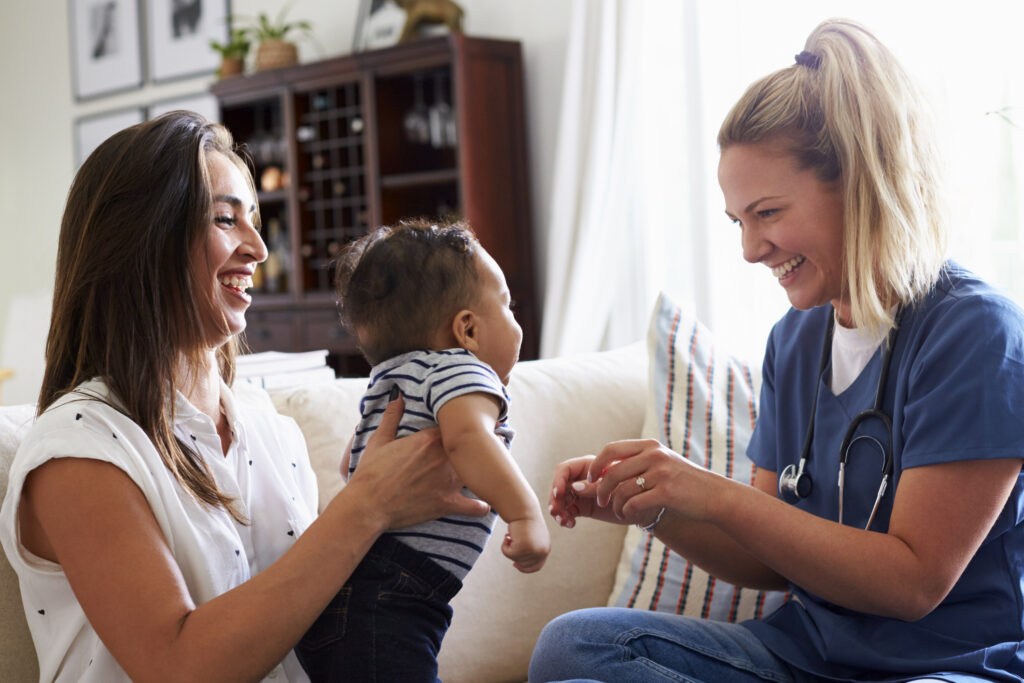
Just as CHIP’s high-impact principles suggest, MFS is continually improving. For example, the organization’s Southwest Center is currently going through the process of opening a Certified Community Behavioral Health Clinic (CCBHC), a federally standardized model that must provide a specific set of services.
“We are continuously growing, learning, taking on new programs to impact our community more and in better ways,” Tavormina says.
The CCBHC will make a deep impact on the community, including the pregnant people and new parents that the Nurse Family Partnership serves.
“A very high percentage of our clients screen high on their anxiety and depression screenings,” Tavormina explains. Once the CCBHC is open, MFS will be able to set such patients up with an in-house care team instead of referring them elsewhere.
Such targeted help to low-income communities like those served by MFS is a way for donors to get that “bang for their buck” that the Center for High Impact Philanthropy advocates.
“You’re investing in the communities that you live in, that you work in. And you’re giving other people the opportunity to better themselves, to be able to also turn around and reinvest in their community, to make their communities better,” Tavormina says.
More from Better
- What If We Funded Nonprofits the Way We Fund the Private Sector? How Lever for Change Is Proving the Model
- LEGO Foundation and Lever for Change Launch ‘Build a World of Play Challenge’ to Combat Childhood Inequity — Meet the Finalists
- Metropolitan Family Services ‘Mpowers’ Children, Families Across Skokie Valley Communities
- Matching Grant Fuels Metropolitan Family Services’ 2024 Mpower the Night Gala, Boosting Support of Chicago Families
Carrie Kirby writes about travel, technology and personal finance. On her travel blog, Miles on a Dime, she helps people learn how to travel using miles and points, home exchanging and other money-saving techniques. Her work on personal finance, business and technology has appeared in San Francisco Magazine, The San Francisco Chronicle, Wise Bread and more publications.