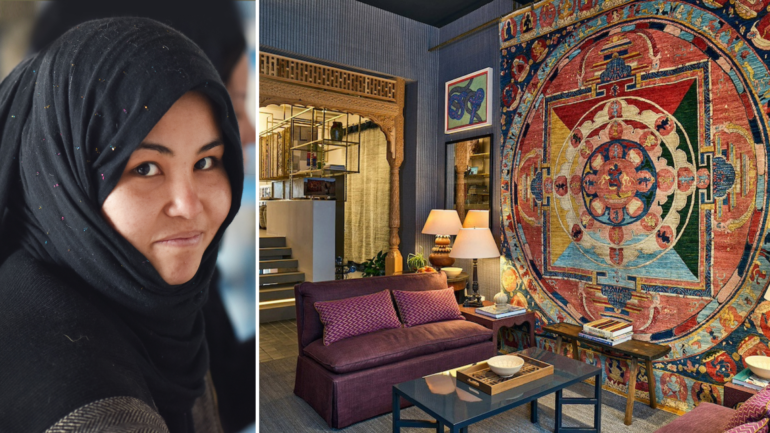
In Afghanistan’s Bamiyan Valley, Seema learned to weave from her mother and grandmother before her. Today, her carpets are sold through Christopher Farr in London and Los Angeles, helping support her family while carrying forward artistic traditions rooted in the region’s history.
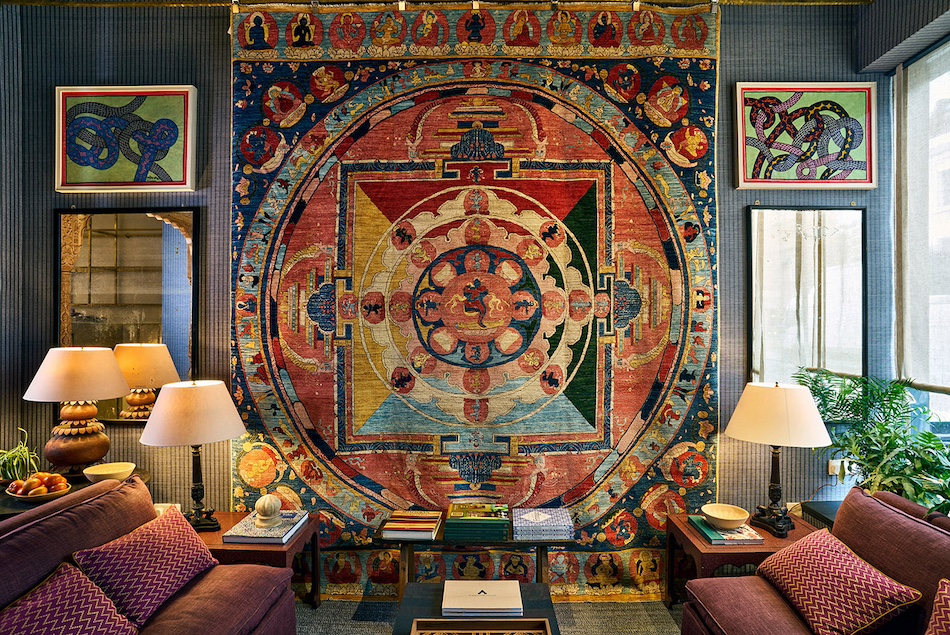
This particular carpet, woven by Seema, features a Buddhist mandala motif that reflects the heritage of Bamiyan, and Afghanistan more broadly.
Seema is one of many artisans supported by Turquoise Mountain, a nonprofit organization that works to sustain traditional crafts and cultural heritage in communities affected by conflict and upheaval. In many cases, the women the organization works with are their families’ sole breadwinners as well as preservers of generations-old artistic traditions. Over the past year, Turquoise Mountain has helped create thousands of artisan jobs, most of them for Afghan women.
Artisans like Seema reflect Turquoise Mountain’s broader mission. The organization supports artisans through a range of programs designed to help them thrive and pass on their traditions to the next generation. One of the most significant forms of support comes through commercial partnerships that bring millions of dollars in artisan-made products to market each year, including collaborations with companies such as Christopher Farr. Although Turquoise Mountain operates as a nonprofit, access to international markets remains central to the organization’s approach. The organization also provides education, primary health services, and emergency services within the communities it serves.
Founded in Afghanistan 20 years ago, Turquoise Mountain has since expanded into Myanmar and communities across the Middle East, working with Syrian, Jordanian, Saudi, and Palestinian artisans. A key part of that work involves supporting master craftspeople whose skills might otherwise disappear. One of those figures was the late Ustad (Master) Abdul Hadi, a renowned Afghan lattice woodworker. At the height of his career, he worked for the King of Afghanistan. By the time Turquoise Mountain encountered him, however, he had spent 15 years selling bananas in a bazaar.
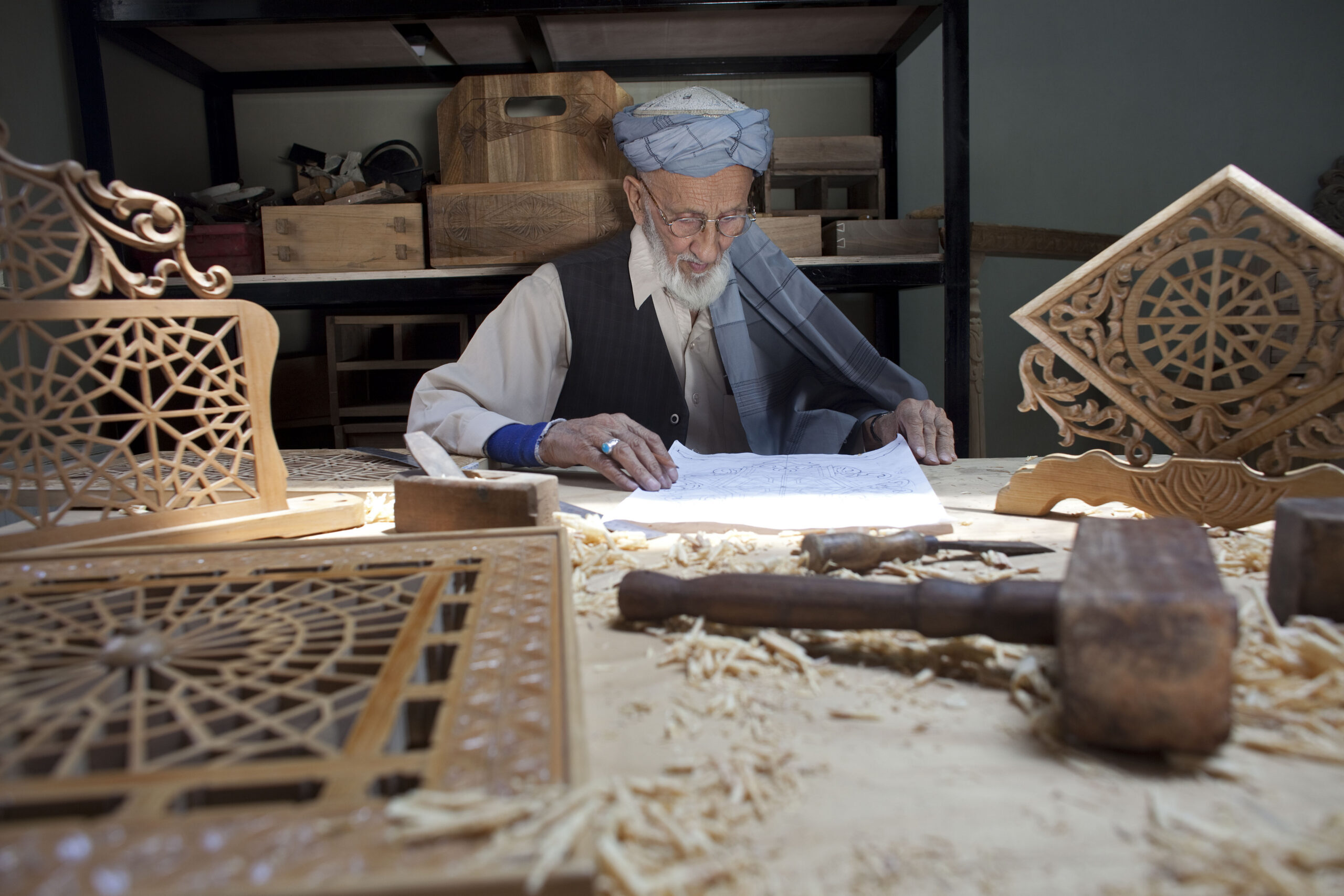
Decades of war, combined with the collapse of markets and apprenticeships, had left little opportunity for artisans to continue practicing traditional crafts. Turquoise Mountain invited Ustad Hadi and other retired craft masters to come out of retirement and teach, building the Institute of Afghan Art and Architecture in Kabul around them. Since then, those masters have passed on their traditions to thousands of men and women through schools of calligraphy and miniature painting, woodworking, ceramics, jewellery, and gem cutting. The institute remains central to Turquoise Mountain’s efforts to revive Afghanistan’s craft industry.
Turquoise Mountain’s work is rooted in the belief that cultural heritage can transform lives. That belief has been tested repeatedly through war, political upheaval, and natural disasters. In difficult circumstances, traditional crafts can provide both economic opportunity and continuity, allowing artisans to earn an income while preserving skills, identity, and creative traditions for future generations.
How to Help
Founded in 2006 by His Majesty King Charles III, Turquoise Mountain is a nonprofit organization that supports artisans and communities while working to preserve cultural heritage in Afghanistan, Jordan, Myanmar, Palestine, Saudi Arabia, and Syria. The organization has trained and employed more than 11,500 artisans, restored historic buildings, and provided healthcare, education, and cultural heritage programs in the communities it serves.
Through partnerships with international brands, designers, hotels, and cultural institutions, Turquoise Mountain has brought millions of dollars in artisan-made products to global markets, helping sustain traditional crafts while generating income for local communities. Follow Turquoise Mountain on Instagram to learn more and donate to support their mission.

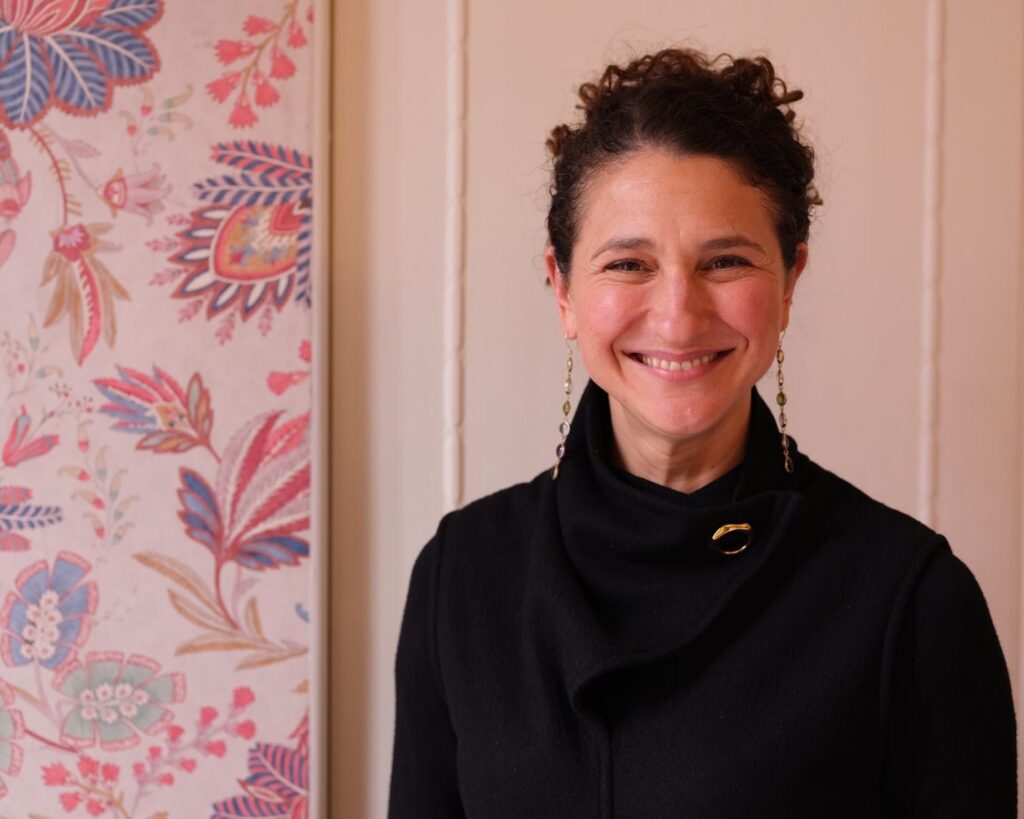
Shoshana Stewart is the President of Turquoise Mountain. She joined the organization in 2006 in Afghanistan, where she lived for five years. Under her leadership, the project has created over 25,000 jobs, brought over $17 million of crafts to market, built the Institute for Afghan Arts and Architecture, restored more than 150 historic buildings in the Old City of Kabul, and provide primary healthcare for almost 200,000 people. She has also expanded the project to work with Myanmar, Saudi, Syrian, Jordanian, and Palestinian artisans.
Shoshana has an MBA from the London Business School, a Master’s Degree in Education, and a Bachelor’s Degree in Astrophysics. She is also a Senior Fellow at the Yale Jackson Institute for Global Affairs.
This post was submitted as part of our “You Said It” program.” Your voice, ideas, and engagement are important to help us accomplish our mission. We encourage you to share your ideas and efforts to make the world a better place by submitting a “You Said It,” which can earn a nonprofit that you champion a $1,000 donation from the Make It Better Foundation and eligibility for a Philanthropy Award.