
I remember the day I looked in the mirror and didn’t recognize the woman staring back at me. My stomach churned, my hands shook, and the circles under my eyes could no longer be covered with makeup. That was the defining moment I chose to rescue myself from my abuser, despite the privilege that convinced the outside world I was safe. It’s a moment far too many people living in upscale communities experience but rarely dare to speak aloud — silenced by fear, shame, and stigma.
Domestic violence affects both women and men — one in three women and one in seven men experience it in their lifetime, according to estimates from the World Health Organization. For simplicity, I use the word “women” throughout, but these experiences and barriers impact men as well.
The Warning Signs of Domestic Violence
What makes my story especially eye-opening is that I had no prior exposure to abuse. It was not part of my childhood or my 30-year marriage. This happened later in life, in a relationship that followed my marriage—at a time when I believed I was experienced, self-aware, and immune to something like this. Like many women, I had never been educated about domestic violence, and I didn’t recognize the warning signs when they appeared in my own life.
To the world, he was a man of integrity — charming, trusted, philanthropic—someone who held my hand in public, kept my favorite fresh flowers in the house, insisted on first-class flights, and spoke proudly about family values. But behind closed doors, another version of him emerged — one no one outside those walls could see or would ever believe, protected by a public image so polished and admired that the truth had nowhere to land.
I was tiptoeing through each day, praying for strength, and pretending everything was fine because I had no choice but to hide what was happening inside our home. I had moved to a new city where I knew no one except his friends. This left me without a single safe, non-judgmental place to turn. I was a prisoner in my own home. And for those who ask, “If it was so bad, why didn’t you just leave?” the truth is this: you cannot even think about leaving when you’re being abused. Abuse conditions your brain for survival — not strategy. The mind becomes wholly focused on staying safe in the moment, not planning an exit from danger.

When he sensed I was leaving, the manipulation escalated. One day, I was being torn down with insults; the next, he was professing his love and sliding a ring on my finger. That proposal wasn’t about love or commitment — it was about control. It was a desperate attempt to pull me back in at the very moment he felt his power slipping away. And when I calmly slid the ring off my finger and said no, I saw a look I’ll never forget — because in his world, you don’t say no to the king.
The days before my escape were filled with fear so deep it left me exhausted. I left with only my clothing, and within weeks, pneumonia hit me like a tsunami. My son drove me home, and I thought the hardest part was over. But it wasn’t. The survival mode that had kept me together began to break, and my body finally told the truth my mind had denied. PTSD arrived uninvited, stalking me for eighteen months, and I faced the realization that the business I had poured my remaining resources into was no longer viable. What I thought was the end of pain was actually the beginning of returning to myself — reconnecting with my inner clarity and slowly reigniting the emotional power I had always owned.
I was blessed to have family and friends who stood by me, yet I still felt desperately alone. The shame was crushing — how could this happen to me, an accomplished and capable woman? It took me to my knees. That moment became a turning point I couldn’t ignore: if this experience took me to my knees — someone widely known for strength, courage, and resilience — what is happening to the women who have not yet found the courage to leave? I knew in that moment I had to use my voice and my story to help other women.
Domestic Violence Isn’t Always What It Seems
Domestic violence doesn’t look like what most people imagine. It lives behind grand entryways, luxury interiors, charitable reputations, and perfectly staged holiday cards — and it thrives where silence is expected.
In upscale households, women often feel intense pressure to maintain the appearance of perfection. They do not want their children, parents, friends, or those who know and admire them to know what is happening at home. Many are surrounded by attorneys, physicians, financial advisors, or community leaders who also move within their social orbit. When everyone knows everyone, seeking help can feel too risky.

And then there is money.
People often believe that financial resources equal freedom. But financial abuse is part of nearly every domestic violence dynamic. Research from the National Network to End Domestic Violence shows it occurs in 99 percent of cases. Money is controlled, access is restricted, and dependence is strategically engineered. The “golden handcuffs” are real — and they keep too many women immobilized in homes others envy.
Breaking the Cycle of Domestic Violence
Domestic violence in upscale communities isn’t rare — it’s unspoken. And when something remains unspoken long enough, people begin to believe it doesn’t exist.
This is why the work of organizations like WINGS matters. WINGS has spent decades serving survivors with proven impact, providing housing, counseling, legal resources, education, and comprehensive recovery support. Their outcomes are strong: last year, 95 percent of survivors leaving WINGS Safe Houses and Housing programs reported not returning to their abuser.
Even with proven programming, one truth has emerged: access pathways differ for those living in upscale communities. Not because they don’t need help, but because fear of exposure creates barriers that existing resources cannot always reach.
For that reason, WINGS has created a discreet pilot program for survivors who would never call a hotline or enter a shelter. Known as the North Shore Outreach Initiative, it will deliver emotional support, financial guidance, legal navigation, and recovery planning privately and safely. The program is ready to launch, but cannot move forward until funding is secured. Once funded, it will launch in Chicago’s North Shore in 2026, with expansion to additional communities as resources allow.
People often ask me how I found the strength to rescue myself from my abuser. And here is the truth: strength isn’t something we go searching for — it’s something we remember. When we sit in the fire and ashes long enough, we rise with deeper clarity, expanded wisdom, and with a heart primed to discover the flowers of peace blossoming all around us.
When communities acknowledge that abuse exists behind prestige, wealth, accomplishment, and reputation, change no longer remains theoretical. It becomes possible.
How to Help
If this story moved you — or if someone came to mind while reading — your donation will directly support the launch of this program in Chicago’s North Shore in 2026. These services will not begin without community funding, and your contribution is part of that collective effort.

Educate yourself and others:
National Network to End Domestic Violence
If someone needs immediate support:
Illinois Domestic Violence Hotline
877-TO-END-DV
National Domestic Violence Hotline
800-799-SAFE
This post was submitted as part of our “You Said It” program.” Your voice, ideas, and engagement are important to help us accomplish our mission. We encourage you to share your ideas and efforts to make the world a better place by submitting a “You Said It,” which can earn a nonprofit that you champion a $1,000 donation from the Make It Better Foundation and eligibility for a Philanthropy Award, grant content partnership, and greater engagement with our audience.
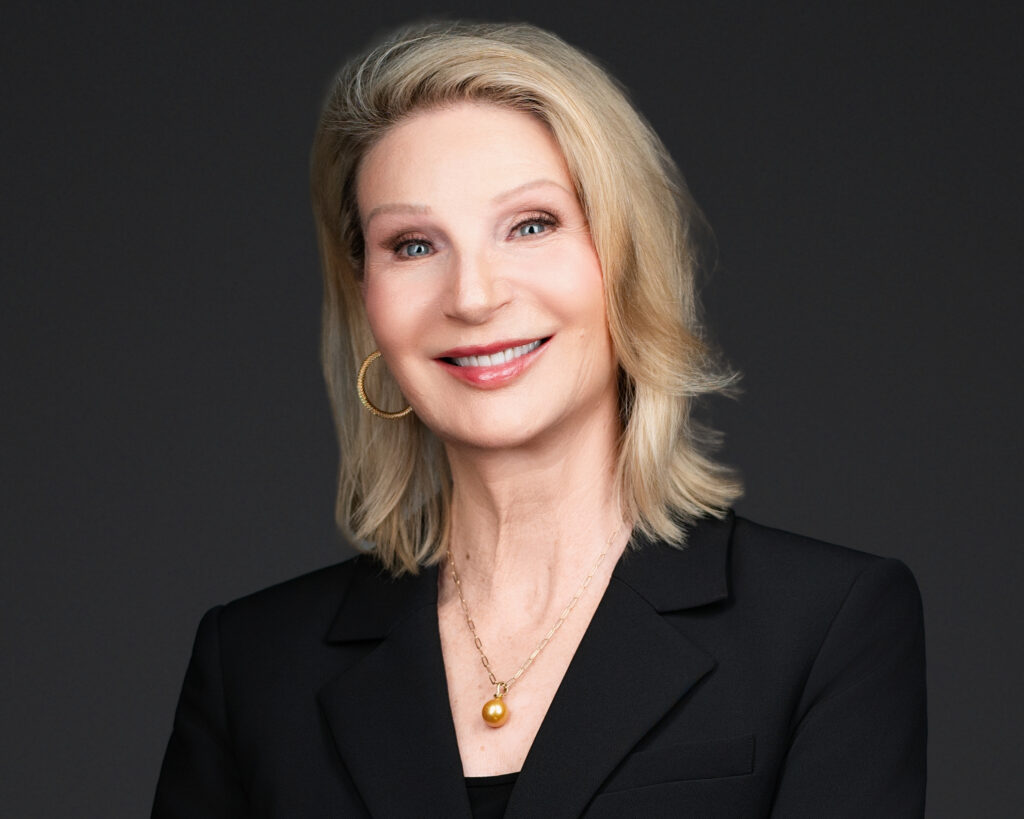
Tracey Mayer is an entrepreneur, speaker, consultant, and personal advisor whose perspective is shaped by over six decades of lived experience and a four-decade career rooted in luxury fashion, philanthropy, and women’s leadership. She works with women during life’s most challenging chapters, helping them reconnect with their inner clarity and ignite their emotional power. Tracey currently advances that mission by advising and leading development efforts for the new WINGS North Shore Outreach Initiative.