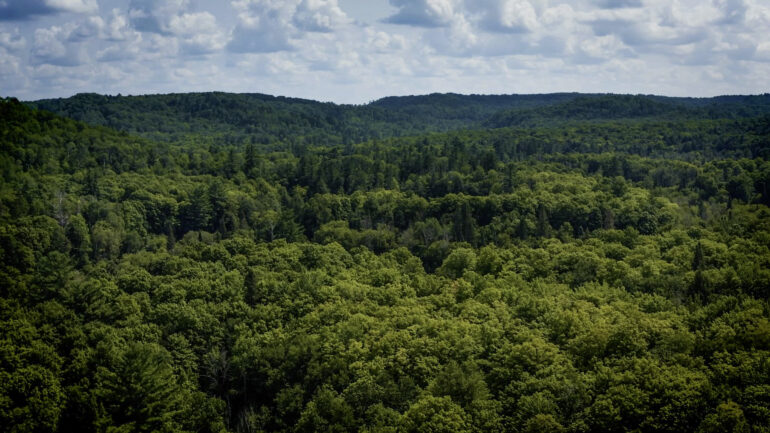
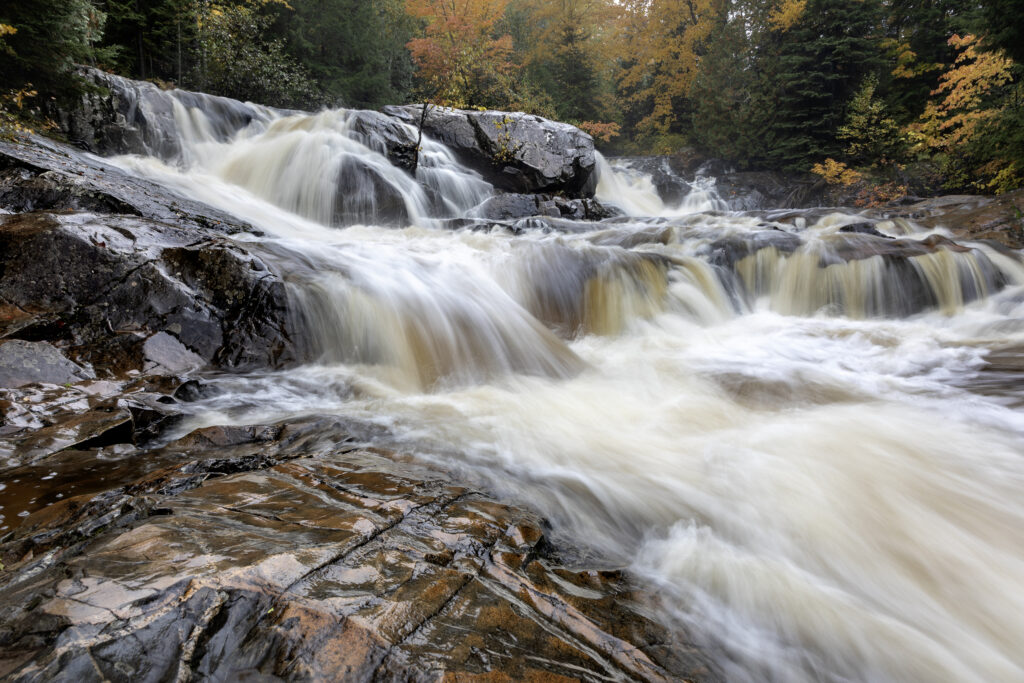
The Ottawa National Forest is one of the Midwest’s great public landscapes: mature hardwoods, wetlands, waterfalls, cold-water streams, wildlife habitats, and outdoor recreation. On any given day, one may find a gray wolf moving through a forest; a family hiking beside a cold-water stream; or a small-business owner supplying anglers, paddlers, and campers in Michigan’s Upper Peninsula.
The Ottawa National Forest is home to three existing wilderness areas: the 34 pristine interconnected lakes of the Sylvania Wilderness and its old-growth northern hardwood and white pine forests; the Sturgeon River Gorge Wilderness replete with waterfalls and the Wild and Scenic Sturgeon River carving a 1-mile-wide, 350-foot-deep gorge; and the rugged, remote McCormick Wilderness with the headwaters of the Yellow Dog River.
But a proposed logging project could put all this at risk.
Proposed Timber Sales Threaten Midwest Ecosystem
The U.S. Forest Service proposed its largest timber sale in decades in the Ottawa National Forest. The Forest Service’s proposed Silver Branch “Vegetation Management Project” would affect more than 127,000 acres—nearly 200 square miles—of national forestland. The plan would clear-cut about 25,000 acres and heavily log another 55,000 acres over the coming decades, including mature northern hardwood stands and a proposed addition to the Sturgeon River Gorge Wilderness Area.
This large-scale logging project requires thorough environmental analysis. National forests are multiple-use landscapes managed for logging, conservation, wildlife habitat, and outdoor recreation resources. The Forest Service is short-circuiting the environmental review process by doing a more limited environmental assessment and finding that the logging project has no significant impact on the environment.
This is just not reasonable or lawful. The Forest Service should be conducting the more robust full environmental impact statement and analysis of alternatives required by the National Environmental Policy Act (NEPA).
What’s at Stake: Holding the Forest Service Accountable
Logging affects everything from mature forest growth to wildlife habitats and tourism. In regard to the Silver Branch project, the proposed logging could threaten the habitat of endangered species, including the gray wolf and two different bat species. This $50 million project can also have a negative impact on the tourist economy, which is vital to the economic stability of Michigan’s western Upper Peninsula.
The Environmental Law & Policy Center public interest attorneys are working with clients and partners at Environment Michigan, Michigan Environmental Council, Michigan League of Conservation Voters, Natural Resources Defense Council, and the Upper Peninsula Environmental Coalition to file formal objections to the Forest Service’s misguided proposal.
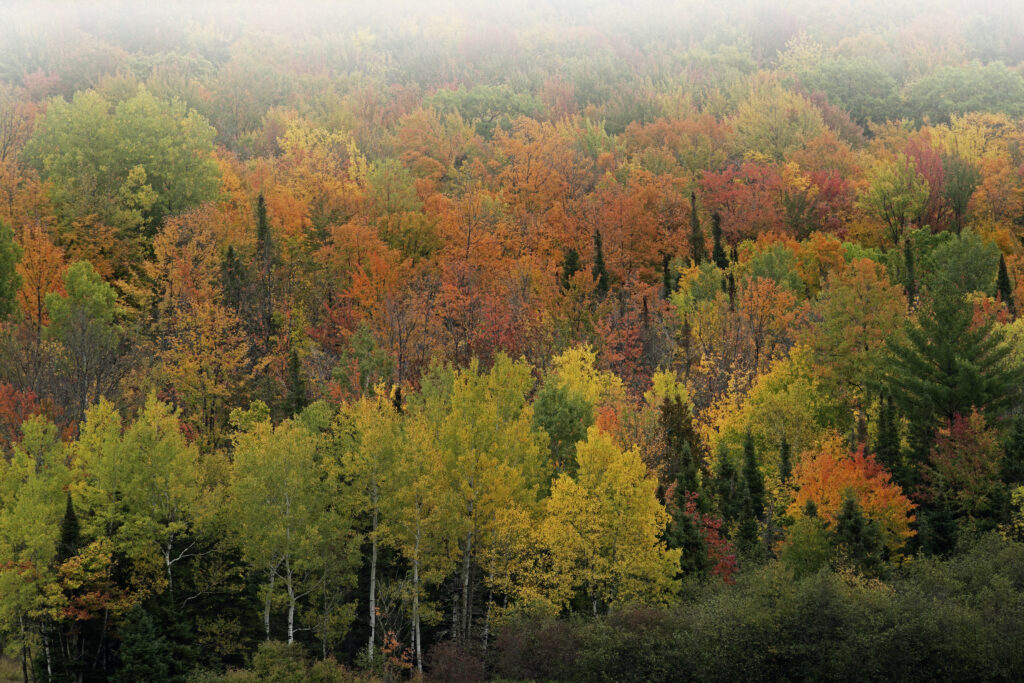
Federal law requires careful review and thoughtful decision-making when a logging project could affect mature forests, wildlife habitats, wilderness values, clean water, and the recreation economy. The objection states that the Forest Service should conduct a full environmental impact statement that examines impacts, evaluates alternatives, and allows the public to weigh in. The Forest Service should also protect the Ottawa National Forest’s most sensitive and vital natural resources.
Effective legal and public advocacy makes a difference, as does collaboration. Conservation groups, Upper Peninsula advocates, regional businesses, outdoor recreation leaders, scientists, lawyers, and community voices bring different knowledge of the land. They are all engaged with the Keep the U.P. Wild coalition.
These public lands belong to all Americans. Before starting a logging project of this magnitude, the Forest Service should complete the thorough environmental impact statement that the vital natural places deserve, and that federal law requires.
This post was submitted as part of our “You Said It” program. Your voice, ideas, and engagement are important to help us accomplish our mission. We encourage you to share your ideas and efforts to make the world a better place by submitting a “You Said It,” which can earn a nonprofit that you champion a $1,000 donation from the Make It Better Foundation and eligibility for a Philanthropy Award, grant content partnership, and greater engagement with our audience.
How to Help
The public deserves a full Environmental Impact Statement before a 200-square-mile logging project in the Ottawa National Forest moves forward. Learn what is at stake for clean water, wildlife, wilderness, and public lands and encourage decision-makers to require a thorough environmental impact statement and consideration of alternatives before any final approval.
The Environmental Law & Policy Center is the Midwest’s leading environmental legal advocacy organization. ELPC drives transformational policy changes with national impacts. Donate to support their work to defend the environment, protect the Great Lakes, and help safeguard our planet’s future.


Howard Learner is the Founder and CEO of the Environmental Law & Policy Center. He has had a long career of public interest advocacy, including serving as the General Counsel for Business and Professional People for the Public Interest, specializing in environmental, energy, economic development, and civil rights litigation and policy development. He currently serves on the boards of the Great Lakes Protection Fund (appointed by Gov. JB Pritzker), the Council for the Great Lakes Region, and the Cook County Forest Preserve Foundation, and is a Lecturer in Law on Environmental Constitutionalism at the University of Chicago Law School.
More From Better
- Make It Better’s 2026 Eco Warriors
- How to Help: Fight Climate Change by Supporting These Nonprofits Working to Protect the Environment
- How Listening to Nature Builds Empathy — and Why That Matters for Conservation
- An Urgent Climate Change Warning: Lake Michigan Shoreline Communities Should Plan for More Extreme Lake Water Levels
- Kids Deserve a Clean Ride to School