What if we challenged the long-standing idea that artists should have to struggle for their art? Is instability proof of passion? Do we equate uncertainty with choosing a creative life? Should dancers, musicians, actors, and visual artists accept sacrifice as the cost of doing what they love?
What if, instead, we believed that extraordinary art requires not only extraordinary talent, but extraordinary care?
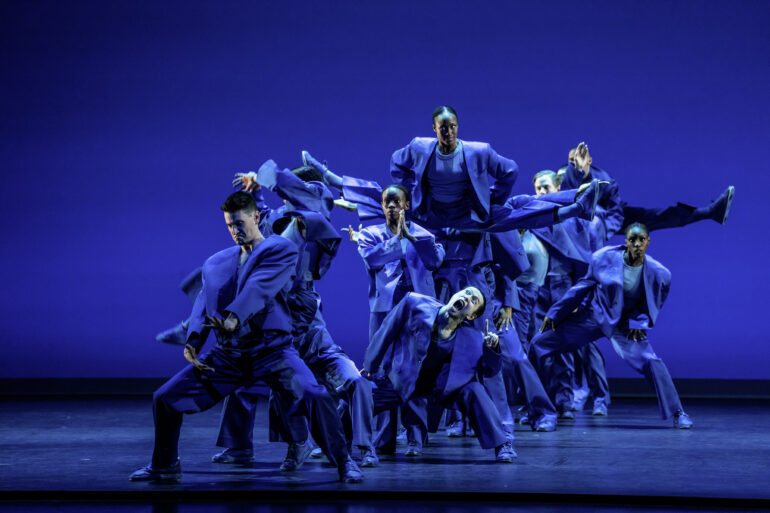
For Hubbard Street Dance Chicago, a Make It Better Foundation 2026 Philanthropy Award Winner, protecting the future of contemporary dance means protecting the people who make it possible: the artists themselves.
Before Linda-Denise Fisher-Harrell became the Artistic Director of Hubbard Street Dance Chicago, she was a dancer. She knows the joy of a dance career, the discipline it demands, and the extraordinary privilege of stepping on stage and sharing something meaningful with an audience.
Fisher-Harrell also knows its challenges. She knows what it feels like to navigate the uncertainty of a profession built around short contracts, layoffs, and inconsistent employment. She knows what it feels like when weeks without work mean having to figure out how to make ends meet before the next pay period begins.
This is not a story unique to dance. Across the arts, the people who give shape and meaning to cultural life are too often asked to do so without the basic infrastructure that workers in other fields take for granted: stable income, health coverage, and access to care when the body or mind needs it.
The Reality of Dancer Life
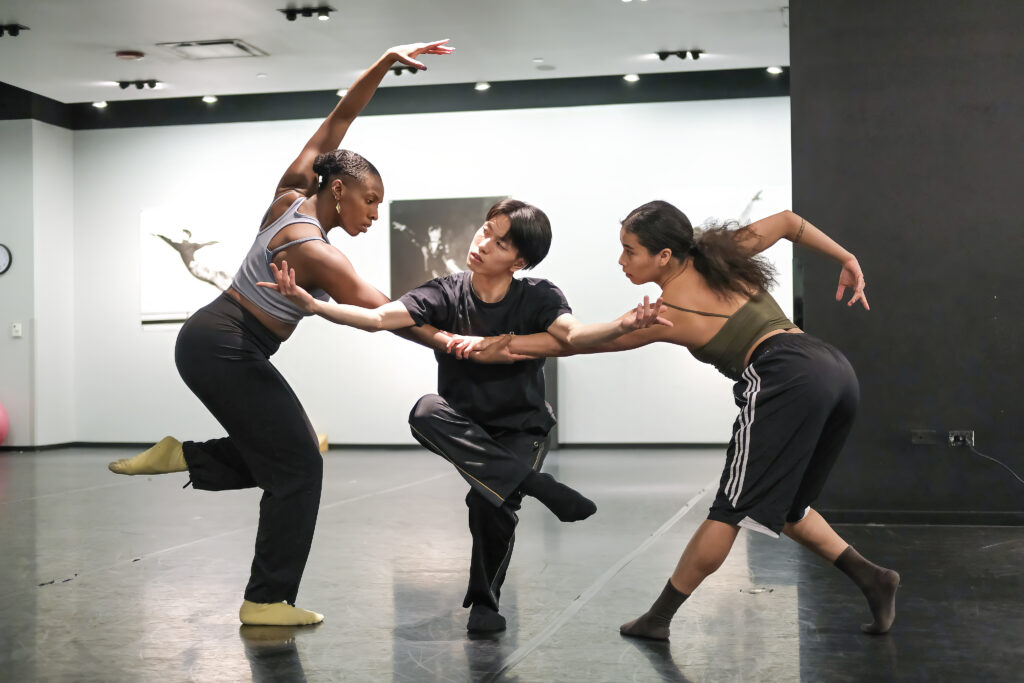
According to the U.S. Bureau of Labor Statistics, the median annual wage for dancers hovers well below what most would consider a living wage in a major city, and income can be unstable from season to season, contract to contract. For freelance and project-based artists across disciplines, this precarity is the norm, not the exception.
Dance also happens to be one of the most physically demanding professions in the world. Hubbard Street’s artists spend countless hours training, rehearsing, creating, touring, and performing. They give themselves completely, physically, emotionally, and creatively. And like professional athletes, they require support systems that allow them to perform at the highest level without sacrificing their long-term health.
What Employers Can Do Differently
Artists are resilient. They are resourceful. But resilience should not require instability.
One of the things that makes Hubbard Street stand out was founder Lou Conte’s deep commitment to the dancers. Lou was a performer himself. He understood the physical, emotional, and financial realities of this career. He knew dancers were not simply bodies on stage. They were human beings building and sustaining lives.
From the beginning, Hubbard Street worked to create something incredibly rare in this field: consistency. Today, Hubbard Street is proud to provide 14 Company Dancers with year-round contracts, comprehensive health and retirement benefits, on-site physical therapy, and resources that support their overall well-being.
This matters for the dancers, and for the art itself.
On-site physical therapy means that a strained muscle or a tweaked knee is treated before it becomes a career-ending injury. When an injury sidelines a dancer, the financial and professional consequences can be devastating, not only for the individual but for the companies and communities that depend on them. Access to care is how we keep artists in the field long enough to do their most meaningful work.
Mental well-being is equally essential. When organizations build mental health support into the fabric of employment, they signal something important: that the whole person matters, not just their output on stage. This holds across all art forms.
Creative Risk Requires a Foundation of Safety
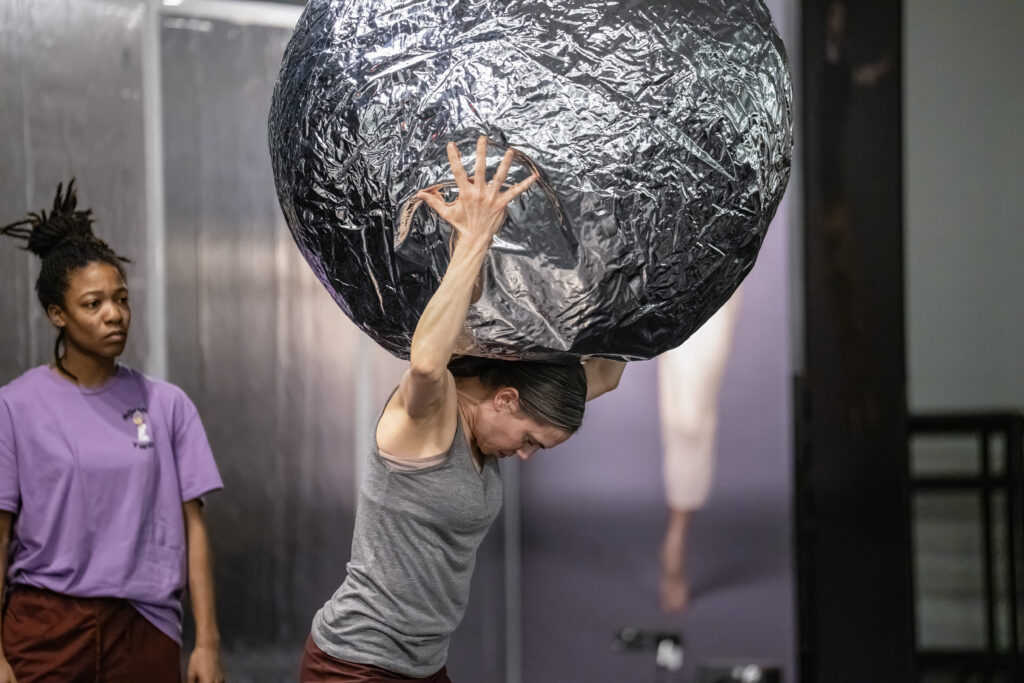
The most transformative moments in the studio happen when dancers are willing to explore the unknown. To investigate, discover, and push beyond what feels comfortable. But creative risk requires trust. It requires knowing that the organization asking you to give so much of yourself is also committed to caring for you.
When artists feel safe, they take risks. And when artists take risks, culture keeps moving forward.
Investing in artist well-being is an investment in the vitality of the art form itself and in the communities that art serves. Thriving artists bring more to every rehearsal, performance, and community engagement. They stay in the field longer and mentor the next generation. They make work that is bolder, more honest, and more alive.
A Healthier Future for Dance and for All the Arts
Like many nonprofit arts organizations, Hubbard Street exists within a landscape where sustainability requires constant creativity, generosity, and community support. Rising costs and economic pressures continue to challenge arts organizations across the country. But Hubbard Street believes the answer cannot be asking artists to carry that burden.
The fight for fair wages and sustainable working conditions is one that the broader arts community is actively grappling with. Hubbard Street’s commitment to supporting dancers reflects what they value. If we believe art is essential to a thriving society, then we must also believe the people creating that art are essential.
When companies invest in the people doing the work across dance, theater, music, and every art form, everyone benefits. Artists thrive. Organizations grow stronger. And communities receive something irreplaceable: art made by human beings who are fully, wholly themselves.
When we protect the artist, we protect the art itself.
This post was submitted as part of our “You Said It” program. Your voice, ideas, and engagement are important to help us accomplish our mission. We encourage you to share your ideas and efforts to make the world a better place by submitting a “You Said It,” which can earn a nonprofit that you champion a $1,000 donation from the Make It Better Foundation and eligibility for a Philanthropy Award, grant content partnership, and greater engagement with our audience.
How to Help
Follow Hubbard Street on Instagram, Facebook, and YouTube to stay connected with their artists and see the work up close. You can also consider making a donation to support Hubbard Street Dance Chicago. Every contribution sustains Hubbard Street’s Dancers, their education and community programs, and the entire organization.
You can also support Hubbard Street Dance by attending the Second Annual Hubbard Street Night at Wrigley Field on September 15, 2026. All qualifying gifts made by August 31 will be matched dollar-for-dollar, up to $10,000, by the Make It Better Foundation. When you purchase your tickets before the match deadline, you help double the impact of your support for Hubbard Street.


Linda-Denise Fisher-Harrell, Artistic Director of Hubbard Street Dance Chicago since 2021, is a celebrated dance artist and educator. A Baltimore native, she trained at the Baltimore School for the Arts, The Ailey School, and The Juilliard School before joining Hubbard Street at age 19 and later serving 13 years as a Principal Dancer with Alvin Ailey American Dance Theater under Judith Jamison, performing globally in works by renowned choreographers. She has performed at the White House, the Kennedy Center, and on stages worldwide, and since 2005 has taught in her hometown as a Professor of Dance at Towson University, where she established AileyCamp Baltimore and hosted Ailey II residencies. An ABT® Certified Teacher with an MFA from Hollins University, her scholarship includes an entry on Alvin Ailey for the Routledge Encyclopedia of Modernism. She and her husband have three children.
More from Better
- Fear of the Unknown Can Keep People From the Arts — This Dance Company Has a Solution
- Ballet 5:8’s BIOS Project Transforms Real Women’s Stories Into Powerful New Dance Works
- Christine Rocas on Her Path from Joffrey Ballet Dancer to Rehearsal Director — and Why the Company Is ‘on the Right Side of History’
- Joffrey Ballet and RUSH Launch Groundbreaking Mental Health Program for Dancers and Staff
- Why Collaboration Is Chicago’s Secret to a Thriving Arts Community