Nonprofits can build a pipeline of great programs, but without thinking carefully about who carries their message and which partners are the right fit, they may miss out.
This is something that Ric Estrada, president and CEO of Metropolitan Family Services (MFS), thinks about a lot.
A human-services agency founded in 1857, MFS provides services ranging from career assistance and summer job placements for young adults to financial planning. It was the first chartered human services nonprofit in Illinois, originally known as the Chicago Relief and Aid Society, later as United Charities and then as Metropolitan Family Services. The organization also provides aftercare for children, adoption support, and counseling as well as legal services.
The many ways MFS, a Make It Better Foundation 2026 Philanthropy Award winner, uses partnerships include donations alongside grants, in-kind donations, volunteering, and event sponsorships.
MFS approaches these partnerships with intention. For example, a sports partnership might lead to high-profile recognition. A Super Bowl ad featuring Chicago Bears wide receiver Rome Odunze could raise the agency’s profile in a neighborhood.
“The street cred and gravitas that comes with that with certain parts of our constituency and not to mention our donors — ‘That was MFS and Rome Odunze in a Super Bowl commercial,’” Estrada says. “It helps us reinforce that we are a high-quality organization, and that other people in prominent places trust the work that we do.”
Potential employee recruits might think, “Maybe I should work there,” he adds.
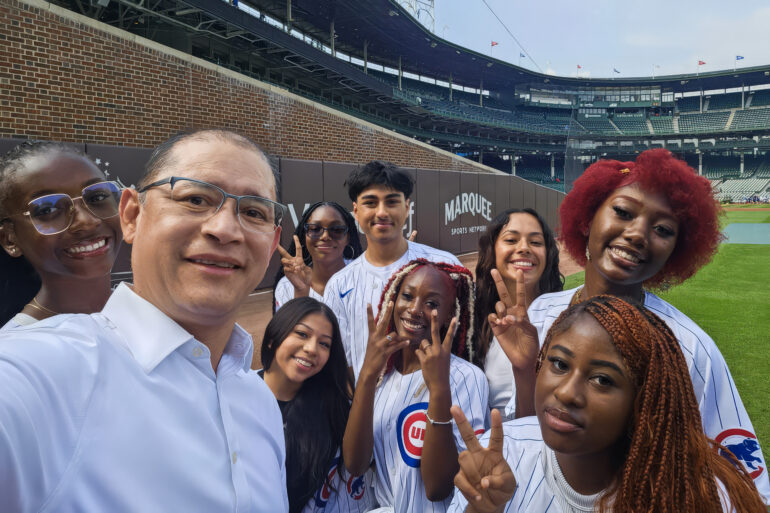
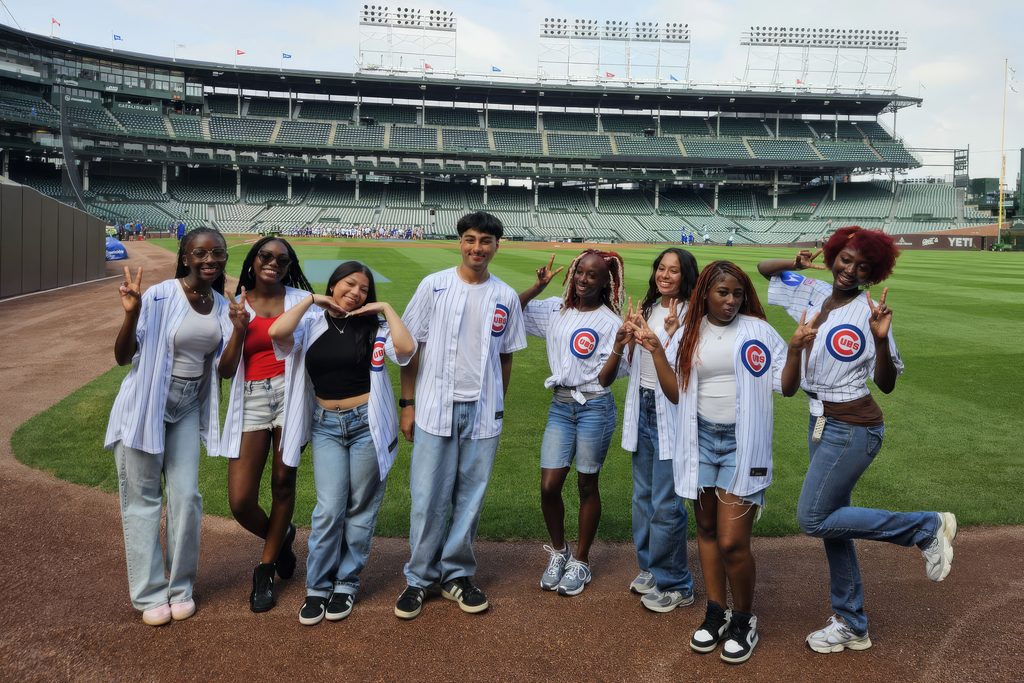
Their professional sports partnerships arrive with a built-in audience, visibility, and trust. MFS’ Calumet Center has had multiple students from its Upward Bound program, which prepares first-generation college students for college, selected as Cubs Scholars; the Metropolitan Peace Initiatives has worked with the NFL’s Inspire Change.
Estrada says MFS has long kept multiple partnerships. The line of people who need their services is always present; they need to make sure they have resources to meet those needs.
“We don’t exist without good partnerships,” Estrada says. “We can’t bring the kind of impact we want to the community without those.”
Corporate partnerships include McDonald’s, which has hosted opportunities where youth can visit McDonald’s headquarters and learn from other students interning at the corporation.
Finding a partnership often comes about in one of two ways — organic, or targeted.
Organic partnerships often come about because of name recognition — a board member might encourage someone to approach Estrada at a gala and offer to work together. Targeted partnerships occur when someone from MFS reaches out to a group they think could have aligned goals or be a good mutual fit to work together.
Estrada has been surprised throughout the years at how people will come up to him at an event and ask for fundraising materials or to get involved. Of course, it isn’t that easy, he adds. But there are surprising moments along the way.
“You could be at an event, and you don’t think anybody’s paying attention, and next thing you know you have someone saying, ‘Hey, I would like to consider joining MFS on the board, or in a partnership,’” he says.
Jose Rodriguez is the director of the Community Capital Portfolio at the Robert R. McCormick Foundation, which has partnered with MFS for more than 70 years, since the beginning of the Foundation. In fact, Colonel McCormick, the longtime publisher of the Chicago Tribune, served on the MFS board himself, “so there is a long history between our two institutions,” Rodriguez says.”
The Foundation has invested almost $15 million, including being a long-term supporter of Metropolitan Peace Initiatives, a 2023 Make It Better Foundation Philanthropy Award winner, since its 2017 launch. The citywide effort helps people affected by trauma through street outreach, legal aid, and youth interventions.
They are also investing $2 million through this 2026 and 2027 in the Metropolitan Peace Academy, which trains frontline professionals in Chicago’s community violence intervention workforce.
Rodriguez says the Foundation is also proud of its commitment to West Englewood, on Chicago’s South Side, through the Joyce Mpower House, where it funded the Robert R. McCormick Media Center. There, young people learn leadership and digital media skills such as music production and podcasting. Rodriguez says the project is especially meaningful given McCormick’s journalism roots.
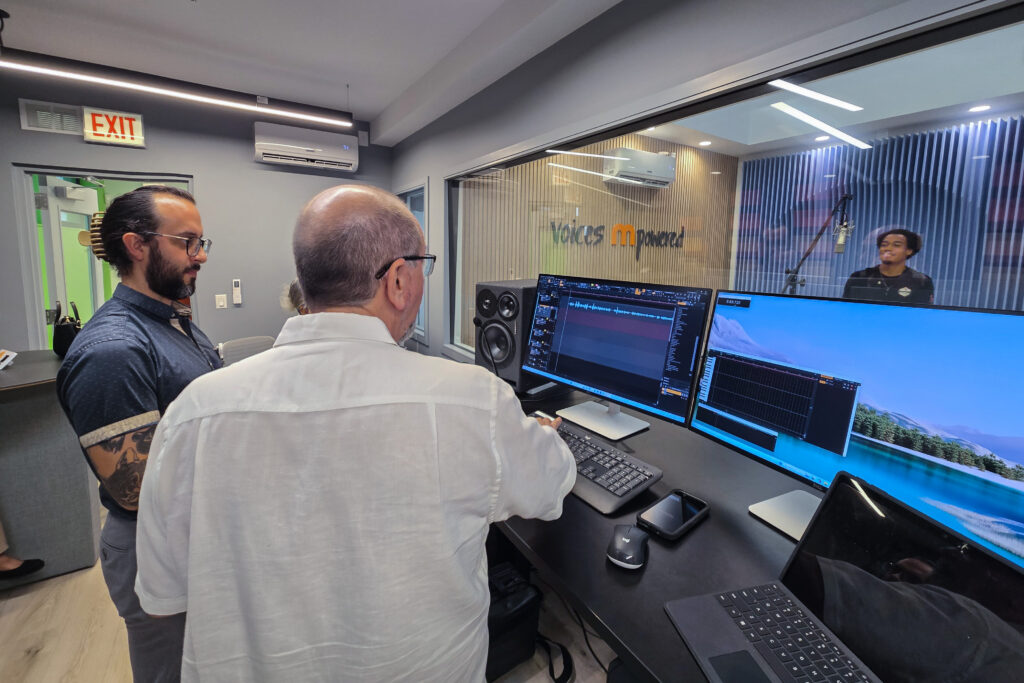
“The staff at MFS know the communities and the residents they serve, which allows them to quickly establish trust with organizations and residents and to collaborate with community stakeholders on initiatives that will have a lasting impact in the neighborhood,” Rodriguez says. “You see that clearly in Englewood.”
Another thing organizations can consider? Partnerships that provide skills. Estrada says MFS has been very fortunate to have Boston Consulting Group as a partner; BCG has helped create their strategic plans pro bono for many years. Deloitte recently talked with them about offering services to streamline accounting or HR practices.
“Their experts come and work with our team to improve processes and ultimately lead to better services and therefore outcomes for our clients,” Estrada says.
And partnerships with institutions already rooted in the community benefit the people they help. For example, the University of Chicago has access and credibility within a huge swath of the city.
It’s equally important to value volunteers, Estrada says. They have more than 1,500 employees, and twice that many volunteers.
“If you treat your volunteers with respect, careful diligence, so that their time is well spent here and they are seeing the level of impact to the best of our ability that we offer, then everything else that’s good follows,” he says, “whether it’s additional volunteering or philanthropy or engagement or sponsorship.”
“You can’t skip the step of, ‘Let’s make sure we manage this relationship in really authentic ways, respect their time, demonstrate the value of that time, and then put them to work on meaningful projects.’”
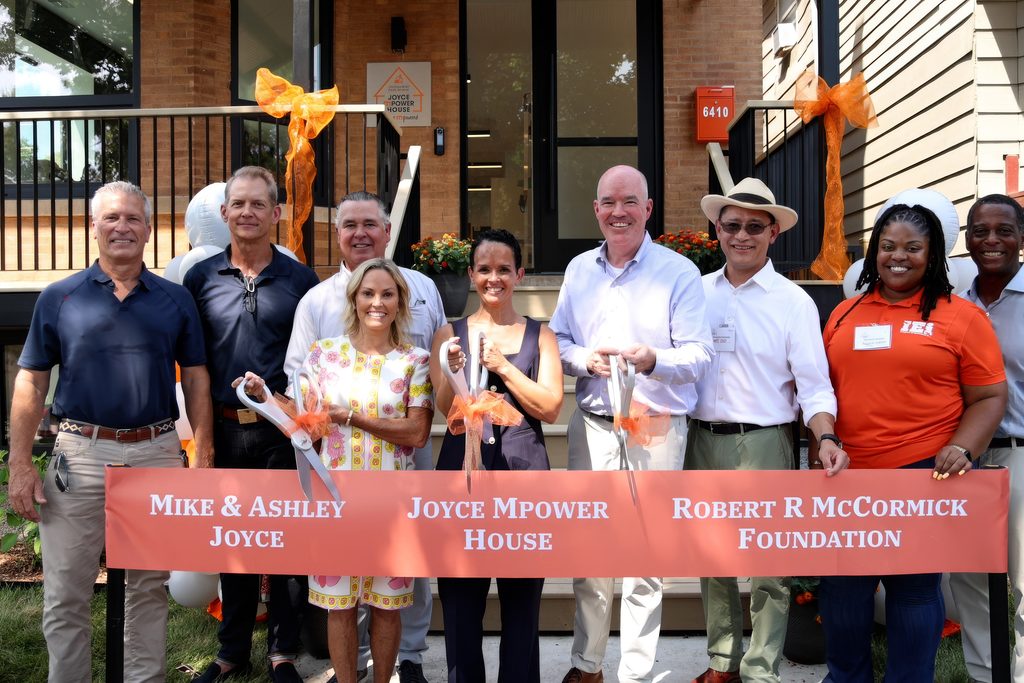
Rodriguez says the McCormick Foundation is thoughtful about its partnerships, too. Support can look like many things — sometimes it’s directly investing in people; sometimes it’s investing in physical infrastructure, like transforming the Joyce Mpower House from a dilapidated property into a neighborhood asset.
“That combination is important to us,” Rodriguez says. “You need strong people and organizations, but you also need strong places where people can see possibility, access opportunity, and build their own futures.”
How to Help
Metropolitan Family Services has been a voice for families since 1857. In Chicago and suburban communities, they offer programs for young children to older adults, and champion social policies that protect communities and empower families to learn, to earn, to heal and to thrive.

More from Better
- Ulta Beauty and Metropolitan Family Services Leaders Discuss How to Build Successful Partnerships Between Nonprofits and Corporations
- How to Make Your Charitable Donations Go Further: 4 Principles of High-Impact Philanthropy
- What If We Funded Nonprofits the Way We Fund the Private Sector? How Lever for Change Is Proving the Model
- Matching Grant Fuels Metropolitan Family Services’ 2024 Mpower the Night Gala, Boosting Support for Chicago Families

Alison Bowen is an award-winning journalist whose work has appeared in publications like The New York Times, CHICAGO magazine, Cosmopolitan magazine and the Chicago Tribune, where she was a staff reporter and editor for a decade. She is drawn to stories about maternal health, well-being, trauma and resilience.