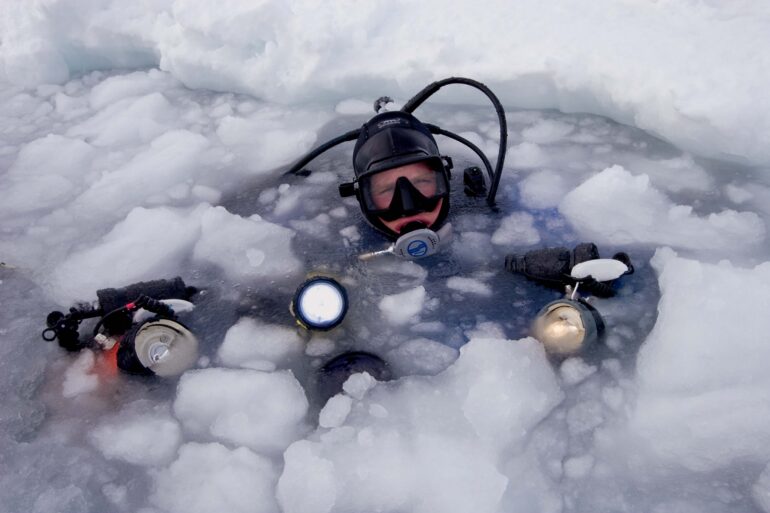
One of the world’s leading ocean conservationists and award-winning nature photographers, Paul Nicklen has spent more than three decades documenting both the beauty of the natural world and the accelerating impact of climate change. Trained as a marine biologist and shaped by decades of fieldwork, Nicklen — a National Geographic contributor for more than 20 years — has traveled extensively to capture ecosystems at their most vulnerable, using his imagery to drive awareness and action.
He is also the co-founder of SeaLegacy alongside fellow award-winning photographer and conservationist Cristina Mittermeier. Together, they lead a global network of photographers, filmmakers, and storytellers who use visual media, expeditions, and international campaigns to inspire millions to protect the oceans and confront climate-driven environmental threats.
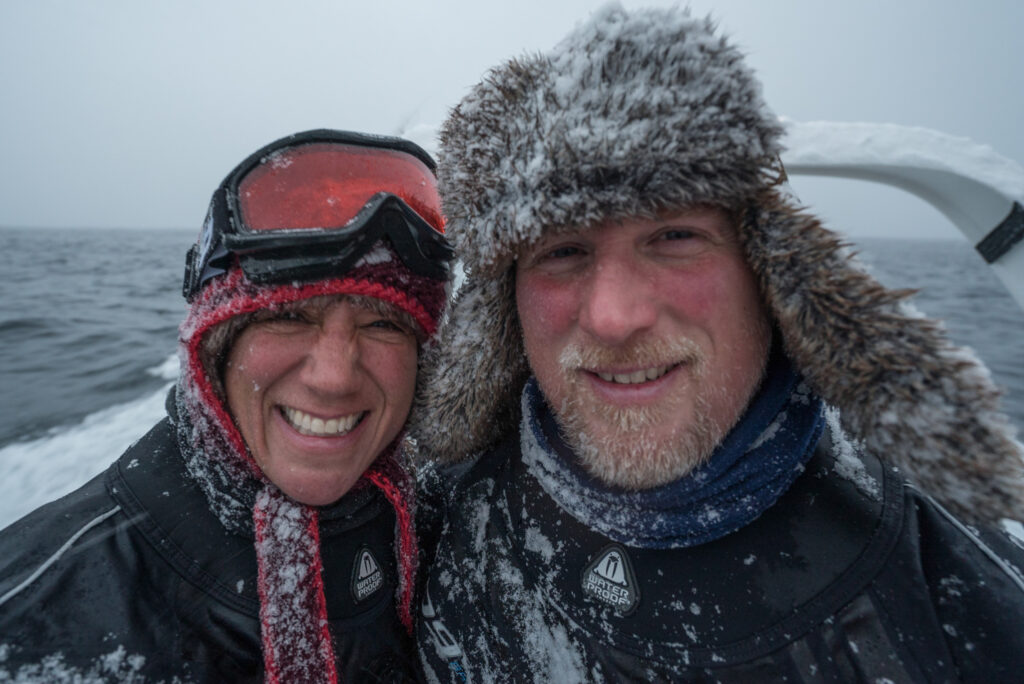
(You can revisit our past conversations with Nicklen and Mittermeier in 4 Eco-Warriors on How to Save Our Oceans and Planet Now and Cristina Mittermeier’s Hope Confronts the Climate Crisis.)
Now, in a new book, Paul Nicklen: A Photography Masterclass, released March 17, 2026, Nicklen turns his lens inward, distilling decades of experience and insights into an essential handbook of 20 key lessons for photographers at every level, from beginner to experienced. The book pairs practical guidance with the stories behind some of his most iconic images, offering readers a way to see, capture, and engage with the natural world meaningfully.
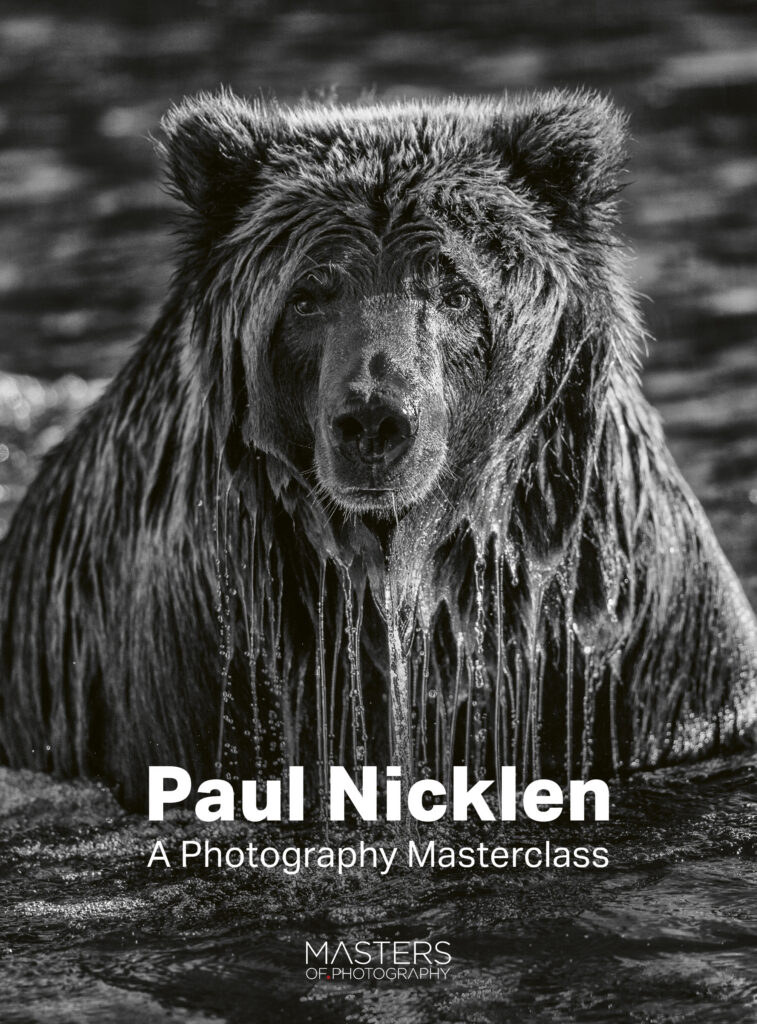
The excerpts below highlight key ideas, in Nicklen’s own words, from five of the book’s lessons. For the full 20-lesson masterclass, along with the images that define his work, you can order the complete book here.
1. What kind of photographer are you? Draw on early life experiences.
I’m only going to teach photography once in my life, and this is it. This book is my ‘tell-all’. I’ve been working as a full-time professional photographer for thirty years. Twenty of those were with National Geographic. I am going to tell you every secret of the trade, every background story behind a photograph, and every technique I use as a photographer. I’ll explain how I photograph bears, coastal wolves, leopard seals, sea otters and salmon. I’ll share the psychological exercises and drills I use to push myself to the furthest reaches of this profession.
Over the following pages, we will explore where art, science and conservation intersect. Most of all, we’re going to learn how to shoot powerful images that tell stories and help effect change. I want you out there with me, changing this world for the better. Whether you want to be a National Geographic photographer or are picking up a camera for the first time, this book is for you.
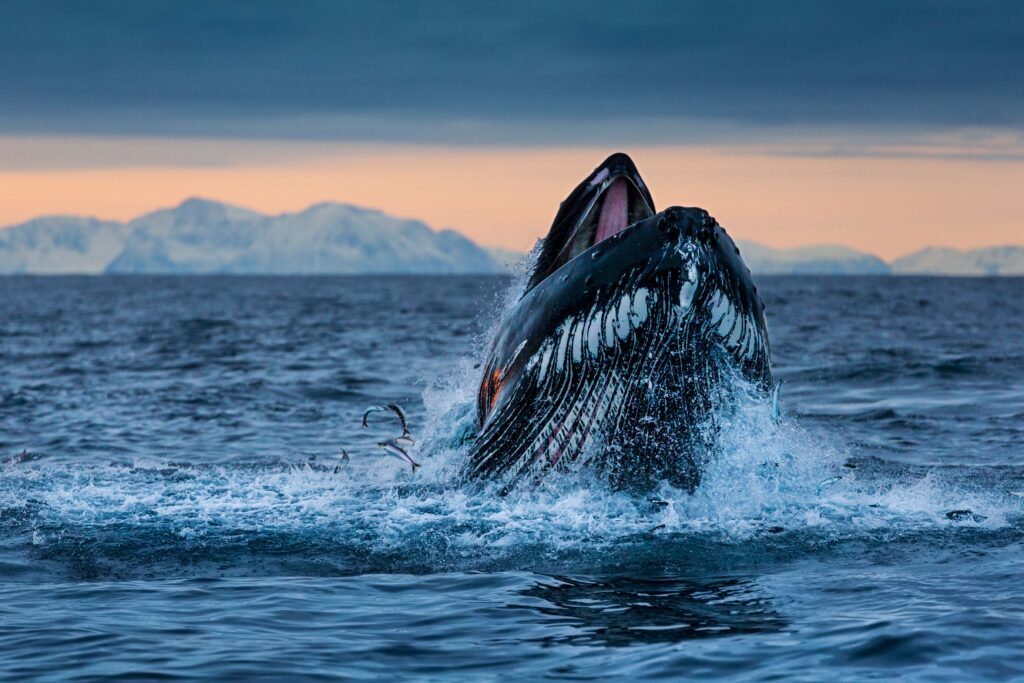
2. Grow as an artist. Hone your creative vision and find your style.
Developing an individual approach to image-making or a personal style is an ongoing process. It’s a lifelong endeavour. No one picks up a camera and is the finished article. In fact, I don’t think it’s possible to reach a definitive place with your photography; the way one makes pictures is always evolving. But that is something to embrace.
By embarking on a life in photography you are making a commitment to yourself to keep doing the work – developing your eye (Chapter 8) and knowledge (Chapters 7, 10 & 11), nurturing your self-belief (Chapter 5), regularly checking in with your reasons for doing what you’re doing and remaining focused on your goals (Chapter 3).
One of the most useful things I learned at the beginning of my career was how National Geographic edits photography (Chapter 16). It’s a model I use to this day. Let’s say I had shot 10,000 images on an assignment. An editor would narrow down the images to around 1,000 ‘top’ images. We’d then look at the images together and whittle them down to 500, 200, 100, a top 50, and then 25 to 35 standout images.
Those images would make it into the final story ‘tray’. (We called it a ‘tray’ because we used to use Kodak carousel slide projectors that were fed by a rotating tray of slides.)
3. A roadmap to success. Set manageable goals.
I am not an expert. What I mean is, I am not a career coach. Neither am I an expert in navigating mental health issues.
I face challenges in the same way everyone does and strive to find ways to manage the obstacles I encounter. I always smile when people look at me and say, ‘Wow, you’re so lucky. Everything has happened easily for you,’ or ‘. . .You get to travel the world and take snaps’. Those kinds of comments irk me, but ultimately, they make me laugh, because my journey has been anything but straightforward. I’ve encountered many downs as well as ups, and I’ve had to put in a lot of work to get to where I am today.
I’ve a toolkit of techniques and exercises that I use to help me keep moving forwards and continue to progress my work. One of the most useful things I find is goal setting – making manageable goals. It’s a technique I use whenever I mentor photographers who are starting out, or when I’m talking to someone about photography or indeed anything a person wants to do in life.
4. Take inspiration from others. Inform your creative proactive by dipping into books.
Ever since I was a young boy, books have meant everything to me. Growing up without a television or a radio, I would disappear into nature or lose myself in a book. I grew up with encyclopedias and books by pioneering French oceanographer and filmmaker Jacques Cousteau.
As I grew older and began to develop an interest in photography, I’d study how-to books that explained how to set your aperture, shoot macro, or photograph at night, and how to decide which lens to use for wildlife or how to approach wildlife. Those kinds of books are useful, informative and they help you learn the basics of photography technique, but they don’t inspire or trigger an emotional or visceral response. I was desperate to get out there and learn and grow as an artist, to go on a journey and tell stories. Once I had got to grips with the basics of photography, I needed to find my own style, to embark on an in-depth journey to find out who I was as an artist; to find my own path.
5. Silence your inner critic. Overcome doubt and the fear of failure.
Like many photographers and creatives, I deal with anxiety, depression and feelings of insecurity that are always knocking at the door. It is not easy to make it as a photographer; it never has been. When you set big goals, you’re going to encounter a lot of things trying to bring you down. And most of those things are inside your head.
It’s terrifying to set a goal to try and achieve something in the world. Little voices will pop up and jeer, ‘You’re going to fail!’ Those voices occur because you may well fail, and in a sense, niggling voices are just trying to protect you.
When I was deciding on my life goals and going out to chase them, people were constantly telling me that I was going to fail. I had a boss who was always telling me to ‘put the camera away’ and ‘stick to being a biologist’ because that’s ‘all there was for me’ in the world. After
I left that job, he would often pop into my head. Various characters would appear in my mind, telling me I wasn’t going to make it. It got to the point where the voices were constant. I had to find a way to make them go away.
How to Help
In addition to reading Nicklen’s book and learning how to use your own creativity to support the natural world, you can donate to support the critical work of SeaLegacy and their fellow eco-warriors on the frontlines of ocean conservation across the globe. You can also help raise awareness and amplify crucial ocean and nature issues by joining SeaLegacy’s social community and sharing solutions with family and friends.

More from Better Magazine
- Photographer Cristina Mittermeier’s ‘HOPE’ Confronts the Climate Crisis with a Powerful Visual Call to Action
- Make It Better’s 2026 Eco Warriors
- ‘Together, We Are Making Big Waves’: Pioneering Marine Biologist and National Geographic Explorer Sylvia Earle Says It’s Not Too Late to Save Our Oceans
- Jane Goodall Shares 3 Reasons She’s Optimistic About the Future of the Environment