When 73-year-old Wisconsin resident Leslie slipped in her bathroom one morning, she never imagined she would spend the next six hours on the floor, unable to stand.
Her daughter had just left when Leslie lost her footing. Her reading glasses shattered, cutting her forehead and leaving her bleeding and disoriented. Her phone was on the other side of the house, and with two knee replacements and a torn rotator cuff, getting back to her feet seemed impossible. Although she avoided life-threatening injuries, the experience changed how she thought about aging, safety, and independence.
Leslie’s story is far from unique. According to the Centers for Disease Control and Prevention, one in four adults age 65 and older falls each year in the United States. Falls are a leading cause of injury-related death among older adults and frequently result in broken bones, traumatic brain injuries, and hospital visits. Even when injuries are minor, the fear of falling again often causes people to limit daily activities, reducing strength and balance and increasing their risk of future falls.
As a former hospital social worker, Leslie spent years helping older adults after devastating falls. Experiencing a fall herself made those realities deeply personal. Determined to lower her risk, she enrolled in the Wisconsin Institute for Healthy Aging’s (WIHA) Stepping On program at her local Aging & Disability Resource Center.
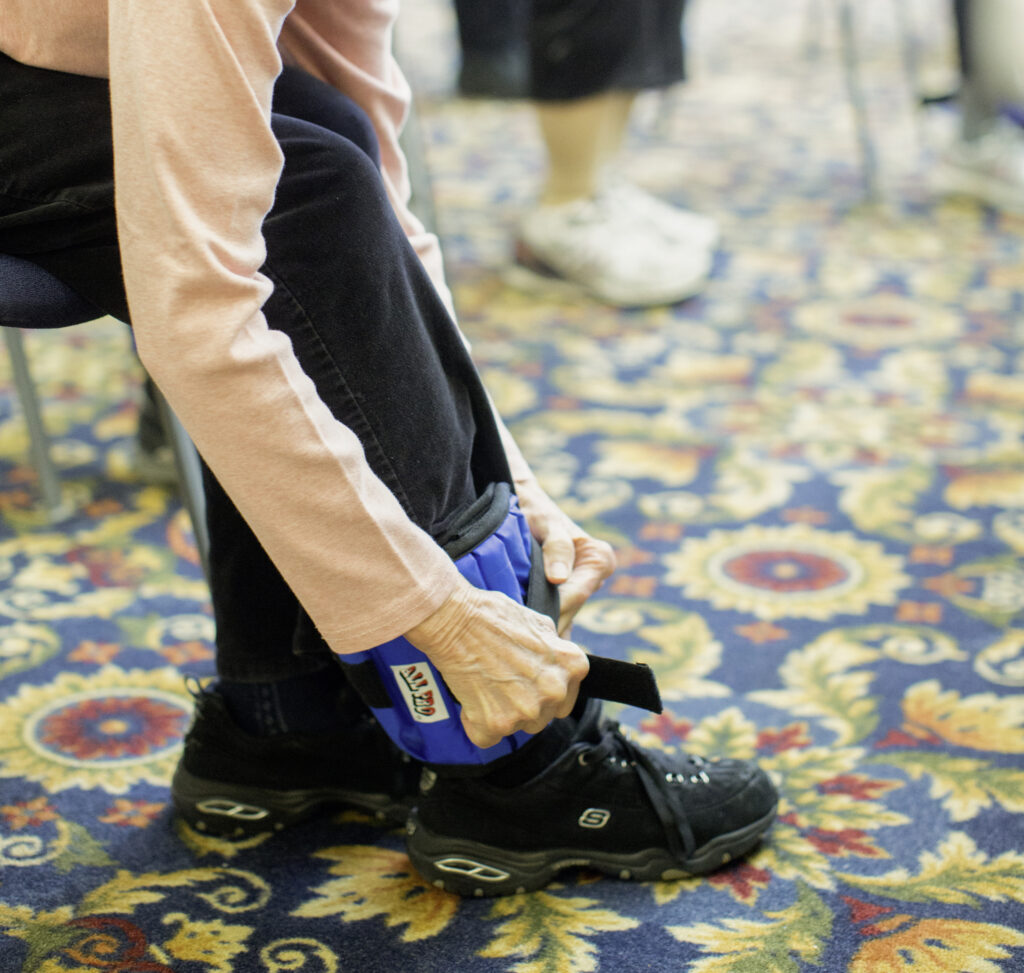
Part of WIHA’s Falls Free Wisconsin initiative, the evidence-based workshop teaches practical fall-prevention strategies including strength and balance exercises, home safety modifications, medication and vision awareness, and safer ways to manage everyday activities.
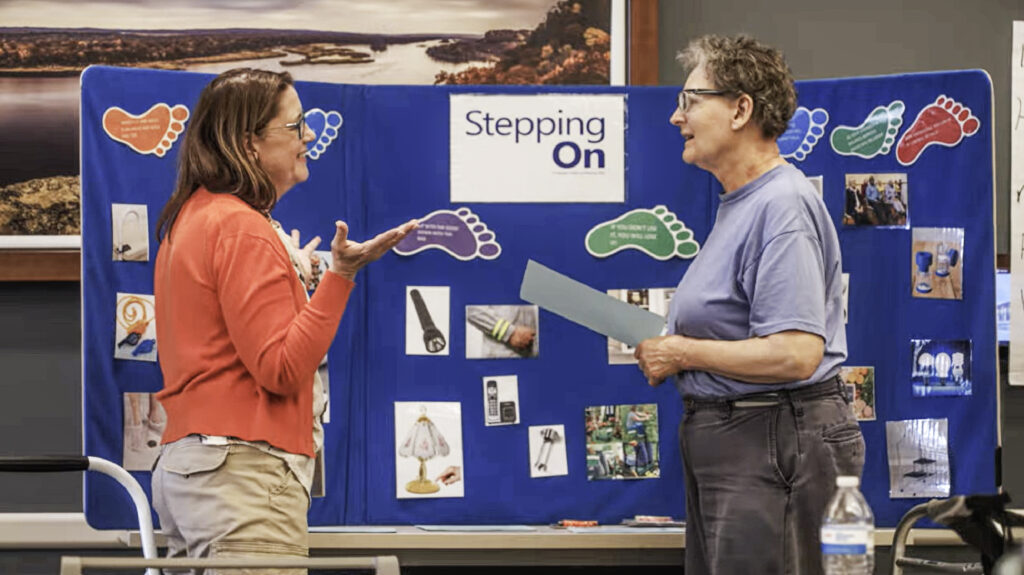
According to WIHA Executive Director Jill Renken, Stepping On has been shown to reduce participants’ risk of falling by 31 percent. Now available in Wisconsin and 18 other states, the program has helped thousands of people reduce their falls risk. Interest in the program continues to grow as more organizations pursue licensing to offer it in their communities.
“We’ve seen amazing transformations as people become more active after taking Stepping On,” Renken says. “We’d love to see the program in every state and welcome inquiries from organizations interested in offering it.”
For Leslie, the lessons quickly became part of her daily routine. She now wears supportive shoes, keeps her phone within easy reach, and uses a smartwatch that allows her to contact family or emergency services if needed. She is also more aware of potential hazards in her home and feels better prepared if an emergency occurs.
“I don’t worry the way I used to,” Leslie says. “Now I know what I can do to help prevent another fall.”
Contrary to common belief, falls are not an inevitable part of aging, Renken says. “With the right education and support, people can significantly reduce their risk of falling and maintain their independence. Stepping On gives participants the knowledge and confidence to do exactly that.”
This post was submitted as part of our “You Said It” program. Your voice, ideas, and engagement are important to help us accomplish our mission. We encourage you to share your ideas and efforts to make the world a better place by submitting a “You Said It,” which can earn a nonprofit that you champion a $1,000 donation from the Make It Better Foundation and eligibility for a Philanthropy Award, grant content partnership, and greater engagement with our audience.
How to Help
The Wisconsin Institute for Healthy Aging (WIHA) is a nonprofit organization dedicated to helping older adults live healthier, more independent lives through evidence-based programs and practices that support healthy aging. Through its Falls Free Wisconsin initiative, WIHA works with health care providers, community organizations, and public safety groups to expand access to proven falls prevention programs, raise awareness about fall risks, and equip older adults with the tools and confidence to stay active and independent. Groups interested in offering Stepping On in their community can contact Suzanne Morley.


Emily Levitan is an economics student at the University of Wisconsin-Madison working as an intern for the Wisconsin Institute of Healthy Aging. She is passionate about community engagement and the business behind nonprofit organizations. She enjoys building connections, learning from others, and finding opportunities to make a positive impact in her community.
More from Better
- Why Your Friends Might Be Better for Your Health Than Your Wellness Routine
- When Alzheimer’s Makes You a Caregiver Overnight, Where Do You Turn?
- 10 Encouraging Insights into the Future of Alzheimer’s Research, Detection, and Treatment
- Better Makers: Meals on Wheels’ Celebrity Chef Ball Raises Funds to Feed Thousands of Chicagoland Seniors