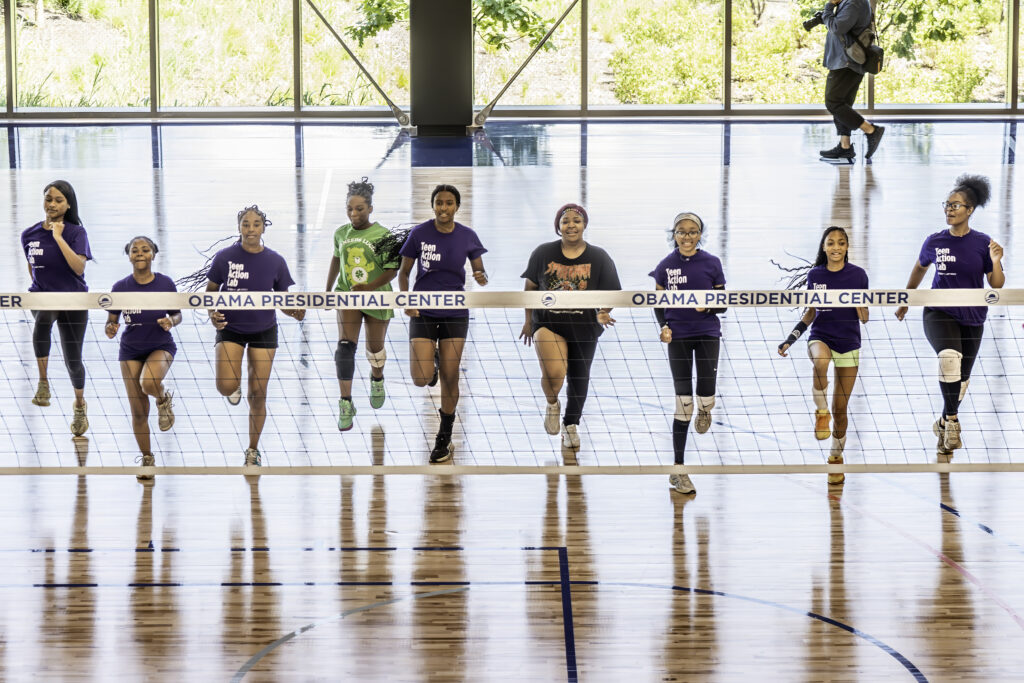
On a Wednesday afternoon, teenagers in colorful T-shirts were jogging back and forth across a brand-new gym floor and practicing their basketball and volleyball skills.
The exercises were part of the first youth programming at the Obama Presidential Center, bringing a long-held vision to life through a partnership with After School Matters, a Make It Better Foundation 2026 Philanthropy Award Winner.
When the Obama Presidential Center launched, After School Matters (ASM), a nonprofit organization that provides Chicago teens with paid opportunities to develop skills while preparing for college and their careers, was announced as the signature youth programming partner.
Tina Tchen, Executive Vice President of Programs at The Obama Foundation, says the partnership was a thoughtful decision to collaborate with one of the many groups in Chicago already supporting teenagers in the city.
Alongside Mary Ellen Caron, CEO of After School Matters, Tchen planned for three years what this could be and how a literal home court could be a foundation.
“We feel like we have the secret sauce for teenagers at scale,” Caron says. They provide nearly 30,000 paid program opportunities for teens each year; this summer alone they had more than 12,000 teens in programs.
That summer afternoon, seeing what were once figures in an architectural rendering become real teenagers talking and basketballs squeaking was surreal, Tchen says. She had helped envision this possibility back in 2015, when she was Michelle Obama’s Chief of Staff in the White House.
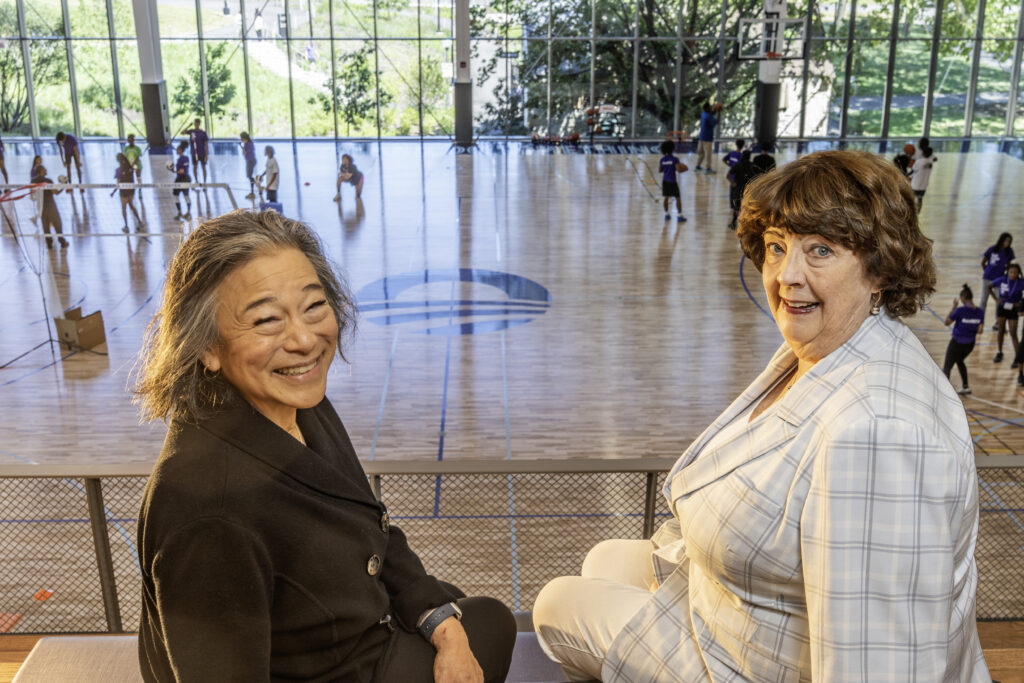
“The whole thing is unbelievable,” Tchen says. “There’s not often, actually, in life, in reflecting back, that you get to see something that you imagined.”
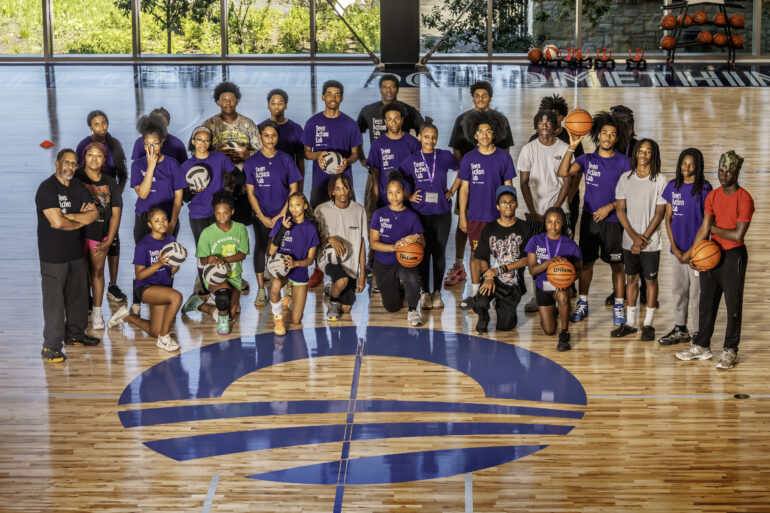
The partnership launched with two co-ed sports offerings — ASM @ Obama Center: Basketball, Health & Wellness, a high-energy co-ed program teaching basketball skills, teamwork, and leadership, and the ASM @ Obama Center: Volleyball, Health & Wellness, where teens learn serving, passing, setting, and hitting alongside those same wellness and leadership skills.
Both took place at Home Court, the Obama Presidential Center’s 60,000-square-foot athletic and programs facility.
The programs are intended to teach youth sports skills alongside leadership skills, an approach Tchen says was informed by responses the Foundation received when it initially surveyed the community while planning the Center.
“The number one thing we heard in those surveys of what people wanted from the Presidential Center was activities for their young people, especially activities that were geared towards skill-building and career-building,” Tchen says. “So that’s been a bit of a North Star for us.”
Participants are teenagers from the surrounding community, including South Shore, Woodlawn, and Washington Park. The programs intentionally focus on those three areas, Tchen says, “because we know they are three of the most disinvested neighborhoods in the city, they’re in real need of the kind of space and activities that we’re trying to provide.”
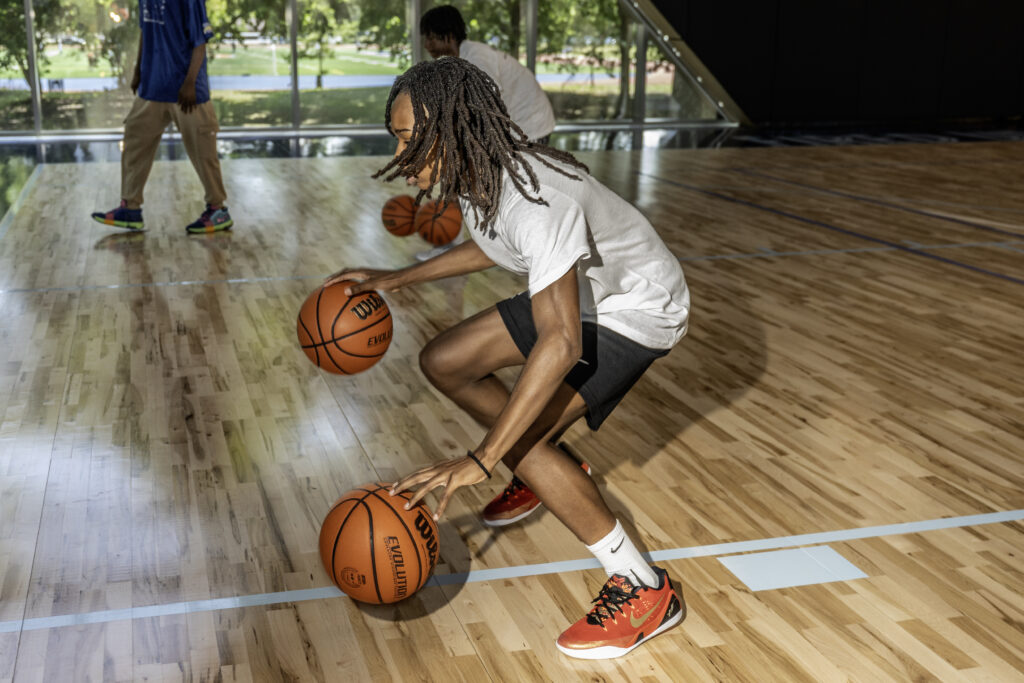
One of the teenagers participating was Ronde Kelly, 15, who applied after his aunt told him about an After School Matters information fair. All participants apply and are interviewed about what they’re proud of and what they hope to gain.
Kelly loves basketball and was excited for the chance to practice more over the summer, and with history one of his favorite subjects in school, being among the first to play ball at the Obama Presidential Center carried an added significance.
“I don’t think now I realize it, but in the future, I’m a part of history,” Kelly says. “It’s something really great, really important, so I’m glad to be a part of it.”
That day, the group also practiced yoga, a first for Kelly. He says he liked learning about stretching as a way to ease the strain sports can place on his body.
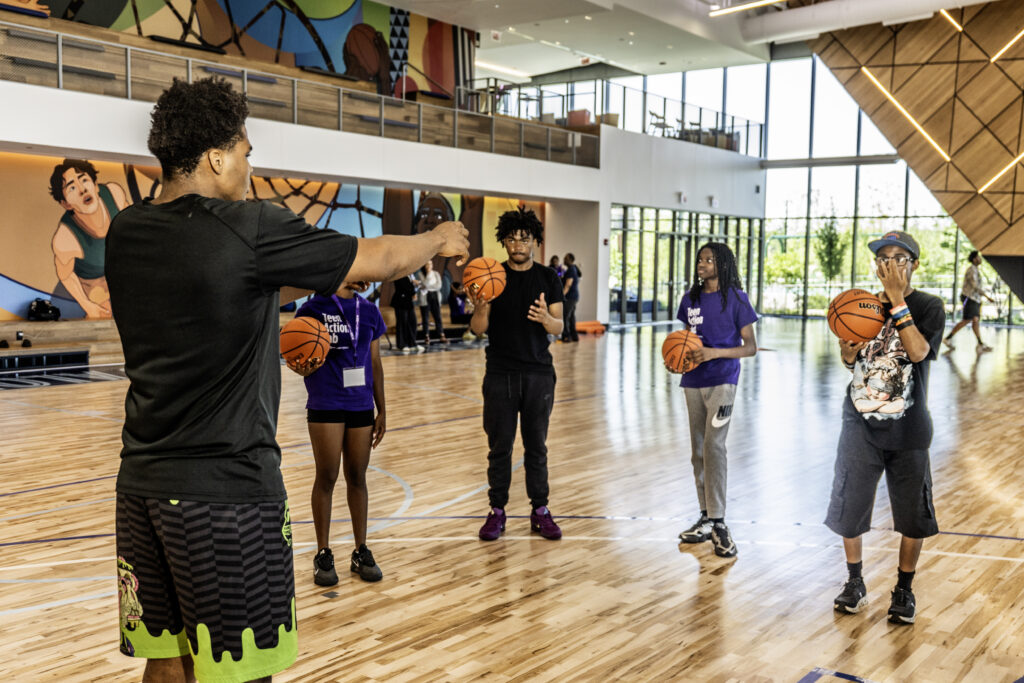
Coach Lavell Amous applied to be a coach because helping kids and teaching basketball are what he does. He works at Chicago Public Schools (CPS) and is often on a court either playing himself or teaching youth. As a coach of the ASM programs, Amous says the setting is unique, but the skills and experience on the court are the same.
“It’s just my love,” Amous says of the sport. “My life is basketball.”
Sports can teach teens all kinds of life skills beyond dribbling, Amous says. “Sports help you deal with stress, because in sports you’re not always successful. You have little letdowns, and you have to learn how to deal with that.”
The two initial offerings were open to Chicago high school teens ages 14 to 18 who live in or go to school in the South Shore, Woodlawn, and Washington Park communities. Teens earned a stipend for participating in and completing the program.
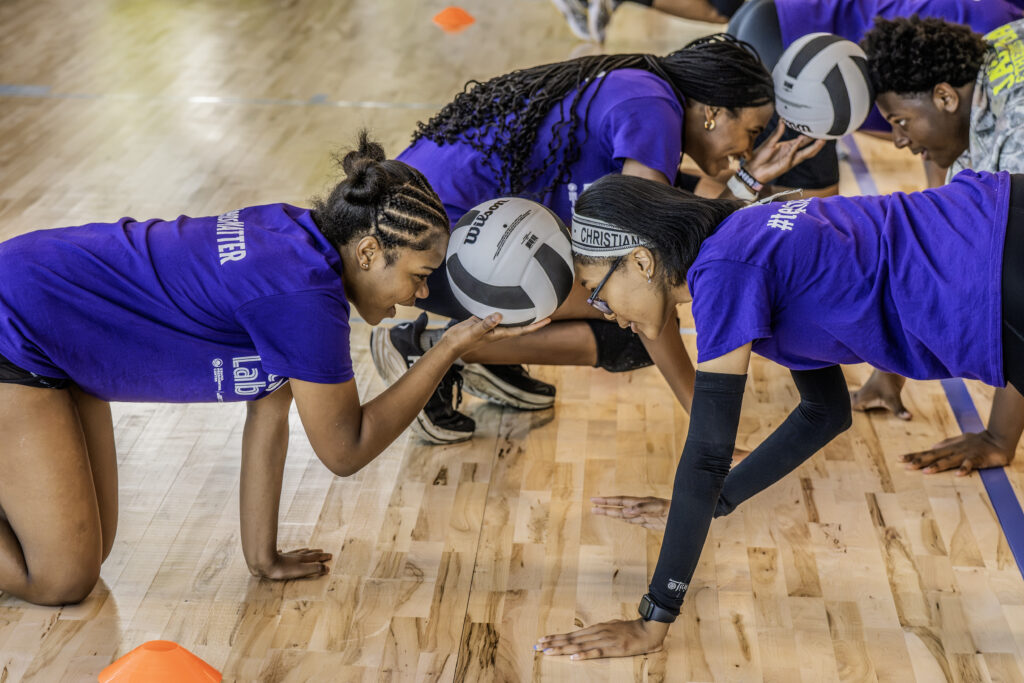
These afternoon programs are the first offerings in the Center’s Teen Action Lab, ultimately planned to grow into a broader slate of youth opportunities through the ASM partnership.
Tchen says they want to build the programming out intentionally and deliberately and will lean on After School Matters’ extensive experience engaging teens.
Tchen adds that the Obama Presidential Center also plans to work alongside Chicago Public Schools and the Chicago Park District, as well as with local groups connected to Obama Foundation programs, like My Brother’s Keeper Alliance and the Girls Opportunity Alliance.
Caron says the partnership has challenged After School Matters to think about how events and what they call activations can enhance their model. For example, teens recently had the opportunity to meet artist Mark Bradford, whose large-scale work City of the Big Shoulders is installed in the museum. Created from layers of recycled paper and found materials including rope and string, the work evokes the streets, transit routes, and neighborhoods of Chicago’s South Side. Caron says it was touching to see the teens in the audience able to ask Bradford questions.
Seeing the response to a one-day event has helped her think differently about the value even a single experience can provide.
“I guarantee there are lasting effects on these one-offs that kids are experiencing, especially kids in the three neighborhoods that surround the Obama Center,” Caron says.
Caron points to another one-day event hosted by the Center, a songwriting class led by singer and poet Jamila Woods, herself an After School Matters alumna, and poet Raych Jackson. “Any teenager would’ve loved to write a song with Jamila Woods,” Caron says.
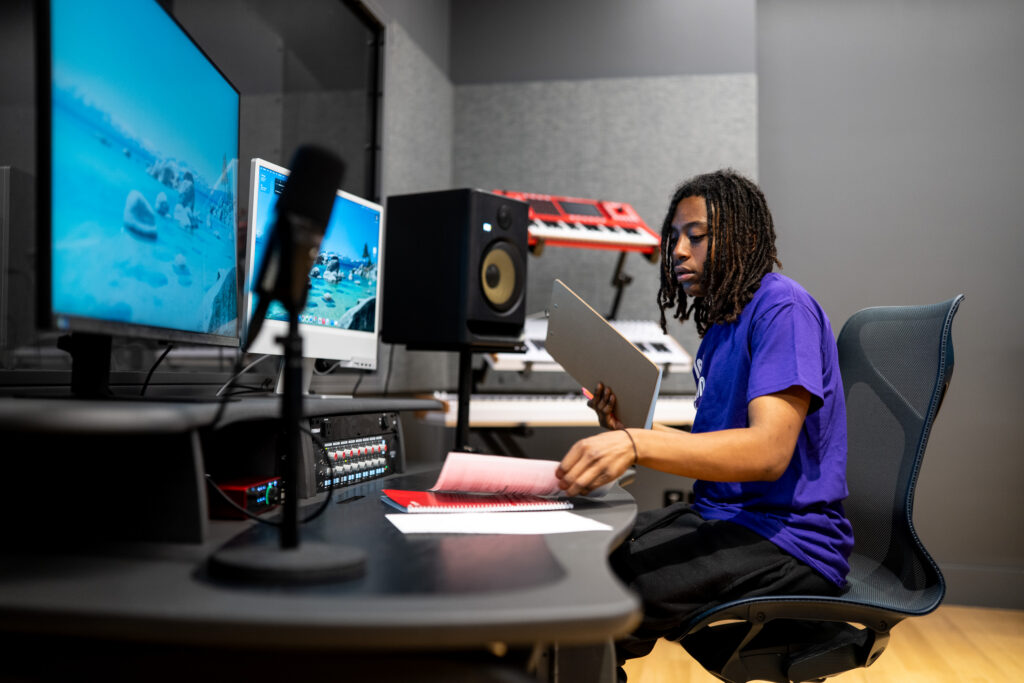
Caron says the activities are intentionally designed to help teens feel both welcome and engaged.
“It’s very intentional that there’s a casualness about it that teenagers love,” Caron says. “The formula is really, really good from my educational lens for welcoming teenagers in particular but children in general.”
How to Help
After School Matters provides thousands of paid after-school and summer program opportunities for Chicago teens each year. Donations help fund programming that allows teens to develop skills, explore interests, and earn stipends while participating. Support After School Matters
Donations to the Obama Foundation support programs for emerging leaders and young people, including mentorship, training, and other opportunities, as well as the Foundation’s work at the Obama Presidential Center. Support The Obama Foundation
Visitors can also experience the Obama Presidential Center in Chicago’s Jackson Park. The campus includes the Museum, Home Court, the Forum, public art and outdoor spaces, and the Chicago Public Library’s Obama Presidential Center branch. The campus grounds are open daily, while entry to the Museum requires a timed ticket.
More from Better
- High Tops, High Impact: Sneaker Ball Raises $175K for After School Matters
- Volunteer Therapists Team Up With After School Matters to Provide Free Mental Health Support for Teens
- Leaders and Advocates, Including Michelle Obama, Unite to Celebrate the Transformational Power of Starting Early

Alison Bowen is an award-winning journalist whose work has appeared in publications like The New York Times, CHICAGO magazine, Cosmopolitan magazine and the Chicago Tribune, where she was a staff reporter and editor for a decade. She is drawn to stories about maternal health, well-being, trauma and resilience.