What does it take to save a species?
A veterinarian with a state-of-the-art CT scanner. A keeper who notices an aardvark skipped dinner. A nutritionist who knows exactly what belongs on a gorilla’s menu. Scientists tracking animals thousands of miles away. Women checking camera traps in the Himalayas. A photographer who can make a mouse command the same attention as an elephant.
It might even take Bluey.
At Disney’s Animal Kingdom at Walt Disney World, encounters with individual animals offer a surprisingly accessible connection to the sprawling work of global wildlife conservation. There is no magic wand for saving a species, but there are some common threads in the work that succeeds. Here are 10.
1. Understanding Animals as Individuals
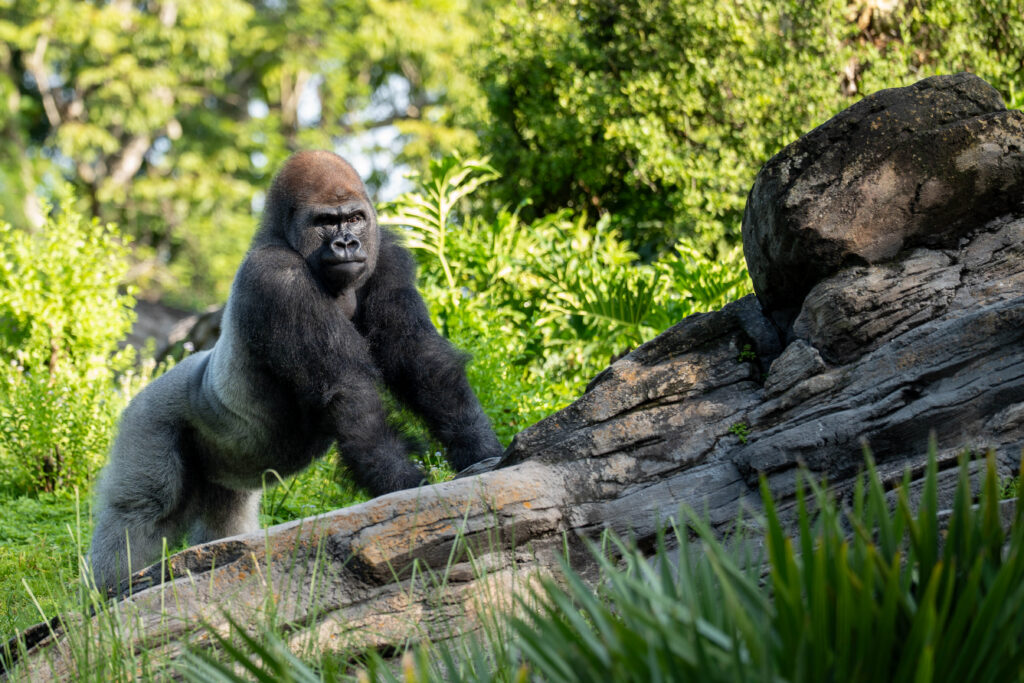
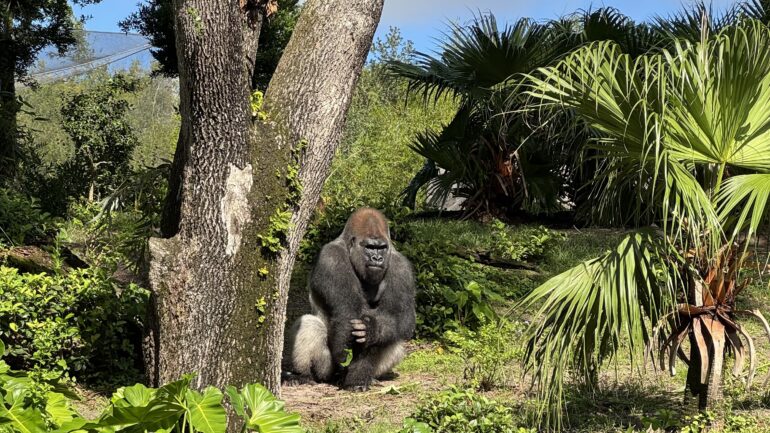
When Bakari arrived at Disney’s Animal Kingdom a few months ago, the 21-year-old western lowland gorilla came with an impressive 400-pound frame, a distinct personality, and behaviors his new care team would have to learn.
On a recent morning at Gorilla Falls Exploration Trail, Bakari was hard at work trying to extract snacks from a red “puzzle feeder.” Animal caretaker Susan Rivard explained that he was supposed to twist it to release the treats inside. Bakari had other ideas, hoisting the entire thing into the air and shaking a weak trickle of snacks into his mouth. “He’s going to need to hurry up and learn that,” Susan said playfully. The female gorillas he’ll eventually join already know how to get to those snacks with lightning-fast precision, and she’s confident Bakari will learn from them swiftly.
Those observations aren’t incidental to animal care. Animal caretakers learn what is normal for each animal, from how much they eat to how they interact with their environment.
That becomes especially important when something changes.
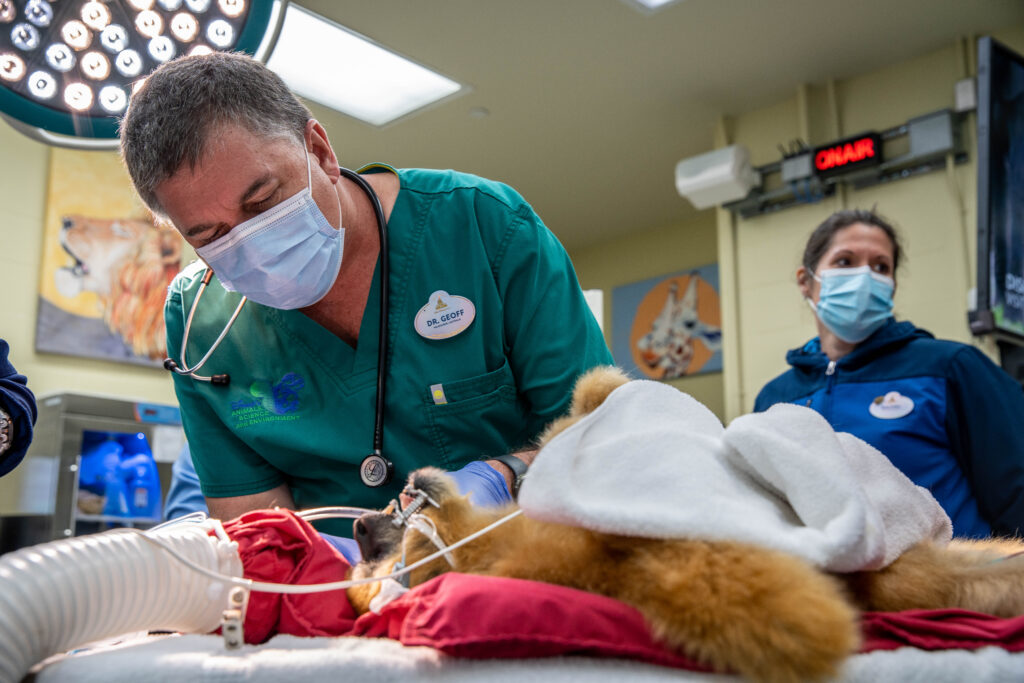
I saw that firsthand inside the park’s veterinary hospital. As I spoke with Dr. Geoff Pye, animal health director at Disney’s Animal Kingdom, another patient was entering the CT scanner behind him.
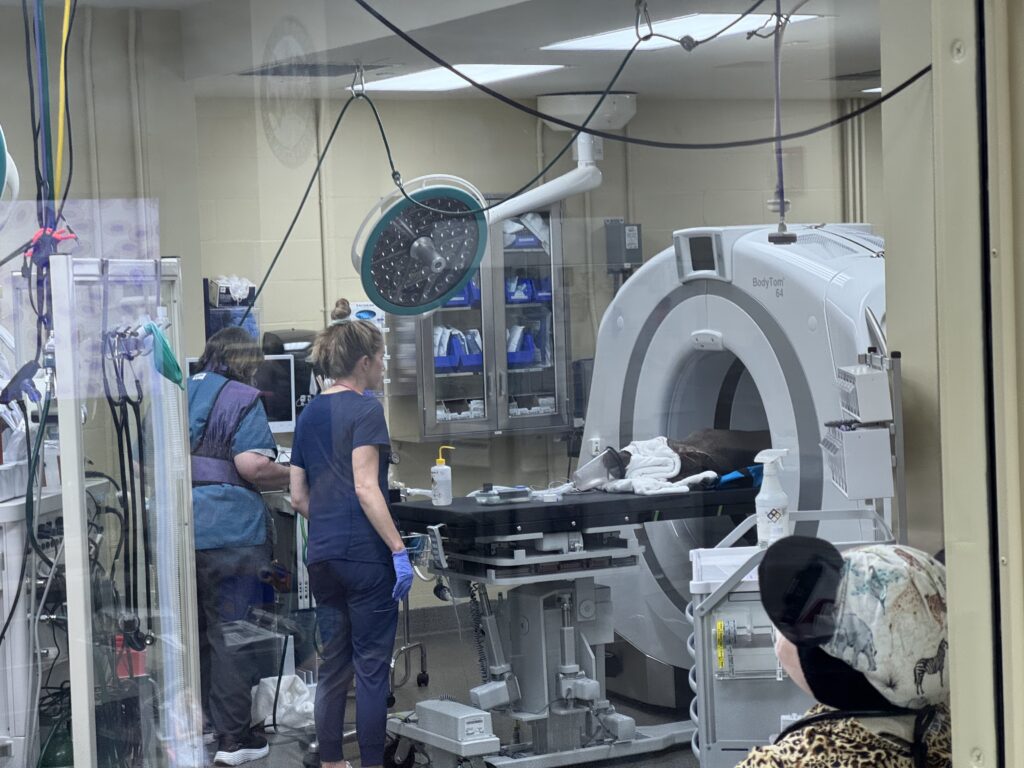
Peanut the aardvark had been eating less and seemed more lethargic than usual, subtle changes his keepers noticed because they knew his normal behavior so well.
“I think his keepers probably spend as much time with the aardvark as maybe they do with their family,” Pye said. “And so they’re really used to the normal behaviors. And when there is something that’s a little bit off, they’ll notice that.”
Sometimes saving an animal starts with knowing them well enough to notice.
2. Trust Built Over Time
Bakari had gone through that same CT scanner shortly before my visit as part of his own preventative health exam.
He had been trained at his previous institution to present his hand for an injection of anesthesia, and Disney’s team continued that training after his arrival.
“He took his hand injection like a champ,” Pye said.
The technique can require roughly 30 percent less medication and avoids the stress of darting the animal, an approach that risks compromising the trust keepers work hard to establish, Pye explained.
“We spend so much time through positive reinforcement of building up trust with our animals,” he said.
And sometimes the best thing humans can do is watch and wait.
Bakari is expected to eventually lead Animal Kingdom’s family troop of female gorillas, but his introductions are happening gradually.
“We’re not forcing anything,” said Dr. Scott Terrell, vice president of Disney’s Animals, Science and Environment. “We let him and the girls tell us when the right time is for them to get together.”
The team has a name for that timetable: “gorilla time.”
Bakari’s arrival at Animal Kingdom is also part of something much bigger than one gorilla settling into a new home.
Disney’s Animal Kingdom is accredited by the Association of Zoos and Aquariums (AZA), which coordinates Species Survival Plan programs for hundreds of species. Rather than managing populations one zoo at a time, participating institutions work together to maintain healthy, genetically diverse populations in human care.
Detailed records track the history and ancestry of individual animals, helping experts make recommendations about which animals should move, where they should live, and which should potentially breed.
For Bakari, that cooperative effort brought him to Animal Kingdom, where he may eventually father offspring as part of the Species Survival Plan for western lowland gorillas.
Later this fall, the same system will send another Animal Kingdom resident in the opposite direction — to a new home.
3. Attention to Every Detail
Protecting animal health means paying attention to details most visitors will never see, including exactly what each animal eats.
Behind the scenes at Disney’s Animal Nutrition Center, a team of nutritionists designs diets for animals across Walt Disney World, working with keepers, veterinarians and behavioral experts to account for species, health, nutritional needs and individual preferences.
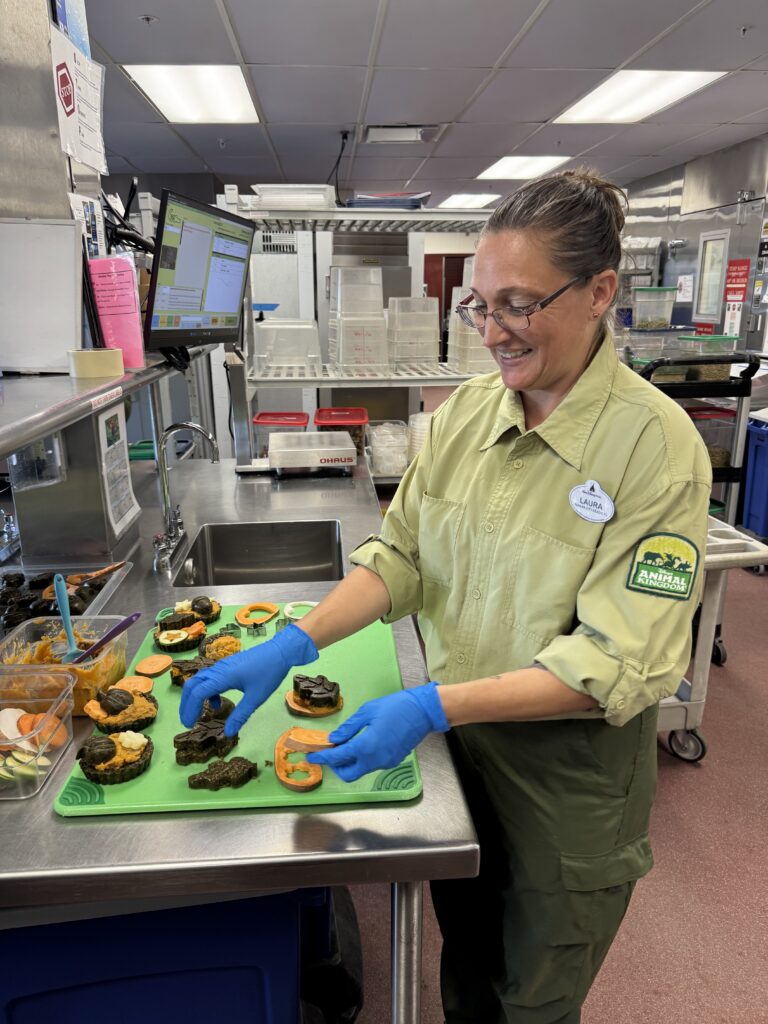
Because, as Dr. Heidi Bissell, Disney’s head of animal nutrition, explained, a diet can be nutritionally perfect, but that doesn’t accomplish much if the animal won’t eat it.
For some species, figuring out what belongs on the menu requires a little detective work.
“There’s not a published nutritional requirement for an aardvark,” Bissell said. Instead, her team draws on what is known about the nutritional needs of other insect-eating animals, what aardvarks eat naturally, and Disney’s own history caring for the species.
The team also tests the nutrient composition of the foods it serves, calculating protein, fat, vitamins, and minerals to make sure each diet delivers what the animal needs.
What they learn doesn’t stay at Disney. Bissell described Animal Kingdom as “a central hub of research for the zoo community,” with its nutritionists working with other AZA-accredited organizations and advising on diets for species ranging from pangolins and aardvarks to giraffes and rhinos.
“Everything that we’re doing here goes elsewhere,” Bissell said, adding that Disney’s team also incorporates what nutritionists at other institutions learn.
Nutrition can also double as enrichment.
The shelves at the Animal Nutrition Center include herbs, spices, and teas that can give animals new scents, tastes, and experiences. Tea can be spread on a log for a tiger to investigate.
Gorillas, Bissell said, drink tea from a cup, generally about one a day. Berry flavors tend to be favorites.
Chamomile, apparently, is not.
4. Knowledge Shared Across Borders
A CT scan in Florida might seem a long way from protecting gorillas in Central Africa, but knowledge gained from animals in managed care can inform conservation in the wild.
“How can we really take what we learn here and apply it to the wild and vice versa?” said Dr. Zak Gezon, Disney’s conservation and agricultural science director. “That information flow goes both ways.”
Pye similarly described the exchange between zoo veterinarians and colleagues working with wildlife as a “two-way street.”
One of the clearest examples is the Gorilla Rehabilitation and Conservation Education Center, or GRACE, the world’s only sanctuary for critically endangered Grauer’s gorillas rescued from wildlife trafficking.
Disney has worked with GRACE for more than 15 years. Disney animal care experts helped build the sanctuary, while veterinarians have worked with Congolese staff on skills ranging from parasite testing to wound care.
In late 2024, four gorillas rehabilitated at GRACE were returned to the wild in a first for the organization, four gorillas rehabilitated at GRACE were returned to the wild in a first for the organization.
One of them, Lulingu, was rescued when she was just 18 months old. She has since given birth in the wild.
“She is a mama and we are so, so proud,” said Laurie Cummins, GRACE’s deputy and education director.
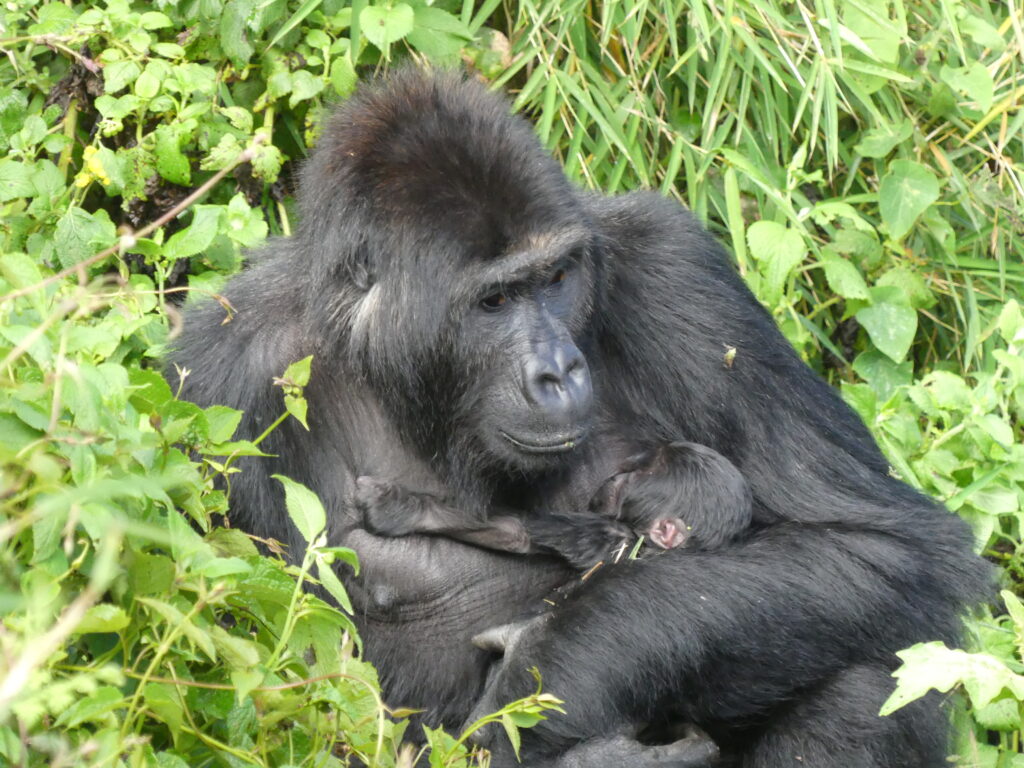
For Pye, rewilding is one of the clearest measures of success.
“There’s lots of good that can be done under managed care in zoos. There’s lots of good that can be done in those orphanages,” he said. “But when it pays off and you’re rewilding animals, that’s when you know you’ve had true success there.”
GRACE also protects more than 500,000 acres of forest in the Congo Basin through community-led conservation.
5. Investment in the People Doing the Work
Saving species requires people with the skills to protect them, but opportunities to build a career in conservation aren’t always equally accessible.
Conservation Nation, a Make It Better Foundation 2026 Philanthropy Award Winner, invests in conservationists who have historically faced barriers to funding and career opportunities while connecting conservation professionals with young people who may eventually follow them into the field.
Conservation Nation Fellow Taylor Rabe, for example, spent years doing unpaid conservation work while holding another job before a fellowship led to her first paid position with the Yellowstone Wolf Project.
In India, Conservation Nation Fellow Deepshikha Sharma leads Women for Snow Leopards. With support from the Disney Conservation Fund and in partnership with Conservation Nation, Sharma is building a network of women conservationists across four critical snow leopard habitats, training them to deploy and recover camera traps that monitor populations, identify emerging threats, and help measure conservation efforts.
Sharma’s project is one example of the global conservation work the Disney Conservation Fund helps support. Since 1995, the fund has directed more than $141 million toward wildlife and nature conservation, helping protect more than 1,000 species and more than 315 million acres of habitat.
During my visit, Disney also announced another $100,000 in grants to GRACE, the Dian Fossey Gorilla Fund, and Gorilla Doctors for gorilla conservation, research, veterinary care, and community-based protection, bringing Disney’s total support for gorilla conservation to more than $4.7 million.
6. Storytelling That Makes People Care
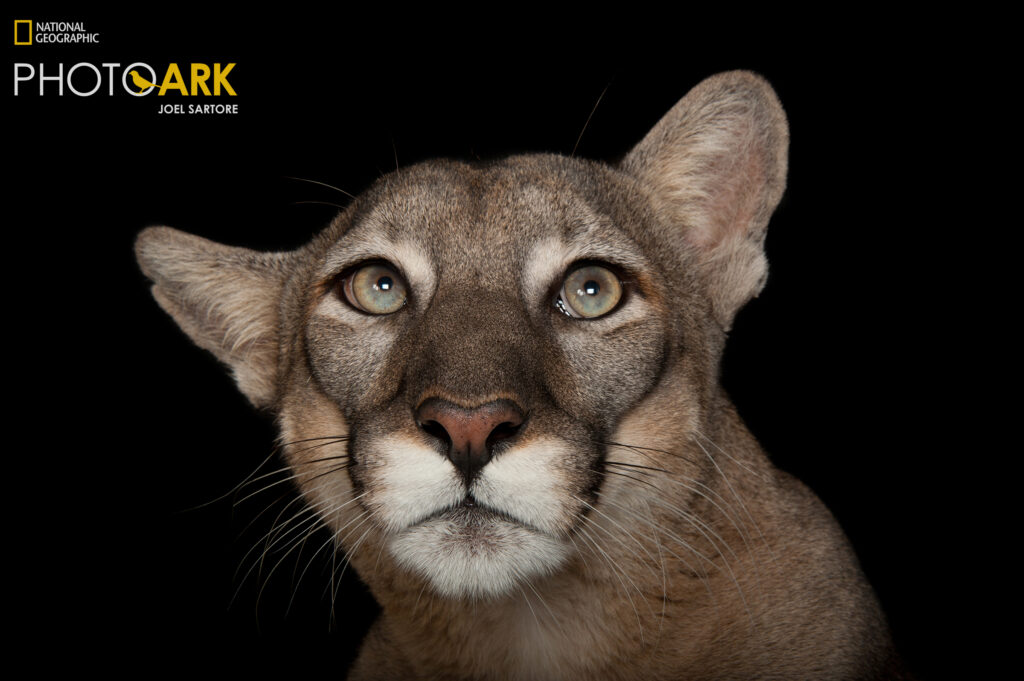
Sartore/National Geographic Photo Ark
Science, funding, and fieldwork are critical to conservation. So is getting people to care about animals they may never encounter in the wild.
National Geographic Explorer Joel Sartore has spent nearly two decades confronting that challenge through the National Geographic Photo Ark, an effort to photograph species living in human care around the world. The project began at his local zoo in Lincoln, Nebraska.
Sartore photographs each animal against a simple black or white background, removing differences in habitat and scale that might make one species appear more important than another. A tiny animal can command the frame just as completely as one many times its size.
“How can you get people to care about all species?” Sartore asked in an interview with Mark Edward Harris for Better. “On our bare background, the mouse is as big and important as an elephant.”
“My job is to tell the story of all these animals around the world,” he said.
That work gained new relevance this year when scientists identified Leopardus tilcayo, a small wild cat from Bolivia and the first new living cat species described in more than a century. Sartore photographed the newly recognized species for the Photo Ark.
Photographer and National Geographic Explorer Ami Vitale traces the direction of her own conservation work to a zoo encounter.
“It happened on a cold, snowy day in a zoo in the Czech Republic when I met a rhino named Sudan for the first time,” Vitale told Better.
Sudan was one of the last northern white rhinos on Earth. Vitale went on to document efforts to save the subspecies, an experience that redirected her work toward conservation.
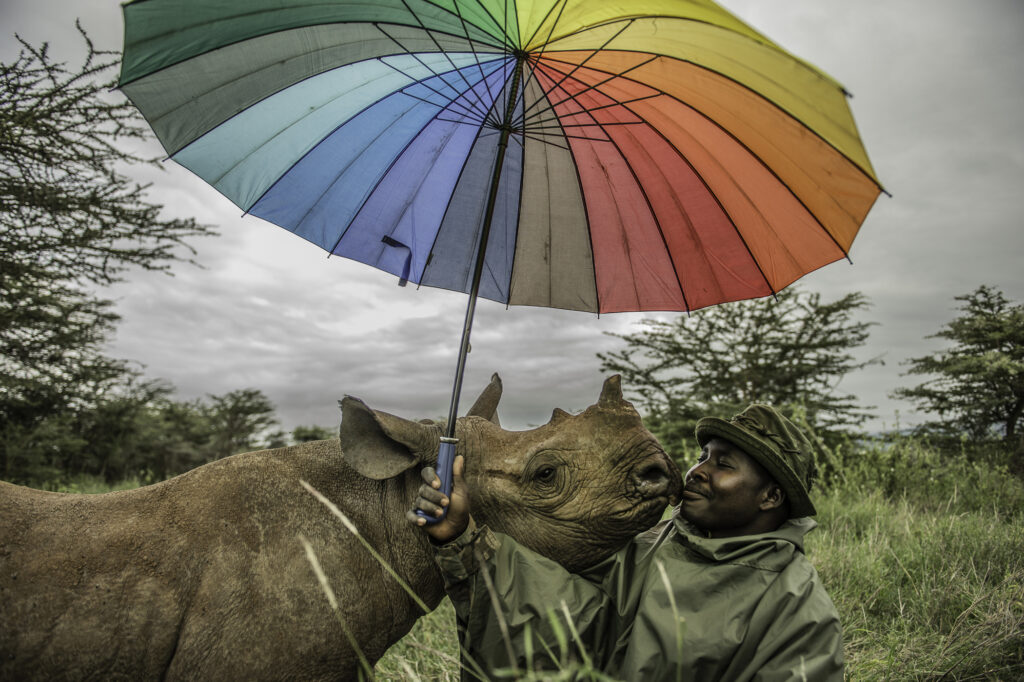
Vitale later founded Vital Impacts, a Make It Better Foundation 2026 Philanthropy Award Winner, which uses photography to support conservation while investing in and mentoring environmental storytellers around the world.
“Everywhere I go, I see people, often with very little, making huge impacts in their communities and for the planet,” Vitale told Better.
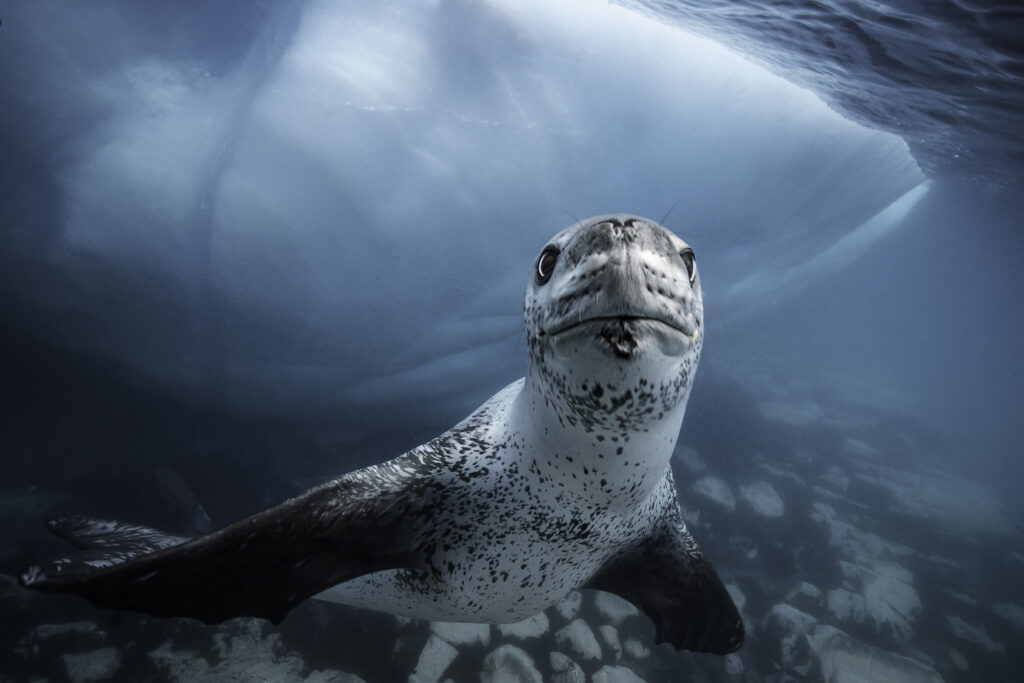
Photographers Cristina Mittermeier and Paul Nicklen co-founded SeaLegacy to harness visual storytelling as a tool for conservation, connecting audiences with threatened wildlife and ecosystems and giving them ways to act.
“There’s real power in social media when people come together,” Mittermeier said during a Better virtual event. “We have built our platform so that every piece of content is linked to an action that we can take together.”
“There are heroes out there trying to understand, trying to solve, and trying to protect,” she told Better in a later interview. “They need our support.”
7. A First Connection
Not every future conservationist is going to come to Walt Disney World asking about biodiversity.
Some will arrive asking about Bluey.
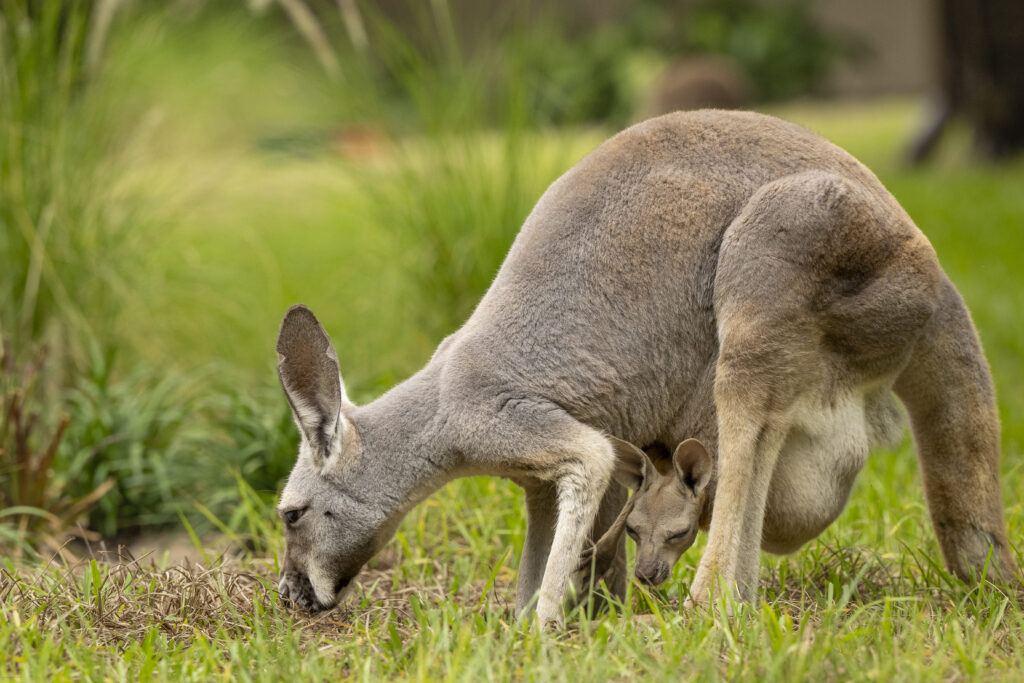
Bluey’s Wild World gives young fans a new draw to board the Wildlife Express to Conservation Station, where Jumping Junction introduces them to real Australian animals like kangaroos and wallabies.
Bluey and Bingo may get children’s attention. But when an animal education cast member suggests they look closely for a joey peeking from its mother’s pouch, the kangaroos quickly become the stars.
Pye sees those young visitors as an especially important audience. Some also wind up on the other side of the veterinary hospital window, watching animals like Peanut receive care and meeting the people doing the work.
8. Making It Personal
Dan Ashe, president and CEO of the Association of Zoos & Aquariums, saw those connections forming during his own visit to Animal Kingdom.
Two bachelor gorillas captured the attention of guests, who peppered a cast member with questions: How old are they? Why are they fighting? How long do they live? Where do they live? Are they endangered?
They walked away with more knowledge, Ashe said, and “probably a lot more emotional connection to gorillas.”
That emotional connection can change the equation. It is one thing to know western lowland gorillas are critically endangered. It is another to know Bakari.
Families return and recognize animals. They learn their names and personalities and watch them grow.
I’ve done it with my own kids. We came to see Bakso, a Sumatran tiger, soon after he was born. We watched Corra, the first second-generation African elephant born at Animal Kingdom, take some of her earliest steps, then checked in on her again during a Caring for Giants behind-the-scenes experience.
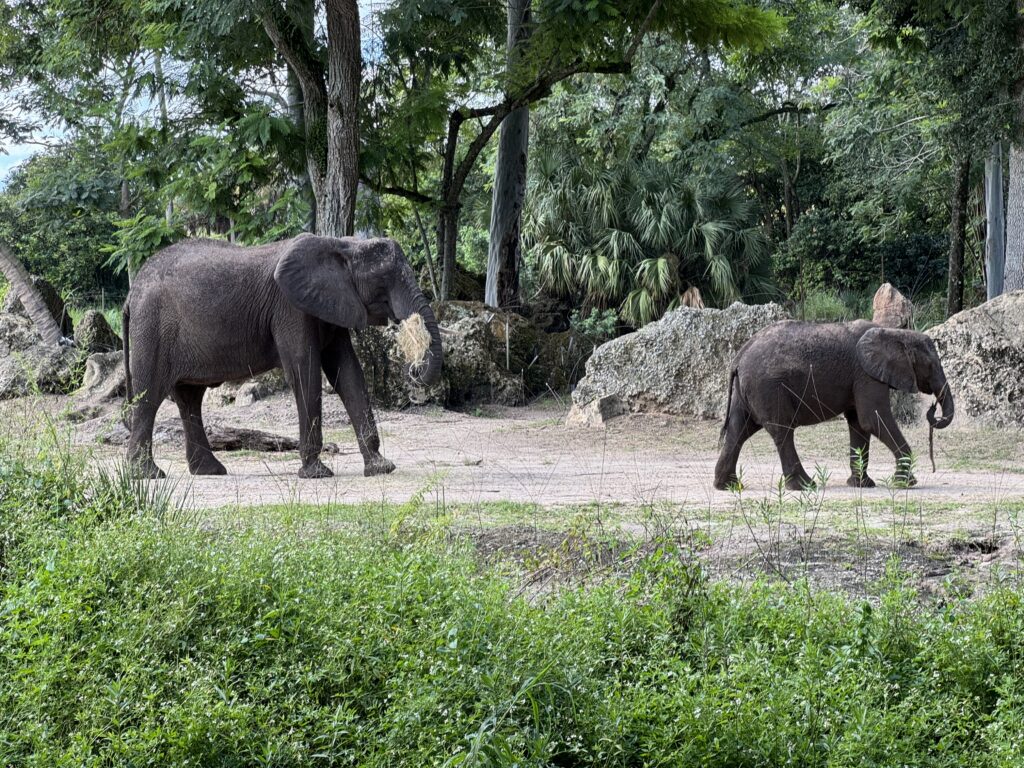
Years earlier, another elephant, Stella, was born not long after my second son. On return visits, I always look for her while riding Animal Kingdom’s Kilimanjaro Safaris attraction, comparing her growth to his.
Those individual connections can make enormous conservation problems feel less abstract.
They also come with another lesson.
9. Knowing When to Say Goodbye
This fall, Bakso is leaving Animal Kingdom.
The adorable tiger cub is now 2 years old and moving to another Association of Zoos & Aquariums-accredited zoo through a recommendation from the AZA Species Survival Plan.
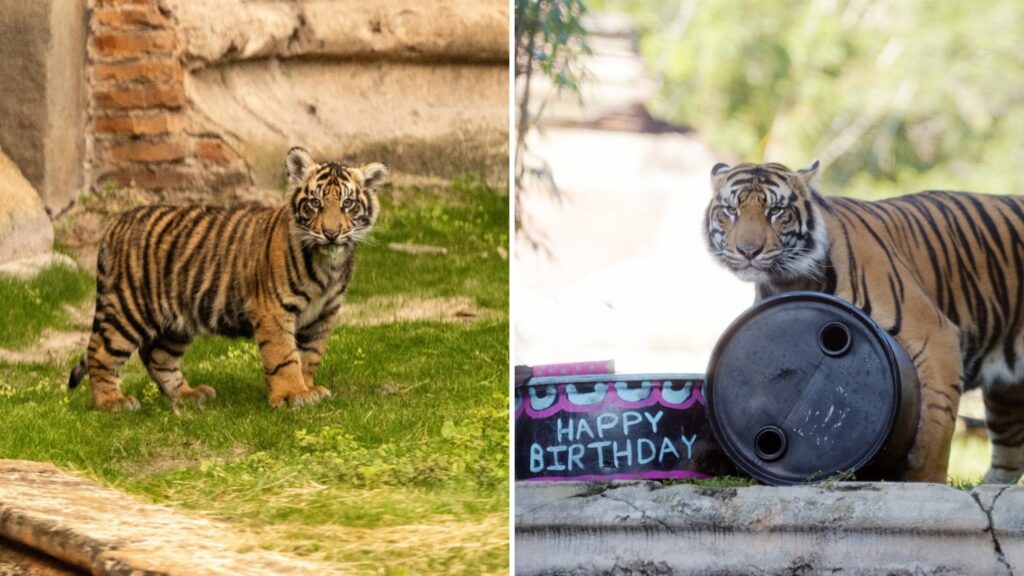
There are fewer than 600 Sumatran tigers remaining in the wild. Bakso could eventually father cubs of his own, contributing to efforts to maintain a healthy population of the critically endangered species in human care.
His departure is bittersweet precisely because the system worked.
10. It Can Start With One
Of everything accredited zoos and aquariums do, Ashe suggested that guests may be among the most important parts.
“If we’re going to save animals like gorillas, then we need to reach the minds and hearts, especially the hearts of people around the world,” he said.
Pye thinks about his own role in that much larger effort as one small part of a system.
“When you put small cogs together and they start moving, they can move a much larger cog,” he said.
Sometimes that means a veterinarian working directly in the field. Sometimes it means information gathered from animals at Animal Kingdom reaching wildlife veterinarians elsewhere.
And sometimes, Pye said, “it might be the fact that we inspired a child today.”
Back at Gorilla Falls Exploration Trail, watching Bakari try to make sense of the tiny red toy in his giant hands brings easy smiles to the steady stream of visitors coming to meet him. Some of those children may return next year and look for him again.
“It’s hard to know exactly what effect we’re having,” Pye said of Animal Kingdom’s youngest guests. “My hope is that they go on and do really amazing things for conservation programs.”
Sometimes, saving a species begins with getting someone to care about one animal.
How to Help
The organizations featured in this story offer ways to support wildlife conservation, the people doing the work, and the storytelling that helps bring threatened species to a wider audience.
National Geographic Photo Ark, led by photographer Joel Sartore, uses photography to document global biodiversity, inspire people to care about threatened species and support conservation and education efforts. Support the Photo Ark
GRACE works with Congolese communities to rehabilitate and rewild critically endangered Grauer’s gorillas while protecting their forest habitat. Support GRACE
Conservation Nation supports conservationists working to protect wildlife around the world through grants, fellowships, professional development, and education. Support Conservation Nation
SeaLegacy, co-founded by photographers Cristina Mittermeier and Paul Nicklen, uses visual storytelling, expeditions and campaigns to advance ocean conservation. Support SeaLegacy
Vital Impacts, founded by photographer Ami Vitale, supports grassroots conservation and mentors the next generation of environmental visual storytellers. Support Vital Impacts
The Dian Fossey Gorilla Fund protects gorillas and their habitats through long-term field conservation, scientific research, and community-centered programs in Rwanda and the Democratic Republic of the Congo. Support the Dian Fossey Gorilla Fund
Gorilla Doctors provides life-saving veterinary care and health monitoring for wild mountain and Grauer’s gorillas in Rwanda, Uganda, and the Democratic Republic of the Congo. Support Gorilla Doctors
Brooke McDonald is the editor in chief of Better Magazine. She regularly reports on entertainment, theme parks, and travel and her work has appeared in Insider, The Points Guy, Parents, TravelPulse, Scripps News, and more. Her favorite nonprofits to support include World Central Kitchen, the ACLU, Direct Relief, and the Vitalogy Foundation. Find her on Instagram @brookegmcdonald, Threads @brookegmcdonald, Bluesky, and X @BrookeGMcDonald.