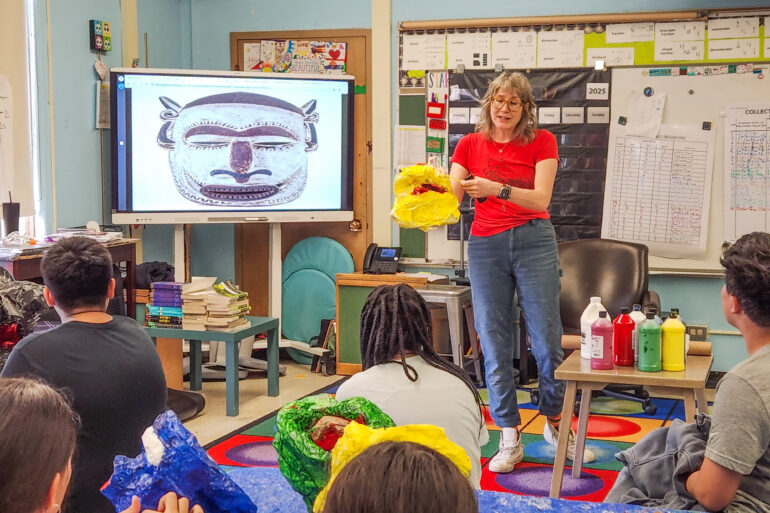
Walk into a classroom at Mosaic School of Fine Arts, and the lesson isn’t simply about completing an assignment. Students investigate, create, question, revise, and share what they discover together. Learning becomes something they build rather than something they receive.
That shift begins with a different assumption about children: they are capable of being artists and researchers at the same time.
For more than 10 years, classroom teacher Gustavo Soto and teaching artist Gwen Terry have partnered through Chicago Arts Partnerships in Education (CAPE), a Make It Better Foundation 2026 Philanthropy Award winner, to help students examine identity, community, science, literacy, and social studies through artistic inquiry. Rather than treating art as an enrichment activity, their classroom uses artistic practice as a way of thinking.
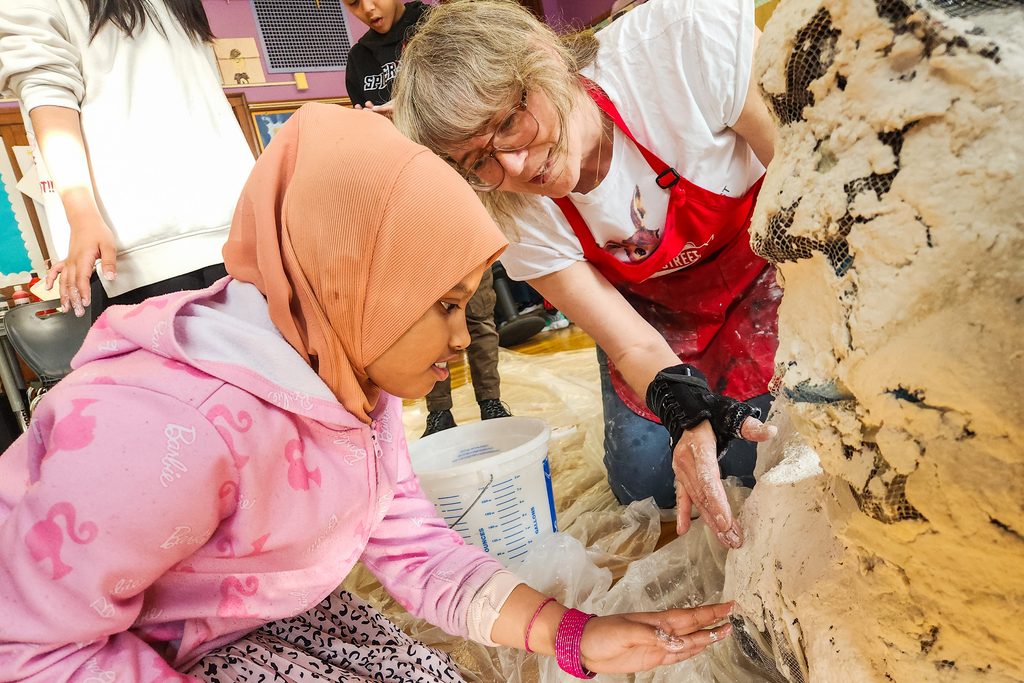
Reflecting on this year’s project, Terry observes, “Through this inquiry process, I discovered that our question encompassed numerous layers and aspects. However, as a group, the class distilled it all down to a fundamental need for protection and the act of protecting.” The realization didn’t come from a lecture — it emerged through conversation, experimentation, and collective creation.
The Research Behind the Importance of Artistic Inquiry
Their classroom reflects a growing body of international research. Studies published by researchers in Finland, Pennsylvania State University, Loyola University Chicago, and New York University have found that arts-integrated, inquiry-driven learning strengthens student engagement, collaboration, reflection, and deeper understanding by positioning students as active makers of knowledge rather than passive recipients of information. Together, these findings suggest that creative inquiry like CAPE’s can support both academic learning and the social and emotional skills students need to thrive.
That evidence is increasingly influencing public education. In 2025, Chicago Public Schools released Cultivating Creativity: CPS Arts Education Plan 2.0, identifying arts integration as a priority for elementary instruction and highlighting CAPE’s Artist/Researcher Model as a leading example of effective practice. The model encourages students, teachers, and teaching artists to become reflective questioners, critical collaborators, integrative innovators, social engagers, and flexible role-shifters who investigate ideas together rather than following predetermined answers.
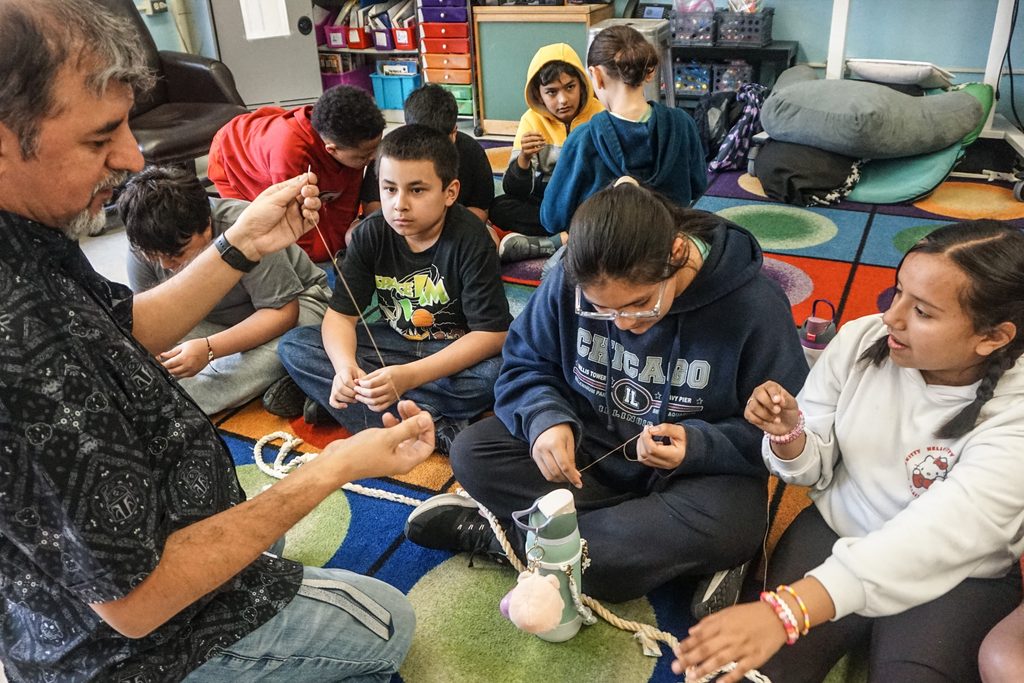
The implications of artistic inquiry extend far beyond one school or one city. Nationwide, educators are searching for ways to increase belonging, strengthen critical thinking, and reconnect students with joyful learning. Arts integration offers more than another instructional strategy. It invites young people to see themselves as curious thinkers whose ideas matter.
When classrooms make room for questions, creativity, and collaboration, students don’t simply learn more deeply. They begin to imagine themselves differently — and that may be one of education’s most important outcomes.
This post was submitted as part of our “You Said It” program. We encourage you to share your ideas and efforts to make the world a better place by submitting a “You Said It,” which can serve as the application for a $1,000 grant award from the Make It Better Foundation for a nonprofit you champion and eligibility for a Philanthropy Award, grant content partnership, and greater engagement with our audience.
How to Help
Chicago Arts Partnerships in Education (CAPE) partners with public school teachers, professional teaching artists, and communities to integrate the arts into everyday learning. Through long-term collaborations, professional development, exhibitions, and research, CAPE helps students build creativity, critical thinking, and social-emotional skills while deepening academic learning. Readers can support this work by attending ARTJOY, CAPE’s annual fundraising celebration, making a donation, becoming a school or community partner, attending public exhibitions, or learning more about arts integration and CAPE’s Artist/Researcher Model.

Noé Cuéllar is Manager of Strategic Operations at Chicago Arts Partnerships in Education (CAPE), where he helps advance research-based arts integration partnerships connecting teachers, teaching artists, and students across Chicagoland.